
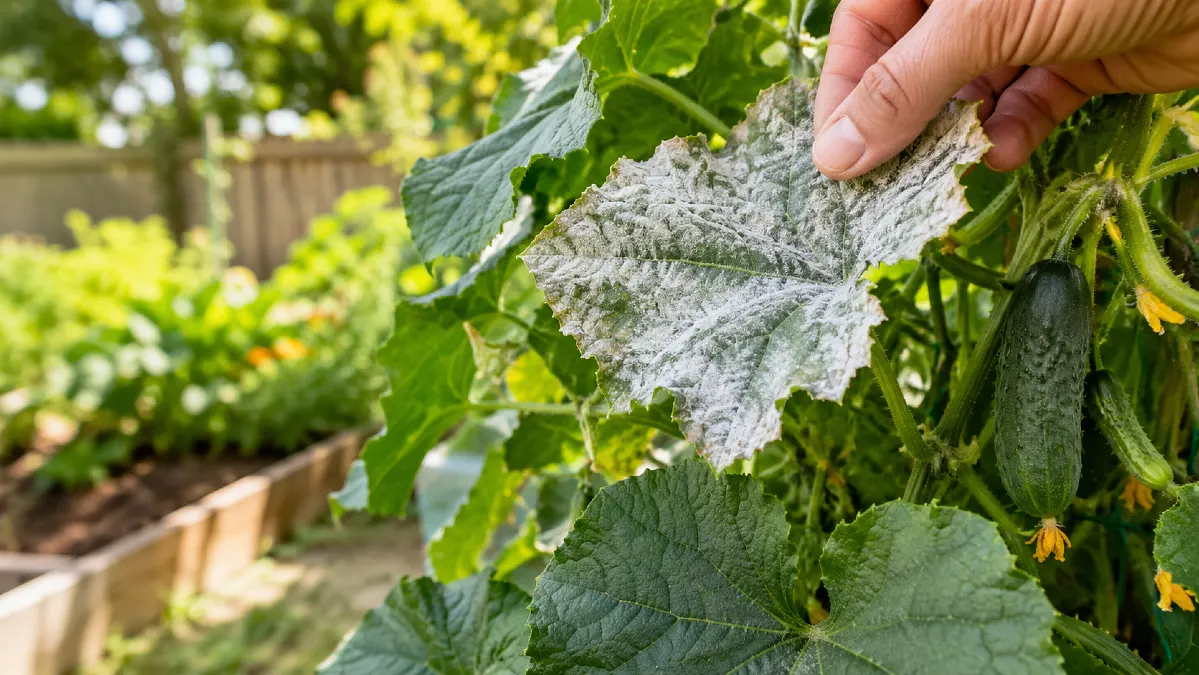
You walk into the garden expecting to pick a few cucumbers. Instead, several leaves look as if someone dusted them with flour.
The spots may seem harmless at first. Then another leaf turns white. A few days later, the coating has reached nearby vines.
When cucumber leaves are turning white, powdery mildew is often the cause. But it is not the only possible problem. Mites, downy mildew, spray damage, and natural leaf patterns can create similar marks.
Correct identification matters. A treatment for one problem may do nothing for another.
Check Whether the White Coating Wipes Off
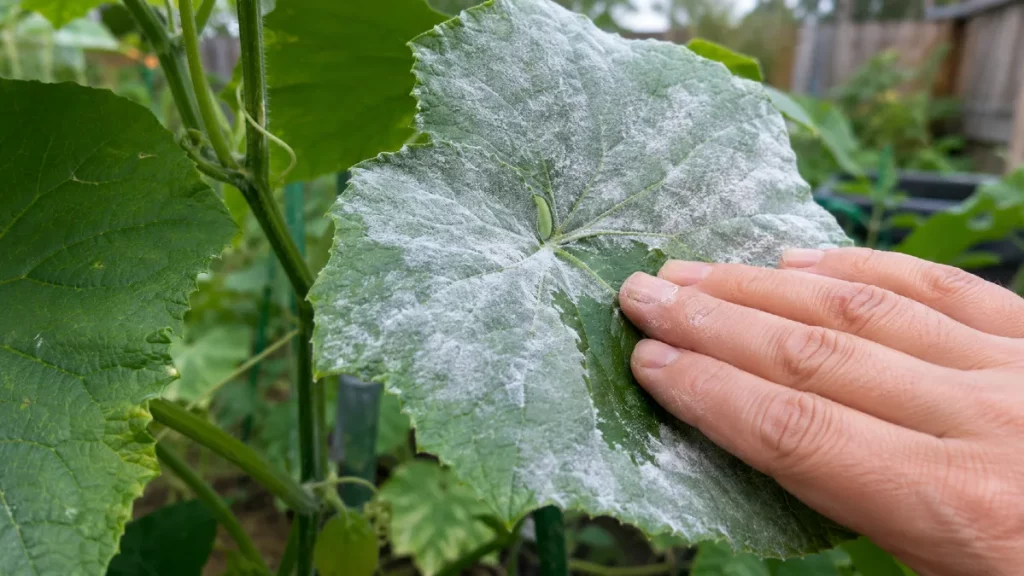
Start with one simple test. Look closely at both sides of an affected leaf.
Powdery mildew usually creates white or gray patches that look dusty, fuzzy, or floury. Some of the material may rub away when touched, though you should wash your hands before handling another plant.
The University of Minnesota Extension says the disease can form white powdery spots on both the upper and lower surfaces. Small spots may grow into large blotches that cover leaves, stems, and leaf stalks.
Check where the problem began. Powdery mildew often appears on older leaves first. Shaded leaves and crowded vines may also show symptoms sooner.
Look for these signs:
- Round white spots that slowly grow wider
- A coating on both sides of the leaf
- Older leaves becoming yellow beneath the white growth
- White marks spreading to leaf stems or vines
- Nearby cucumber or squash plants showing similar spots
Utah State University Extension explains that the visible powder is made of fungal growth and spores. These spores can continue spreading through the planting during summer.
Do not shake a badly infected vine. Moving it roughly may scatter more spores.
Rule Out 4 Problems That Look Similar
Do not spray the plant until you have checked for other causes. Several cucumber problems can create pale or white leaves.
1. Downy Mildew Creates Angular Spots
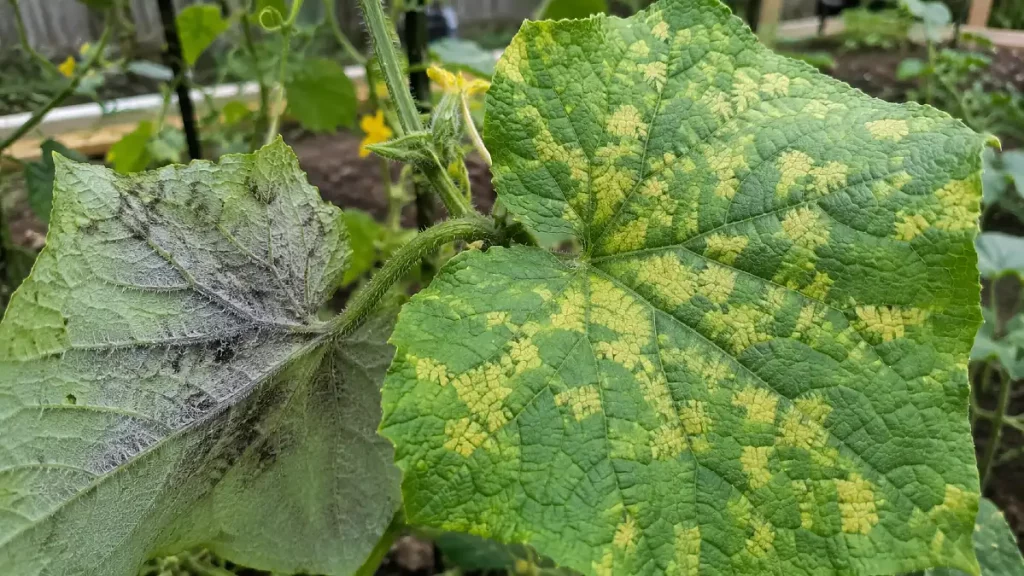
Downy mildew does not usually look like loose flour across the top of a leaf.
It often causes pale green or yellow patches that are limited by the leaf veins. This gives the spots an angular or blocky shape. Dark gray or purple fuzz may appear on the lower surface during damp or humid weather.
The University of Minnesota Extension notes that downy mildew is especially destructive on cucumbers and melons. It can spread through air, splashing water, hands, and garden tools.
Powdery mildew is usually white and diffuse. Downy mildew is more likely to create yellow blocks above and darker growth below.
2. Spider Mites Cause Fine Pale Speckles
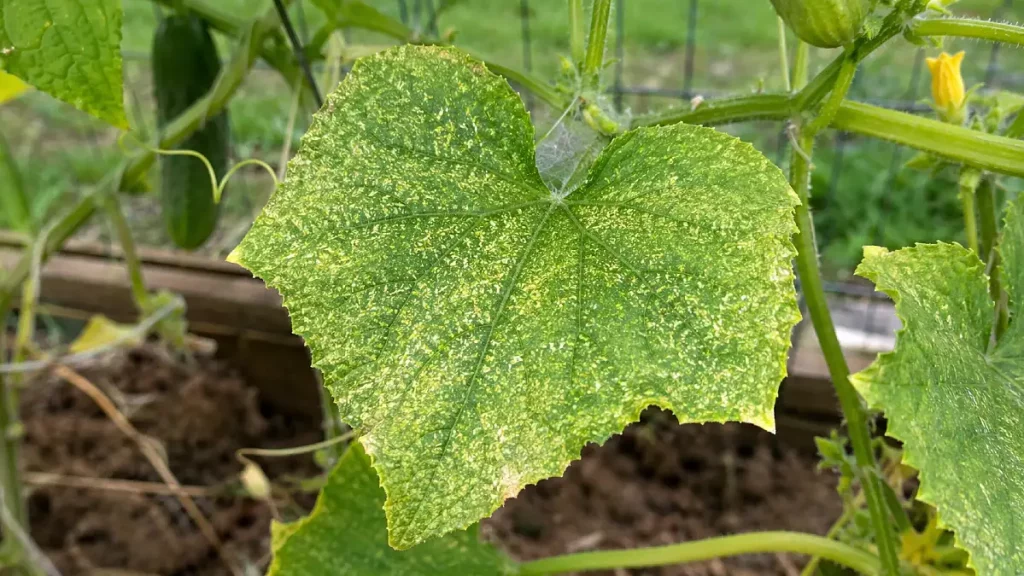
Spider mites feed by removing plant juices from the leaves. Their damage often looks like hundreds of tiny pale dots rather than a fuzzy coating.
A badly affected leaf may become bleached, gray, or bronze. You may also find fine webbing near the veins or between the leaf and stem.
The University of Minnesota Extension lists spider mites as a possible cause of bleached or bronzed cucumber leaves during hot, dry weather.
Hold white paper under the leaf and tap it gently. Moving dots on the paper may be mites. A hand lens makes them easier to see.
3. Sun or Spray Injury Damages the Leaf Tissue
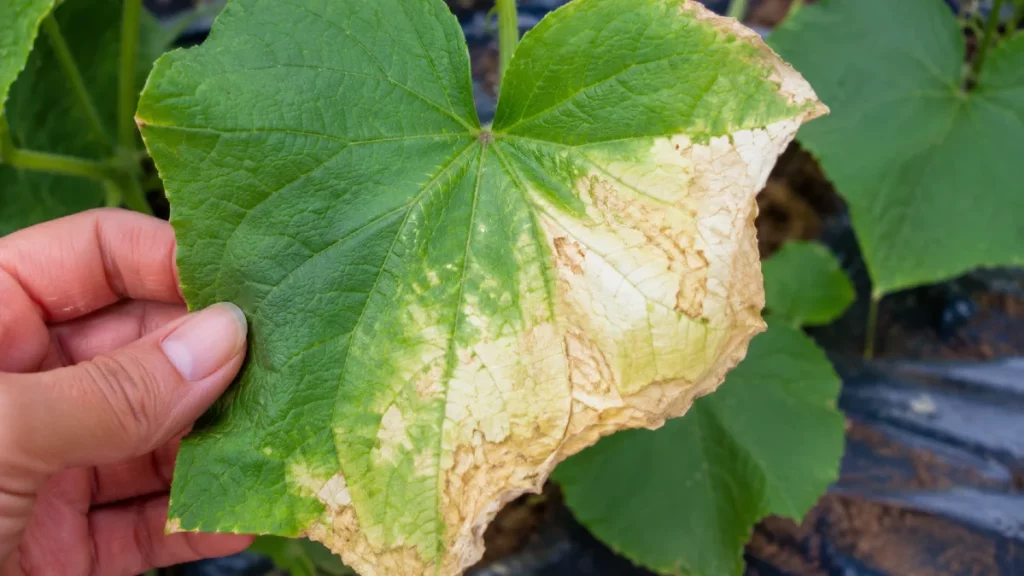
A strong garden spray can burn leaves, especially when applied during hot weather. Sun injury may also bleach areas that were suddenly exposed after heavy pruning.
This damage is part of the leaf. It will not wipe away like surface growth.
Think about what happened before the marks appeared. Fertilizer spray, soap, oil, weed killer drift, or a homemade mixture may be responsible.
Damaged areas will not become green again. Watch the new growth. Healthy new leaves suggest that the injury has stopped.
4. Natural Markings Do Not Keep Spreading
Some cucumber and squash leaves have pale silver markings around their veins. These patterns are part of the leaf and may appear on many healthy leaves in the same way.
Natural markings do not feel fuzzy. They do not rub off, turn brown, or expand from day to day.
Take a clear photo today. Compare it with the same leaf in two or three days. Powdery mildew usually changes and spreads. A natural pattern stays much the same.
Remove the Worst Leaves Before the Disease Spreads
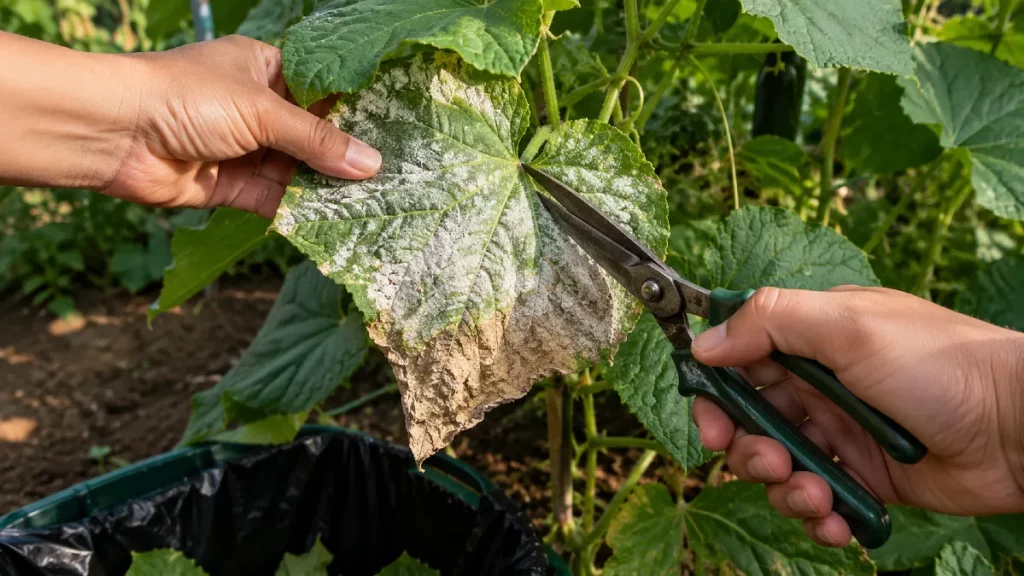
Once you identify powdery mildew, deal with the worst leaves first.
Cut off leaves that are heavily covered, yellow, dry, or no longer helping the plant. Removing them reduces some of the active fungal growth and opens the vine to more air.
Do not strip the plant bare. Healthy leaves are still needed to make energy and shade the cucumbers.
Follow this order:
- Work on healthy plants first.
- Cut the worst infected leaves from the cucumber vine.
- Place them directly into a bag or covered container.
- Clean your shears before touching another plant.
- Wash your hands after handling infected foliage.
Do not leave diseased leaves on the soil. Spores can remain close to the vines and spread to new growth.
Avoid pruning when the plant is wet. Wet leaves are easier to damage, and several cucumber diseases can move on hands or tools.
Check nearby cucumber, melon, squash, pumpkin, and gourd plants. Powdery mildew can infect all of these crops, though the exact fungi and level of damage may vary.
Improve Airflow Around Your Cucumber Vines
Better airflow will not cure leaves that are already white. It can make conditions less favorable for further growth and help treatments reach the leaves.
Start by lifting vines from the ground. Tie them loosely to a trellis with soft plant ties. Keep the stems supported without squeezing them.
Remove weeds around the base. Weeds crowd the plant and hold humid air within the leaves.
You can also:
- Separate tangled vines carefully
- Move container cucumbers farther apart
- Remove dead leaves under the plant
- Trim a small number of crowded leaves
- Keep nearby plants from pressing against the cucumber vine
The University of Minnesota Extension recommends proper spacing, staking, and weed control to improve air movement. It also notes that crowded plants, shaded sites, and plants receiving too much fertilizer can face more powdery mildew.
Do not feed a sick cucumber plant with a large dose of nitrogen. It may push out soft, crowded growth without solving the disease.
Base fertilizer choices on a soil test when possible.
Water the Soil Without Soaking the Leaves
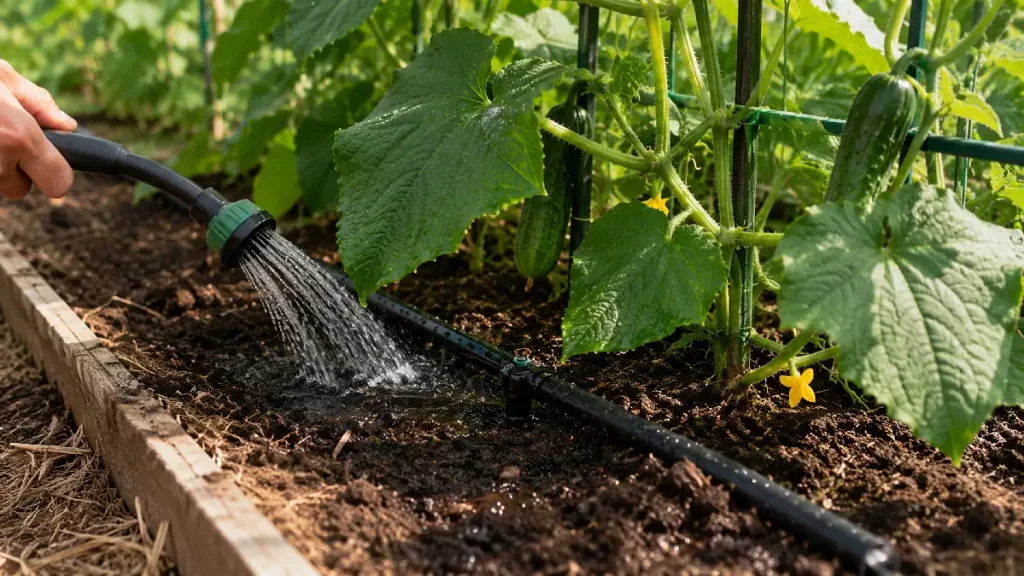
Cucumbers need steady moisture, especially while fruit is growing. But watering habits can affect how easily several leaf diseases move through the garden.
Place water on the soil near the roots. Drip irrigation and soaker hoses keep most of the foliage dry.
If you must use a watering wand, point it under the leaves. Water early enough for any splashed foliage to dry before evening.
Do not stop watering because the plant has mildew. Drought stress weakens the vine and may reduce fruit quality.
Aim for soil that stays evenly moist without remaining waterlogged. A layer of clean mulch can slow water loss and reduce soil splash.
Powdery mildew differs from many plant diseases because it can continue growing during dry weather after infection. Utah State University Extension says high humidity or dew can support infection, while the disease can produce and spread spores during dry conditions.
This means overhead watering is not a reliable cure. It may also increase the risk of other cucumber diseases.
Choose a Cucumber Powdery Mildew Treatment Early
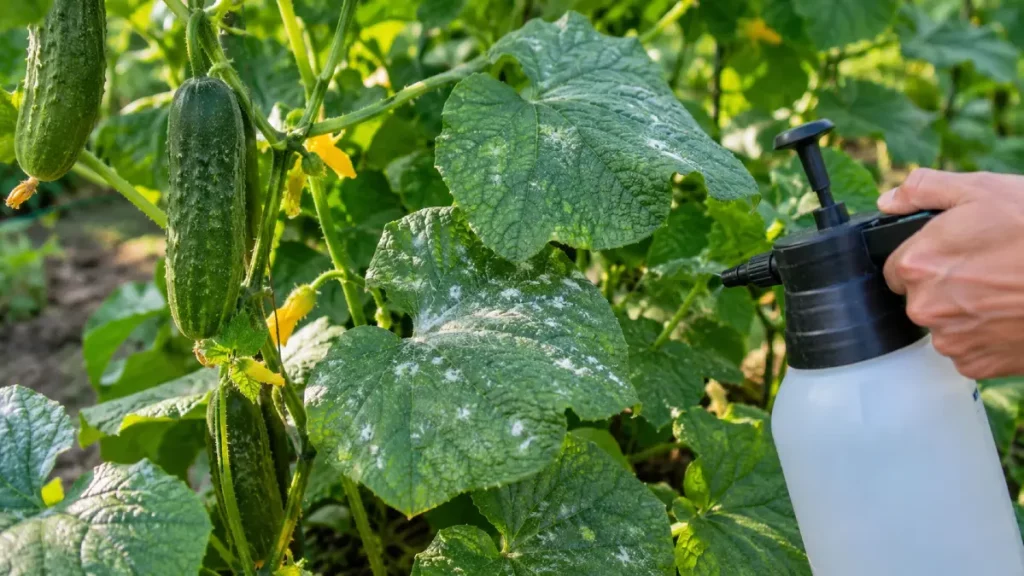
Treatment has the best chance of working when you find the first few spots.
Once most of a leaf is covered, a spray will not turn it green again. The goal is to protect healthy tissue and slow new infections.
Look for a fungicide label that clearly lists cucumbers or edible cucurbit crops. The label must also list powdery mildew as a target disease.
Possible active ingredients may include:
- Sulfur
- Potassium bicarbonate
- Horticultural oil
- Other fungicides registered for edible vegetables
Product registration and directions differ by location. Read the complete label before buying or spraying anything.
Sulfur Can Work but Heat Matters
Utah State University Extension reports that sulfur products can work well when applied after the first white spots appear. It also warns that sulfur can injure foliage when temperatures rise above 90 degrees Fahrenheit.
Do not spray sulfur simply because it is available. Check the forecast and product directions first.
Sulfur and horticultural oils may also injure plants when used too close together. The exact waiting period depends on the products, so follow both labels.
Potassium Bicarbonate May Slow New Growth
Some vegetable fungicides use potassium bicarbonate. These products can damage fungal cells on contact, but coverage must be thorough.
The product still needs to be labeled for cucumber plants. Follow its mixing rate, repeat schedule, harvest interval, and temperature limits.
More product is not better. A stronger mixture can burn the foliage.
Horticultural Oil Needs Careful Timing
Certain horticultural oils are labeled for powdery mildew on edible crops. They may help when the disease is still light.
Oil can damage drought stressed plants or leaves sprayed during high heat. Never apply it to a wilted plant.
Water a dry cucumber plant first. Give it time to recover before using any treatment allowed by the label.
Be Careful With Homemade Sprays
Online recipes often suggest milk, baking soda, soap, mouthwash, or mixtures of several ingredients.
Results can be inconsistent. Concentrated soap or baking soda can burn cucumber leaves. A mixture that appears safe on one plant may harm another during hotter weather.
A registered product gives you a tested mixing rate, crop list, safety instructions, and harvest interval.
If you test any permitted treatment, spray a small section first. Wait long enough to check for damage before covering the entire vine.
Know When the Plant Is Too Infected to Save
A cucumber plant with a few infected leaves is often worth treating. A vine with almost no healthy foliage may be different.
Consider removing the plant when:
- Most leaves are covered with white growth
- Leaves are yellowing or dying from the base upward
- New leaves become infected soon after opening
- The vine has stopped growing
- Fruit production is nearly finished
- Nearby cucurbit plants are still healthy
Severe powdery mildew weakens the plant. The University of Minnesota Extension reports that infected plants may produce fewer and smaller fruits. Loss of leaf cover can also expose cucumbers to sun damage and poor ripening.
Removing a finished plant can protect younger vines nearby. Bag the diseased material rather than carrying it uncovered through the garden.
Do not save seed from a weak or diseased cucumber plant. Start with clean seed next season.
If you are unsure what disease is present, send clear photographs or a plant sample to a local diagnostic service before removing the entire planting.
Protect the Rest of Your Garden This Season

Powdery mildew spores can move through the air. That makes regular inspection more useful than waiting for a whole plant to turn white.
Check all cucurbit plants once a week. Look at mature leaves, shaded areas, and the lower parts of the vines.
Use this simple routine:
- Inspect clean plants first.
- Look at the upper and lower sides of five mature leaves.
- Mark any plant with suspicious spots.
- Photograph the same leaves for comparison.
- Remove badly infected foliage.
- Clean tools before moving to another bed.
The University of Minnesota Extension advises growers to scout mature leaves regularly because early treatment is more useful than waiting for widespread infection.
Do not carry infected leaves across healthy beds. Bring a bag to the plant and seal the material where it was removed.
Clear weeds and fallen foliage from beneath the vines. Keep paths wide enough to avoid brushing against every plant.
Downy mildew needs different management. It can move on tools, hands, splashing water, and air currents. Home garden pesticide choices may also be limited. If the leaves have angular yellow areas and dark fuzz underneath, seek a firm diagnosis rather than treating them as powdery mildew.
Prevent White Cucumber Leaves Next Year
Prevention starts before the first seed enters the soil.
Choose cucumber varieties with resistance to powdery mildew when that trait is listed by the seed seller. Resistance does not always mean complete immunity, but it may delay the disease or reduce its severity.
Give each plant enough room. Follow the spacing listed on the seed packet rather than placing several plants together to save space.
Grow vines on a trellis. Upright growth improves airflow and makes both sides of the leaves easier to inspect.
At the end of the season:
- Remove infected vines and leaves
- Clear weeds from the bed
- Clean trellises and cutting tools
- Rotate cucurbit crops when space allows
- Avoid saving seed from diseased plants
- Record which varieties had the worst damage
Utah State University Extension advises removing infected plant material after harvest because powdery mildew may survive in plant remains in some climates. It also recommends wider spacing and resistant varieties.
Apply fertilizer based on what the soil needs. Excess nitrogen can create a thick canopy with poor airflow.
Begin checking plants before midsummer. Early spots are easier to manage than leaves already covered in fungal growth.