Your pepper plants are tall and green, but the harvest is still disappointing. A few flowers appear. Some fall off. The peppers that remain seem small or slow to ripen.
Then someone suggests adding Epsom salt.
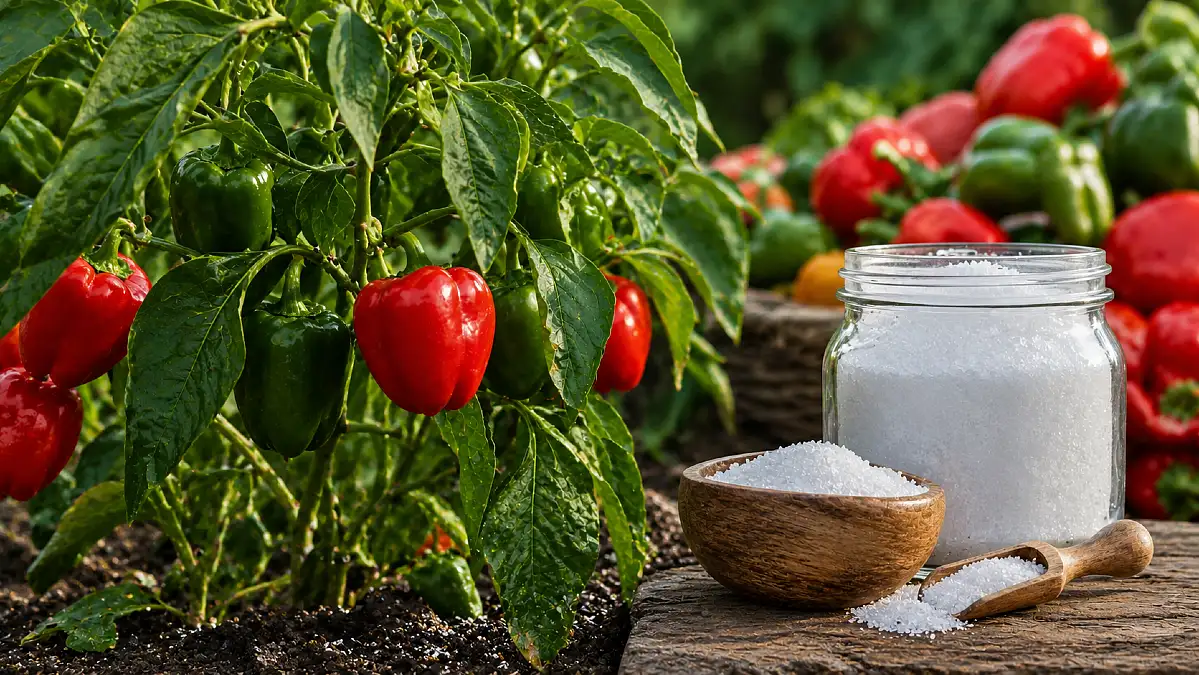
The old advice sounds simple. Mix the salt with water, pour it around the plants, and wait for a huge crop. Some versions of the tip even claim it can double the harvest.
Here is the honest answer. Epsom salt can help a pepper plant that lacks magnesium. It cannot automatically double the number of peppers you grow. There is no dependable research showing that routine Epsom salt treatments produce twice as much fruit.
Grandpa’s remedy was not completely wrong. It was simply useful in a narrower set of conditions than many gardeners realize.
Will Epsom Salt Really Double Your Pepper Harvest?
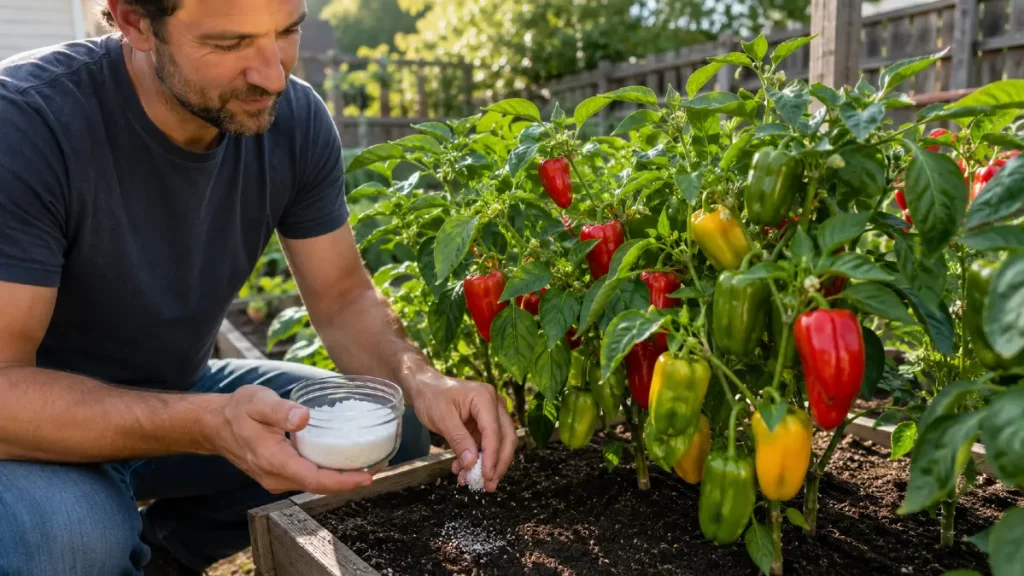
There is no strong evidence that Epsom salt doubles pepper harvests in normal garden soil.
Epsom salt contains magnesium and sulfur. Both are nutrients that plants need. However, supplying more of a nutrient does not help when the soil already contains enough.
The University of Minnesota Extension advises that Epsom salt is unnecessary unless the garden has a magnesium deficiency. It also warns that needless applications may harm soil, plants, and water.
Oregon State University Extension gives similar advice. Its horticulture specialists recommend using Epsom salt only when a soil test shows that magnesium is low. Routine use in healthy soil may harm plants rather than improve them.
That means Grandpa’s old trick works only in the right situation.
A pepper plant that lacks magnesium may grow poorly because it cannot use light as well as it should. Correcting that shortage can improve growth and fruit production.
But Epsom salt does not force a healthy plant to produce twice as many peppers. Sunlight, temperature, water, root health, pollination, plant variety, and overall nutrition still control the crop.
What Epsom Salt Actually Gives Pepper Plants
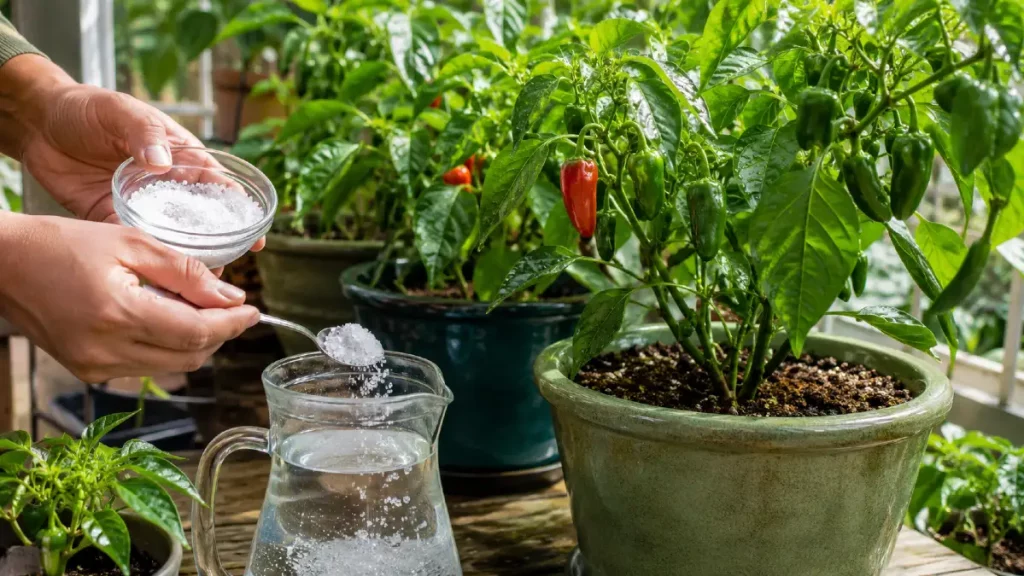
Epsom salt is another name for magnesium sulfate.
It supplies two plant nutrients:
- Magnesium
- Sulfur
Magnesium has an important job inside leaves. It is part of chlorophyll, the green material plants use to capture light.
A plant with too little magnesium may struggle to make energy. Growth may slow, and older leaves can develop yellow areas between green veins.
Sulfur also supports plant growth. It helps plants form proteins and enzymes.
Still, Epsom salt is not a complete fertilizer. It contains no meaningful amount of:
- Nitrogen
- Phosphorus
- Potassium
- Calcium
That matters because peppers need all of those nutrients in suitable amounts.
Epsom salt cannot replace compost, balanced fertilizer, steady watering, or healthy soil. It also cannot fix every yellow leaf.
Think of it as a correction for one possible shortage. It is not an all purpose pepper food.
4 Signs Your Pepper Plant May Lack Magnesium
Magnesium deficiency has a fairly clear pattern, but several other problems can look similar.
Check the whole plant before treating it.
1. Older Leaves Turn Yellow Between the Veins
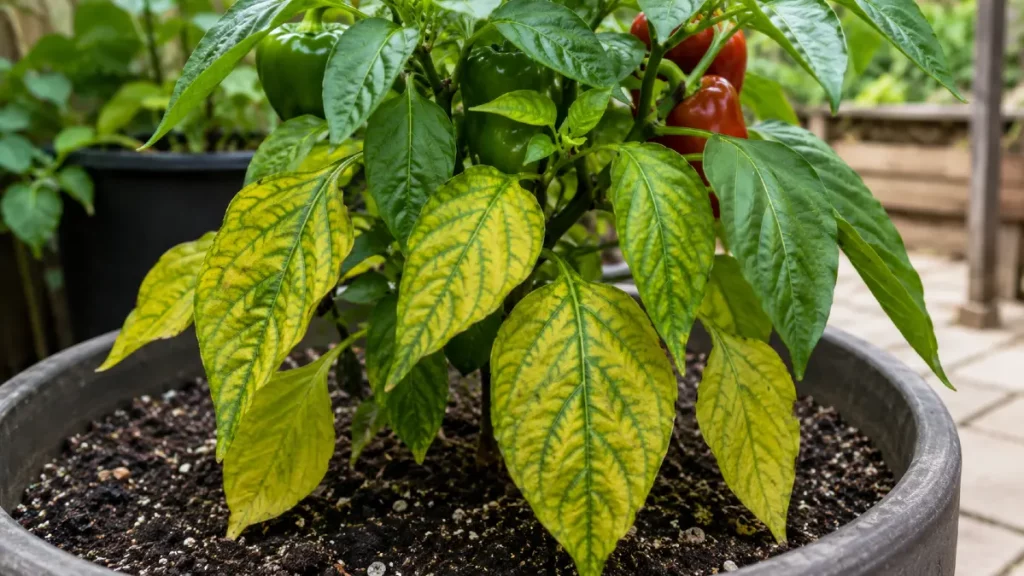
Magnesium can move from older leaves into younger growth.
When supplies become low, the plant often takes magnesium from its oldest leaves first. The tissue between the veins turns pale while the veins remain green.
This pattern is called interveinal chlorosis.
It usually looks like a green network of veins sitting over a yellow leaf.
2. The Problem Starts Low on the Plant
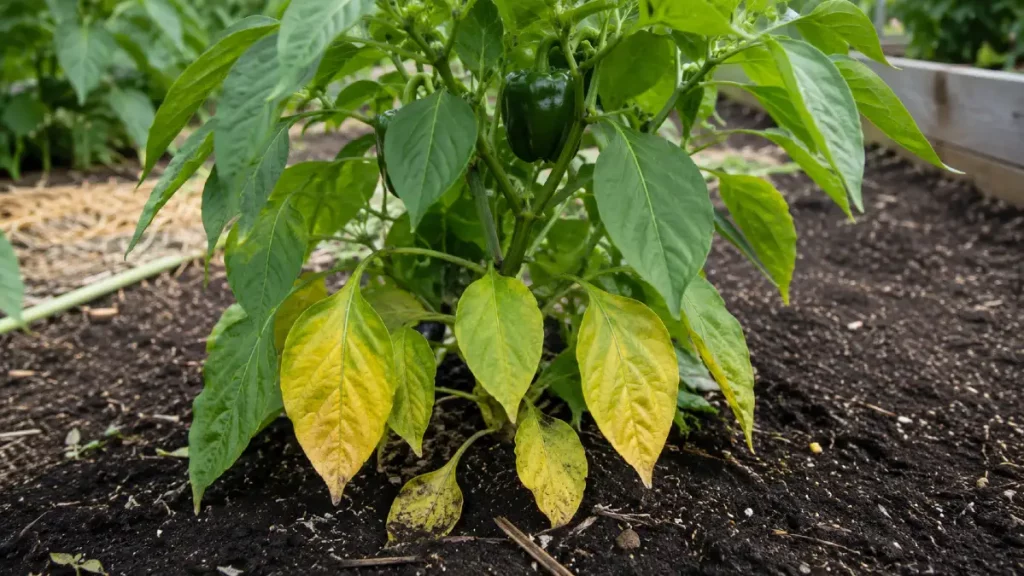
A magnesium shortage usually affects older, lower leaves before it reaches the top.
That helps separate it from an iron shortage, which is more likely to show up on young leaves first.
The exact pattern can vary, so leaf position is a clue rather than final proof.
3. Growth Slows After the Leaves Change Color
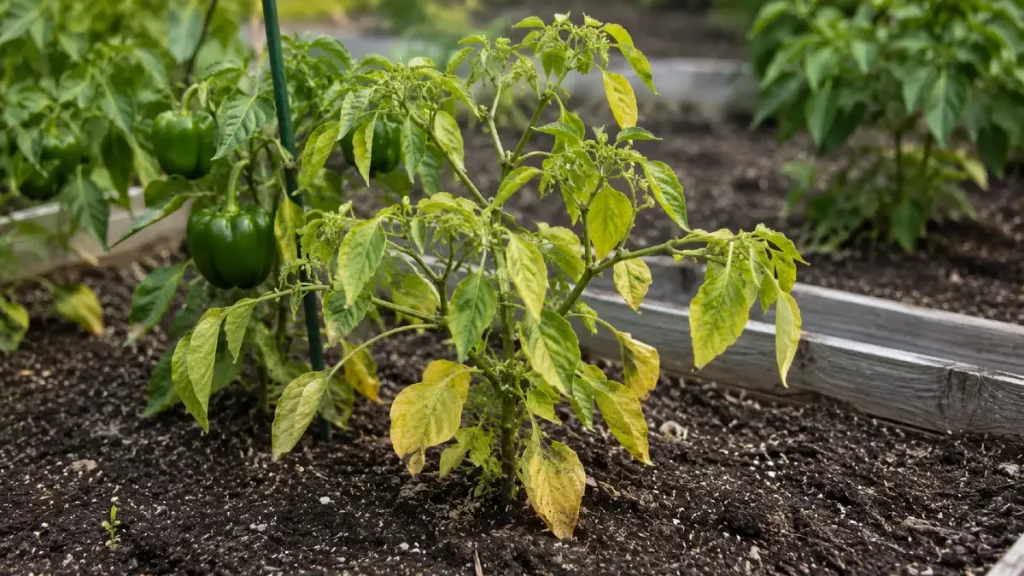
A serious shortage can reduce growth because the plant has less working chlorophyll.
The pepper plant may produce fewer new leaves. Flowers and fruit may also develop more slowly.
However, slow growth alone does not prove that magnesium is missing.
Cold weather, damaged roots, poor drainage, drought, pests, disease, and low nitrogen can all slow a plant.
4. A Soil Test Confirms Low Magnesium
This is the strongest sign.
A laboratory soil test can measure magnesium along with pH and other major nutrients. It can also show whether another mineral is present at a level that affects magnesium uptake.
Oregon State University notes that magnesium shortages can be corrected with magnesium sulfate when soil pH is already suitable. When both pH and magnesium are low, dolomitic lime may be a better choice because it raises pH while supplying magnesium.
Test the Soil Before Reaching for the Salt
A yellow leaf gives you a clue. A soil test gives you evidence.
Contact a cooperative extension office or a reputable agricultural soil laboratory. Ask for a vegetable garden test that includes:
- Soil pH
- Magnesium
- Calcium
- Potassium
- Phosphorus
- Organic matter
- Soluble salts, when available
Collect soil from several places in the pepper bed. Mix the samples in a clean container and send the amount requested by the lab.
Do not collect soil from one tiny spot beside a fertilizer granule. That may give you a misleading result.
Soil pH also deserves attention. Many vegetables perform well when soil is mildly acidic to neutral. The University of Minnesota lists a general range of 6.0 to 7.0 for fruits and vegetables.
A pH problem can prevent roots from taking up nutrients efficiently. In that case, adding more fertilizer may not solve the real issue.
The relationship among nutrients matters too. Very high levels of some minerals can affect the uptake of others.
That is why guessing often leads to more guessing.
How to Use Epsom Salt on Pepper Plants Safely
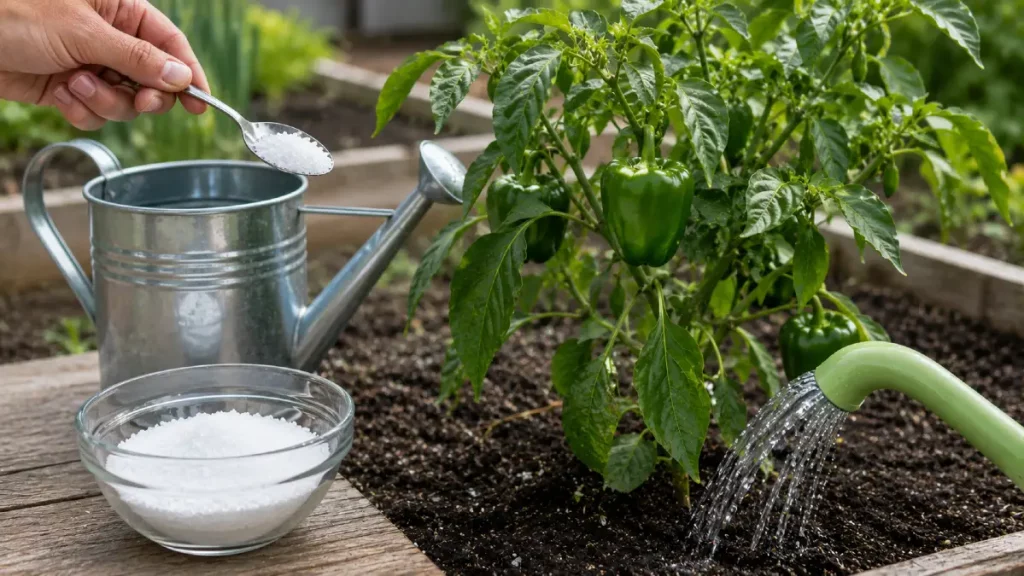
Use Epsom salt only when a soil test or a strong set of symptoms points to low magnesium.
The safest rate is the one printed on your soil test report. Soil type, plant size, existing magnesium, and growing conditions can change the correct amount.
For a cautious home treatment, Oregon State University describes a weak solution of one teaspoon of Epsom salt per gallon of water, used no more than twice a year in a suitable deficiency situation.
Follow these steps:
- Measure one level teaspoon.
Do not guess or pour directly from the bag. - Dissolve it fully in one gallon of water.
Stir until the crystals disappear. - Water the soil first if it is very dry.
Applying fertilizer to severely dry roots can increase stress. - Pour the solution over the root area.
Keep most of it on the soil rather than soaking the leaves. - Wait and watch the new growth.
Damaged old leaves may never return to a deep green color. - Do not repeat the treatment every week.
More frequent use can cause minerals to build up.
Do not add a full dose of Epsom salt, liquid fertilizer, granular fertilizer, and compost tea on the same day.
You will not know which treatment helped. You may also expose the roots to too many dissolved salts at once.
Should You Spray Epsom Salt on Pepper Leaves?
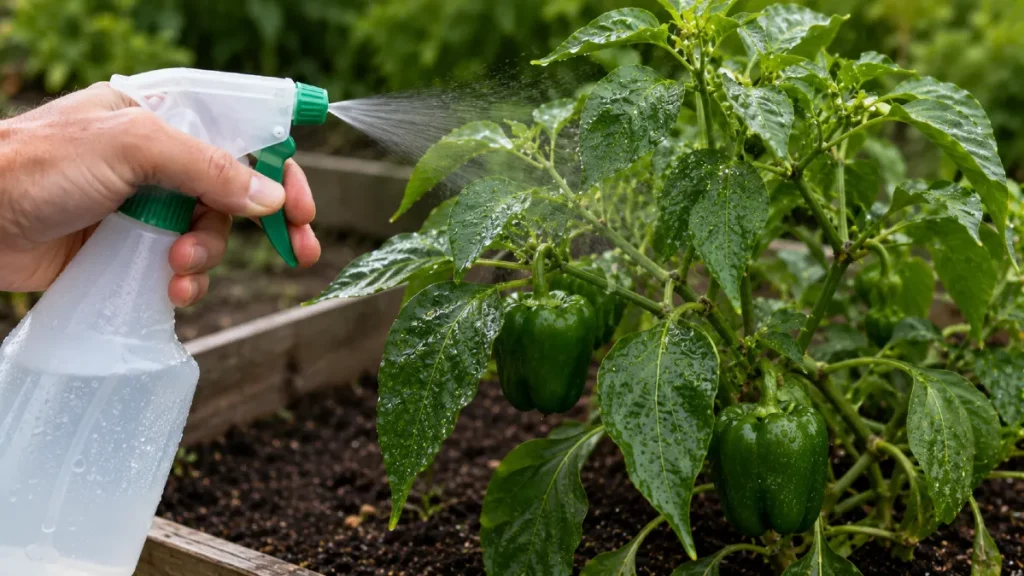
A foliar spray places a diluted solution directly on the leaves.
Plants can absorb some magnesium through leaf tissue. Still, foliar feeding is a temporary treatment, not a replacement for correcting the soil.
It also comes with risks.
A strong solution may mark or burn leaves. Bright sun and hot weather can increase the chance of damage. Water sitting on leaves may also support some disease problems when conditions are humid.
A root application is usually easier for a home gardener to control.
Use a foliar treatment only when a reliable soil or plant expert recommends it. Follow the given dilution exactly.
Never assume that a stronger spray will act faster.
Why More Epsom Salt Can Make Pepper Plants Worse
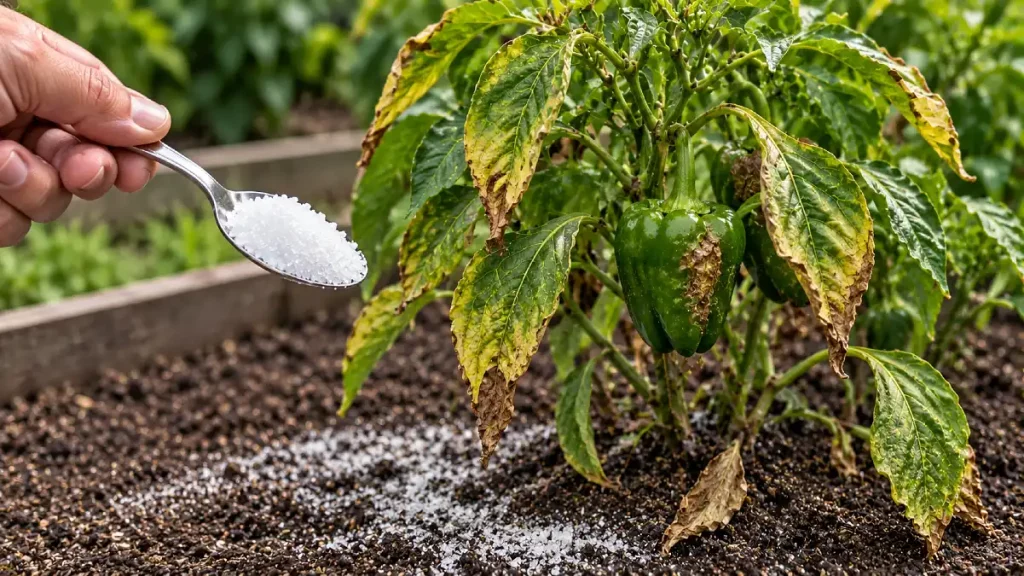
Gardeners often think a household product is harmless because it seems natural.
Plants do not respond that way. The dose still matters.
Extra Magnesium Can Affect Calcium Uptake
Oregon State University lists calcium interference as one possible effect of excess magnesium.
That is important for peppers because calcium movement plays a role in healthy fruit development.
Epsom salt does not contain calcium. It should never be used as a treatment for blossom end rot.
Blossom end rot appears as a dark, sunken patch at the bottom of a pepper. It is connected to calcium failing to reach developing fruit, often because soil moisture changes sharply.
Adding magnesium does not solve that problem.
Salt Can Build Up Around the Roots
Epsom salt dissolves into charged mineral particles.
Repeated applications raise the amount of dissolved salt around the root zone. High salt levels make it harder for roots to take in water.
Containers are at greater risk because excess minerals have less soil in which to spread. They may also build up when pots are watered lightly and never flushed.
It Can Hide the Real Problem
A plant with pale leaves may need nitrogen. It may have damaged roots. It may be sitting in cold, wet soil.
Adding Epsom salt delays the correct treatment when magnesium is not the issue.
It Can Leave the Garden
The University of Minnesota warns that needless Epsom salt use can affect soil and water.
Anything the plant does not use may move lower in the soil or leave the bed in runoff.
7 Proven Ways to Get More Peppers From Each Plant
Correcting a true magnesium shortage can help. These seven basic steps usually have a much larger effect on pepper production.
1. Give Pepper Plants Plenty of Sun
Pepper plants need strong light to build the energy used for flowers and fruit.
Choose a place that receives at least six hours of direct sun. Eight hours is often better in regions where summer heat is not extreme.
A plant grown in deep shade may look leafy but set fewer peppers.
Trim nearby growth that blocks morning light. Move container peppers to a brighter spot when possible.
In very hot climates, light afternoon shade may protect plants from severe heat. The goal is strong light without constant heat stress.
2. Wait for Warm Soil Before Planting
Peppers are warm season plants.
Putting them into cold soil can slow root growth for weeks. A stalled plant may survive, but it can take longer to flower and fruit.
Wait until frost danger has passed and nights are reliably mild. Local extension planting calendars give more useful dates than a general national guide.
Use black plastic or a dark ground cover before planting when the soil is slow to warm. Remove or manage it carefully once extreme summer heat begins.
3. Water Deeply and Consistently
Peppers need steady moisture, especially while flowers and fruit are forming.
Allowing the soil to become bone dry and then flooding it can stress the plant. It may drop flowers or develop fruit problems.
Water deeply enough to moisten the active root area. Then wait until the upper layer begins to dry before watering again.
The exact schedule depends on heat, soil, plant size, rainfall, and whether the pepper is in a pot.
Check the soil with a finger or hand trowel. Do not rely only on the surface color.
4. Stop Pushing Leaf Growth With Extra Nitrogen
Nitrogen supports stems and leaves.
Too much can produce a large green plant with disappointing fruit.
Use compost and fertilizer based on soil needs. Avoid repeated doses of high nitrogen lawn food or strong liquid feed once peppers are flowering.
More leaves do not always mean more peppers.
The best plant has enough healthy foliage to feed its fruit without becoming a dense mass of soft growth.
5. Help Flowers Through Extreme Weather
Pepper flowers may drop when nights are too cold or daytime temperatures become extreme.
High humidity can also make pollen sticky. Still air inside a sheltered greenhouse or patio can reduce movement around the flowers.
You can gently shake a container plant or tap a flower cluster during mild morning weather. This may help move pollen.
Do not shake the plant roughly. A light movement is enough.
Keep plants watered during hot spells, but do not leave the roots soaked.
6. Pick Mature Peppers Regularly
A pepper plant spends energy developing and ripening fruit.
Picking usable peppers can encourage the plant to keep flowering while the season remains favorable.
Green bell peppers are mature enough to harvest before they change color. Leaving them on the plant produces sweeter red, yellow, orange, or purple fruit, depending on the variety.
Use clean scissors or pruners. Pulling hard can break branches.
Harvest hot peppers at the stage that gives the flavor and heat you prefer.
7. Cover the Soil With Mulch
A layer of organic mulch slows water loss and reduces sharp changes in soil moisture.
Use shredded leaves, clean straw, untreated grass clippings applied in thin layers, or another local mulch.
Leave a small open space around each stem. Mulch pressed tightly against the stem can hold excess moisture and hide pests.
Apply mulch after the soil has warmed. Covering cool spring soil too early can delay warming.
A Simple Pepper Feeding Schedule That Makes More Sense
Pepper plants need balanced nutrition rather than repeated household treatments.
Use this basic schedule as a starting point.
| Growth stage | What to do | What to avoid |
|---|---|---|
| Before planting | Test the soil and mix in finished compost when needed | Adding lime or magnesium without test results |
| At planting | Use a mild starter fertilizer only if recommended | Strong fertilizer touching the roots |
| Early leaf growth | Watch plant color and growth rate | Repeated heavy nitrogen feeding |
| First flowers | Keep moisture steady and follow soil based feeding advice | Assuming flower drop means the plant needs Epsom salt |
| Fruit formation | Support plants and maintain regular watering | Letting containers dry out fully |
| Main harvest | Pick peppers often and inspect for pests | Feeding heavily when the plant already looks healthy |
Container peppers may need fertilizer more often because watering carries nutrients through the drainage holes.
Use a product labeled for vegetables. Follow its directions rather than making the solution stronger.
Flush containers with plain water from time to time so excess fertilizer salts can drain away. Make sure each pot has open drainage holes.