
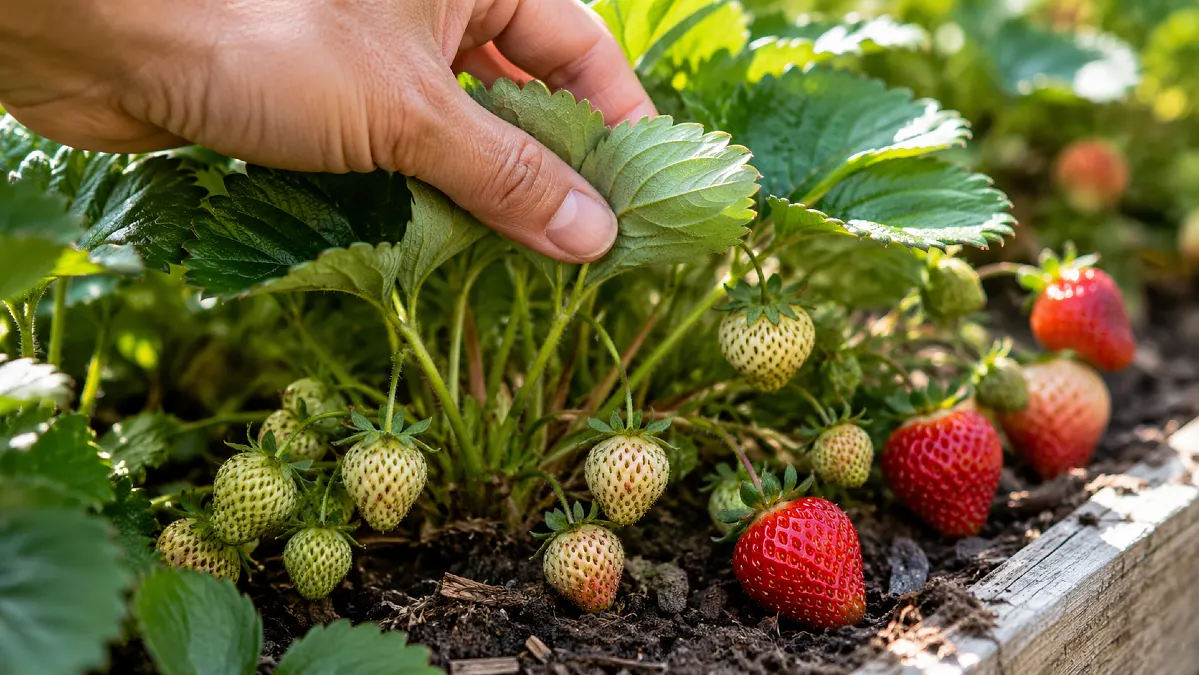
Your strawberry plants flowered. Small green berries appeared. You waited for the sweet, juicy harvest you had pictured all spring.
But the berries stayed tiny. Some tasted so sour that they were hard to enjoy. Others looked lumpy, pale, or dry.
It is easy to blame the variety or reach for more fertilizer. That may make the problem worse. Berry size and flavor depend on several conditions working together.
Sunlight helps the plant make energy. Steady moisture helps each berry expand. Pollination shapes the fruit. Good spacing keeps roots and leaves from competing. Harvest timing affects how sweet the final berry tastes.
Mistake 1: Your Strawberries Are Not Getting Enough Sun
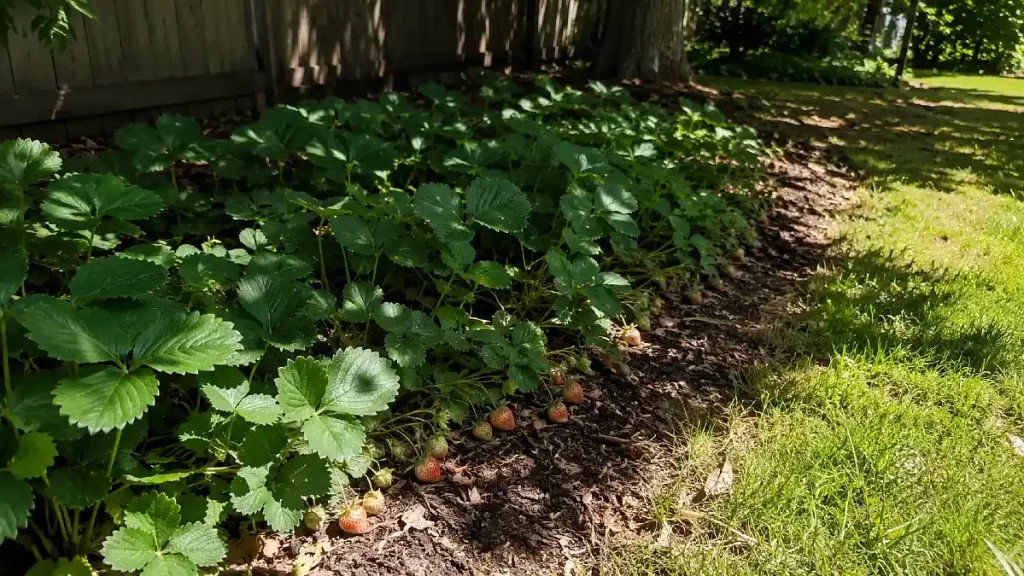
Start by watching your strawberry bed for one full day.
Strawberries need direct sunlight to make the energy used for flowering and fruit growth. Utah State University Extension recommends at least eight hours of full sun each day for maximum production. University of Minnesota Extension also advises planting strawberries in full sun for the best fruit crop.
A plant may survive in partial shade. It may also grow attractive green leaves. That does not mean it is receiving enough light to produce its best berries.
Shade can come from places you may not notice at first:
- A fence that blocks morning light
- A tree that has filled out since spring
- Tall tomatoes growing beside the bed
- A porch wall that shades plants after lunch
- Thick strawberry leaves covering smaller crowns
Track the hours when direct sun touches the leaves. Do not count bright shade as full sun.
Move pots and towers to the sunniest safe location. Trim nearby plants when possible. Avoid placing strawberries behind corn, tomatoes, sunflowers, or tall flowers.
You may not be able to move an established garden row during the growing season. In that case, improve the light you can control. Remove weeds, thin excess strawberry plants, and cut back plants that hang over the bed.
More light will not change an almost ripe berry overnight. It can help the remaining flowers and fruit. It can also help the plants store more energy for the next crop.
Mistake 2: The Soil Keeps Swinging Between Dry and Soaked
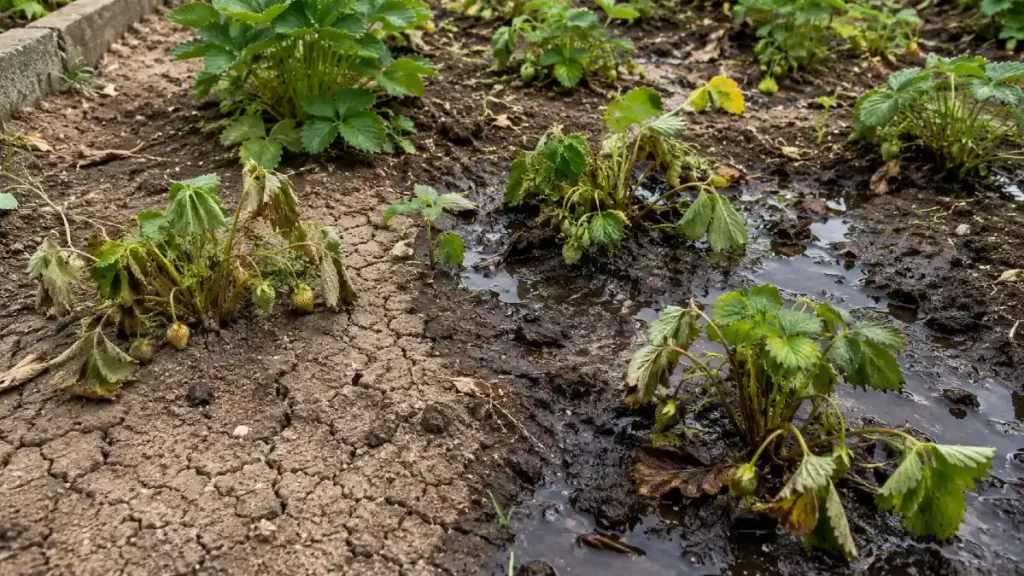
Small berries often begin with a watering problem.
Strawberry roots are shallow. University of Minnesota Extension notes that most of the root system sits in the top 6 to 12 inches of soil. That upper layer can dry quickly during warm, windy weather.
A plant may look fine in the morning but run short of water during the hottest part of the day. When this happens while the berries are expanding, fruit growth can slow.
Penn State Extension reports that timely irrigation can greatly increase strawberry size as the fruit enlarges. However, it also warns that too much water can dilute berry flavor.
That creates an important balance. The goal is steady moisture, not constantly wet soil.
Oregon State University Extension recommends about one inch of water per week during the growing season in many conditions. Sandy soil and very hot weather may require more. The soil should be moistened about 6 to 8 inches deep without remaining saturated.
Check the soil before watering. Push a finger or small trowel about two inches below the surface. Water when the soil at that depth feels dry rather than judging the bed by its top crust.
For more even moisture:
- Water deeply instead of giving a light daily sprinkle.
- Apply water near the soil rather than over the fruit.
- Use a drip line or soaker hose when possible.
- Add clean straw mulch around the plants.
- Check pots every day during hot weather.
- Empty saucers that leave container roots sitting in water.
Mulch slows moisture loss and reduces sudden swings between dry and wet soil. Keep it loose around each crown. Do not bury the center of the plant.
Drainage matters too. Strawberries can suffer in soil that stays wet for long periods. Penn State Extension notes that red stele root disease is most common in soil that remains saturated.
If water stands after rain, improve drainage before adding more irrigation. Raised beds can help in heavy soil.
Mistake 3: Runners and Crowded Plants Are Taking the Plant’s Energy
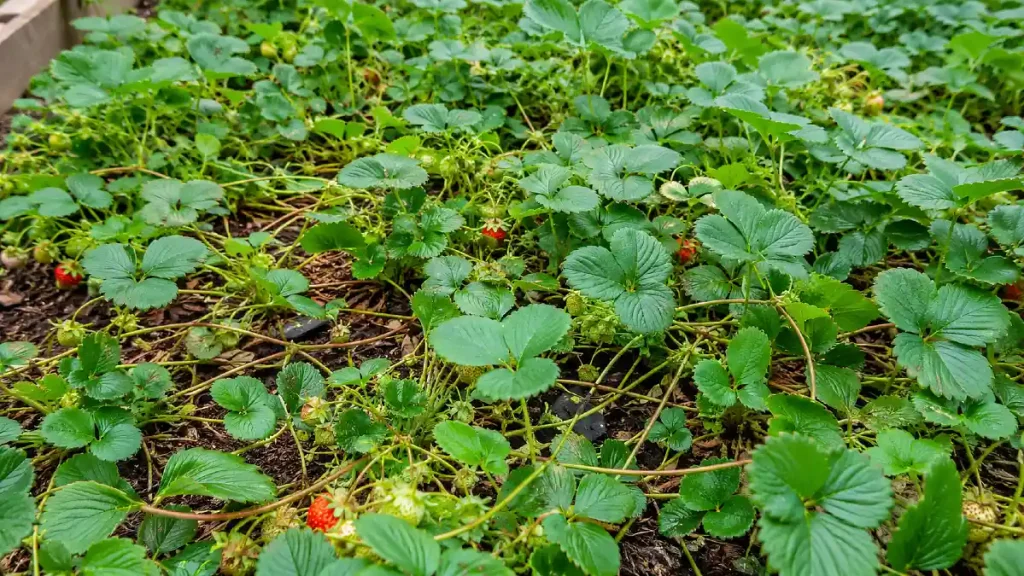
A thick strawberry patch may look productive. It can still produce disappointing fruit.
Each plant needs light, moisture, nutrients, and room around its crown. When runners fill every open space, the plants begin competing with one another. Weeds add even more competition.
University of Minnesota Extension lists weed pressure and overcrowding among the common causes of small or misshapen strawberries.
Runners are long stems that grow away from the mother plant. Each runner can form a daughter plant. This is useful when you want to expand a June bearing strawberry row.
It is less helpful when every runner is allowed to root.
The mother plant must send energy into the runner and the new plant. A crowded bed also blocks light from reaching lower leaves and developing berries.
The correct fix depends on the type of strawberry you grow.
For day neutral strawberries
Remove most runners. These plants are normally grown for repeated fruit production rather than for building a wide matted row.
Utah State University Extension explains that removing runners allows the mother plants to keep growing and producing fruit.
Cut each unwanted runner with clean scissors. Do not pull it hard enough to lift the mother plant from the soil.
For June bearing strawberries
Some runners can remain and root within the row. However, the row still needs limits.
University of Minnesota Extension recommends thinning crowded home garden beds and leaving the remaining plants about 6 to 8 inches apart. It also advises removing plants that have spread outside the intended row.
June bearing beds are commonly renovated soon after the final harvest. Renovation removes old leaves, narrows the row, controls weeds, and makes room for healthy new growth.
Narrower rows receive better light and airflow. University of Minnesota Extension connects this improved light penetration with better fruit quality.
Remove weeds carefully so you do not tear the shallow strawberry roots. Then decide which strong plants will stay. Weak, diseased, or badly placed plants should be removed first.
Mistake 4: Flowers Are Opening Without Complete Pollination
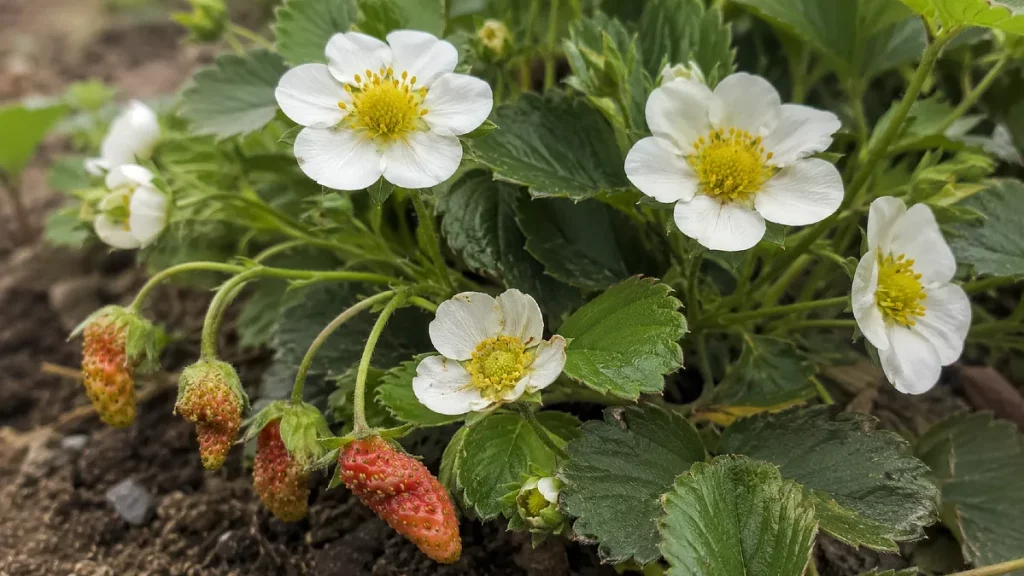
A strawberry flower needs pollen to reach many parts of the bloom.
Strawberries are self fertile, which means a flower does not need a separate male plant. However, insect visits still help move pollen around the flower. University of Minnesota Extension states that strawberry flowers require bees for effective pollination.
Incomplete pollination can create berries that are small, lumpy, flat on one side, or covered with hard green areas. The fruit may begin growing around the pollinated sections while the missed sections remain underdeveloped.
Pollination may be poor when:
- Cold weather keeps insects inactive
- Rain continues through the bloom period
- Strong wind limits insect visits
- Few flowering plants grow nearby
- Insecticides are used while flowers are open
- Strawberries are grown behind screens or indoors
Look closely at the fruit before assuming the plant needs fertilizer. A small but evenly shaped berry often points to water, crowding, plant age, or variety. A badly shaped berry makes poor pollination or insect damage more likely.
Encourage pollinators by growing several small flowering plants near the strawberry bed. Choose plants that bloom at the same time as your strawberries.
Avoid spraying open strawberry flowers. Even a product sold for garden pests can harm insects visiting the blooms. Follow every label direction and treat only when there is a confirmed need.
For a few container plants, you can move pollen by hand. Use a clean, soft artist’s brush. Gently touch the center and outer parts of each open flower, then move to the next bloom.
Do this during dry weather after the flowers have opened fully. It is useful in screened porches, balconies, and other places that receive few insect visits.
Mistake 5: Too Much Nitrogen Is Feeding Leaves Instead of Fruit
Fertilizer is often the first fix gardeners try. It should rarely be the first step.
Strawberries need nitrogen, phosphorus, potassium, and smaller amounts of other nutrients. The right amount supports healthy crowns, leaves, roots, flowers, and fruit.
Too much nitrogen can shift growth in the wrong direction.
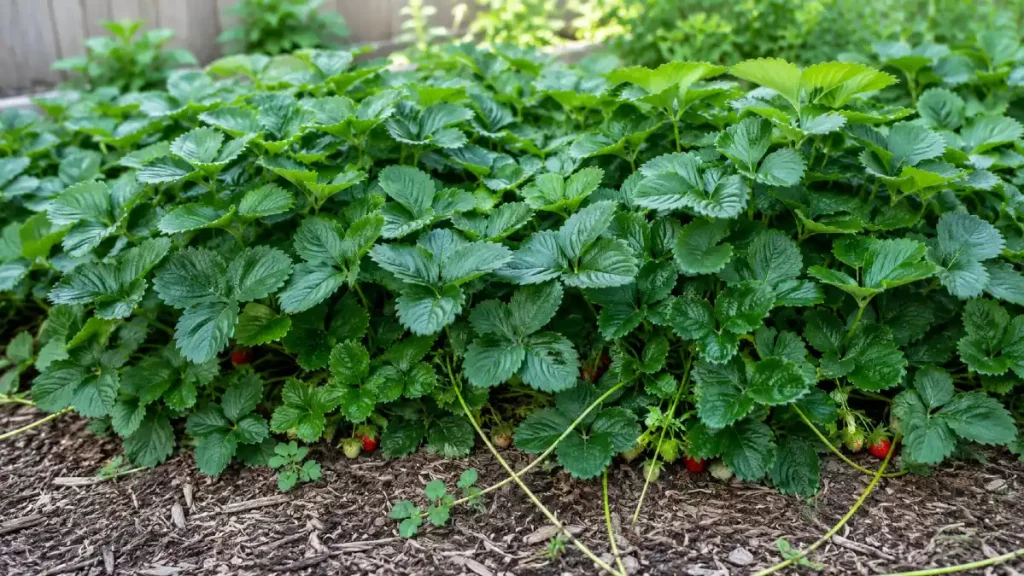
Nitrogen encourages leaves and runners. University of Minnesota Extension warns that nitrogen used before or during harvest can reduce fruit quality in medium or heavy soils. Excess nitrogen can also reduce yield and cause too much late growth.
Signs of excess nitrogen can include:
- Very dark green leaves
- Fast runner growth
- A thick mass of soft foliage
- Few flowers compared with the amount of leaves
- Fruit hidden inside a dense canopy
Do not add fertilizer just because the fruit is small. Check sunlight, moisture, spacing, pollination, and plant health first.
A soil test is the safest guide. University of Minnesota Extension reports that strawberries prefer slightly acidic soil, with a pH of about 5.3 to 6.5.
A soil test can show whether the pH or nutrient levels need correction. Your local extension office can also provide fertilizer guidance suited to local soil.
Avoid using lawn fertilizer around strawberries. Many lawn products contain a large amount of nitrogen. Some also contain weed control ingredients that are not meant for an edible strawberry bed.
Do not keep applying strong liquid feed every week without checking the label and plant response. Container strawberries may need regular feeding because water carries nutrients from the pot. They still need the correct amount.
Yellow older leaves and weak growth can point to low nitrogen. Dark leaves and heavy runner growth can point to too much. Neither symptom should be judged alone.
Root problems can also make a well fed plant look hungry. Utah State University Extension notes that black root rot can stunt plants, reduce runner growth, and cause small fruit.
Lift a failing plant if several nearby plants show the same decline. Healthy strawberry roots usually have light colored inner tissue. Dark, weak, rotting roots need more than another dose of fertilizer.
Mistake 6: You Are Picking the Berries Before Their Flavor Develops
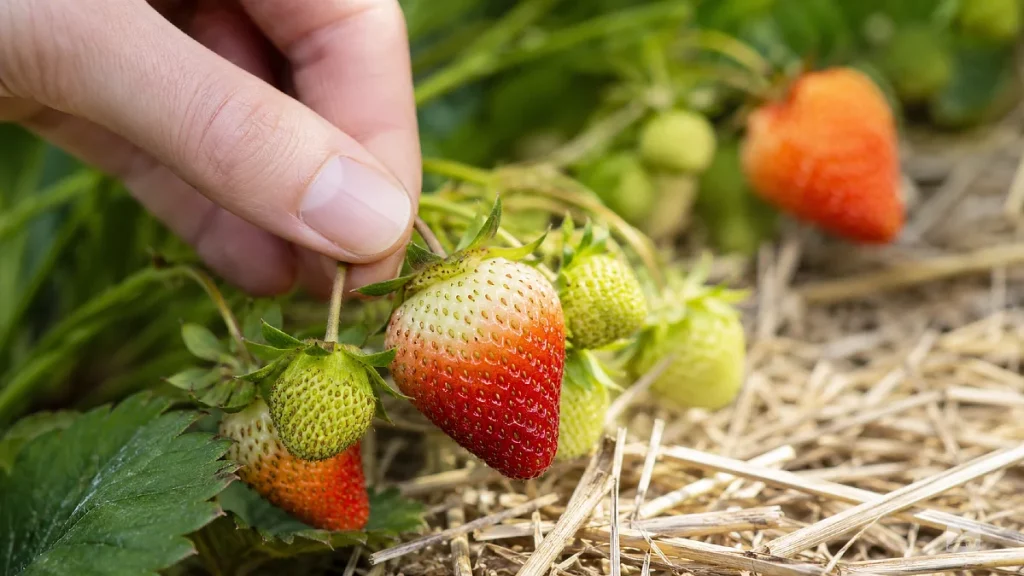
A berry can look red from across the garden and still be unripe near the cap.
Strawberries should finish ripening on the plant. Oregon State University Extension states that strawberries do not ripen properly after they are picked. Berries with white tops or pale tips were usually harvested too soon.
Color may deepen a little after picking, but color change is not the same as flavor development.
Oregon State University Extension notes that fruit can be picked when about 75 percent red for better storage. However, the flavor is much better when the berry is allowed to ripen fully on the plant.
Wait until the berry is red around the shoulders and beneath the leafy cap. Check the side hidden from the sun as well.
Pick during the cool part of the morning after the fruit has dried. Hold the stem just above the cap and pinch it rather than squeezing the berry.
Do not leave fully ripe fruit sitting for many extra days. Soft fruit attracts insects and develops rot quickly.
Berry size does not always predict sweetness
Some cultivars naturally produce smaller fruit. A small berry can still taste rich and sweet.
Oregon State University Extension states that berry size and shape do not determine flavor by themselves.
Weather also matters. Heavy rain close to harvest can weaken flavor. Penn State and Oregon State both warn that excess water during ripening may dilute berry flavor.
Hot weather can reduce the fruit size of certain cultivars. Penn State Extension notes, for example, that some varieties produce smaller berries during hot conditions.
Your strawberry type matters too:
- June bearing plants produce one main crop in late spring or early summer.
- Day neutral plants produce fruit over a longer season when temperatures are suitable.
- Everbearing plants usually produce more than one main flush.
Choose a cultivar suited to your climate rather than buying by the fruit photo alone. Local extension variety lists can help you compare flavor, fruit size, disease resistance, and heat tolerance.
Plant age can also limit the harvest. Oregon State University Extension says strawberry plants are generally productive for two to four fruiting seasons. Production can fall as an older bed becomes crowded or diseased.
An old patch that produces weak leaves and smaller fruit each year may need renovation or replacement. Start the new bed with healthy certified plants in fresh, well drained soil.
Use This Quick Check to Find the Real Cause
Several problems can happen at the same time. Use the fruit and plant as clues before changing your whole routine.
| What you see | Likely causes | What to check first |
|---|---|---|
| Small but evenly shaped berries | Dry soil, shade, crowding, old plants, variety | Sun hours and soil moisture |
| Lumpy or uneven berries | Poor pollination, frost, tarnished plant bug | Flowers, insects, and weather |
| Pale or white shoulders | Fruit picked too soon | Color beneath the cap |
| Heavy leaves with few berries | Excess nitrogen or too much shade | Fertilizer use and sunlight |
| Wilting plants with small fruit | Dry soil, wet roots, or root disease | Moisture and root condition |
| Many runners with little fruit | Crowding or unsuitable runner management | Plant spacing and strawberry type |
University of Minnesota Extension lists poor pollination, tarnished plant bug damage, frost, weeds, overcrowding, old beds, blossom disease, poor nutrient care, and dry soil as possible causes of small or deformed fruit.
Tarnished plant bugs deserve special attention when berries have hard, seedy tips or badly shaped sections. The insects feed on flowers and young fruit. Penn State Extension identifies them as common strawberry pests in home gardens.
Change one or two conditions at a time. Begin with the checks that do not cost anything:
- Count the hours of direct sun.
- Check moisture two inches below the surface.
- Look for crowded crowns and excess runners.
- Watch open flowers for bee visits.
- Review when and how much fertilizer you applied.
- Let several berries become fully red before picking.
This makes it easier to see which change improves the next group of berries.