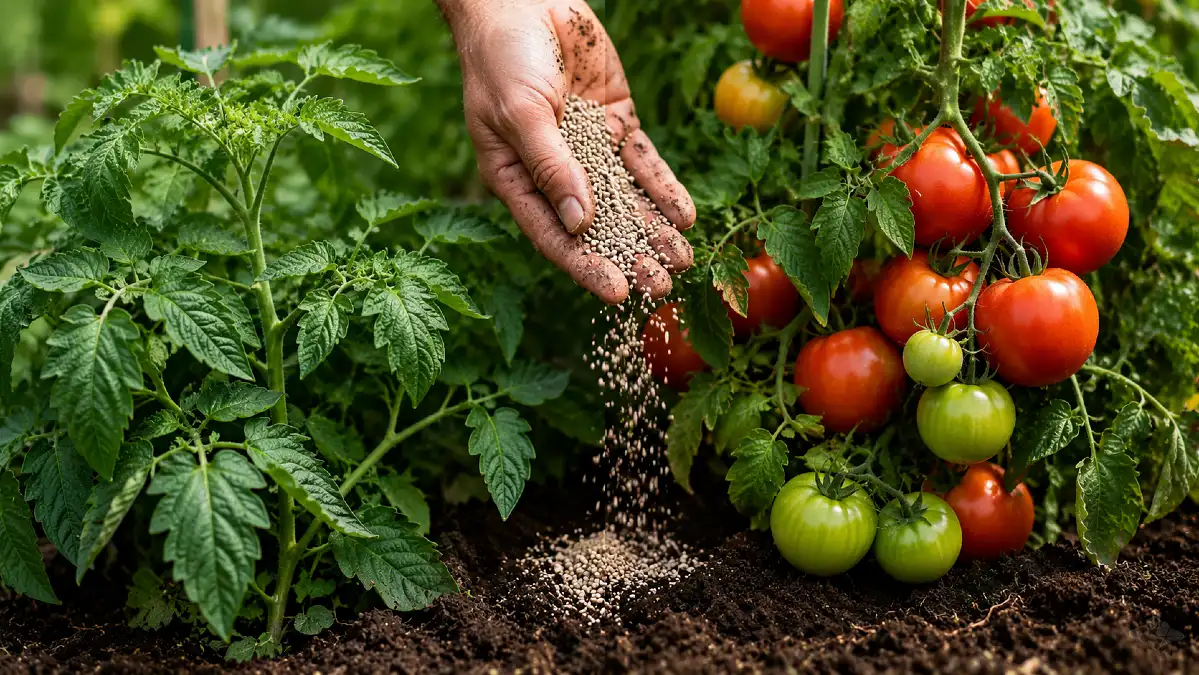
Your tomato plant looks healthy at first. Then it keeps growing taller, darker, and leafier, but hardly any tomatoes appear.
The problem may be sitting in the fertilizer bottle.
Many gardeners feed tomatoes every week because the label makes frequent use sound helpful. That schedule can work in some containers. It can be far too much for tomatoes growing in fertile garden soil.
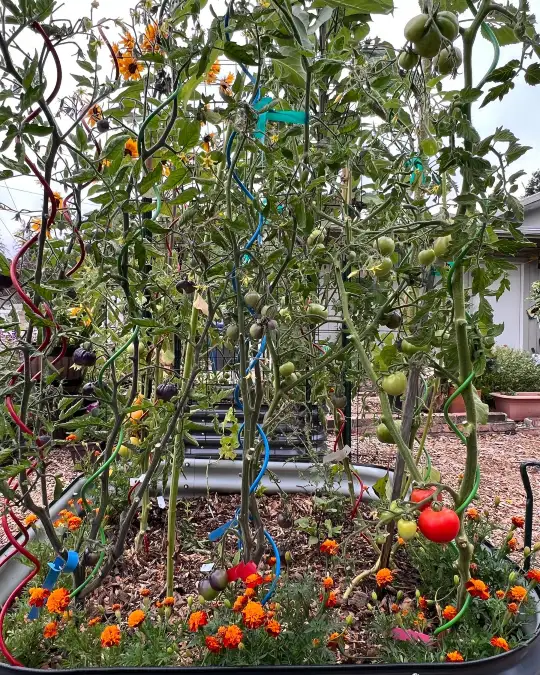
Too much fertilizer, especially nitrogen, can push a tomato plant to make stems and leaves instead of flowers and fruit. Penn State Extension warns that high nitrogen fertilizer can cause heavy foliage while delaying flowering and fruiting.
How Often Should You Really Fertilize Tomatoes?
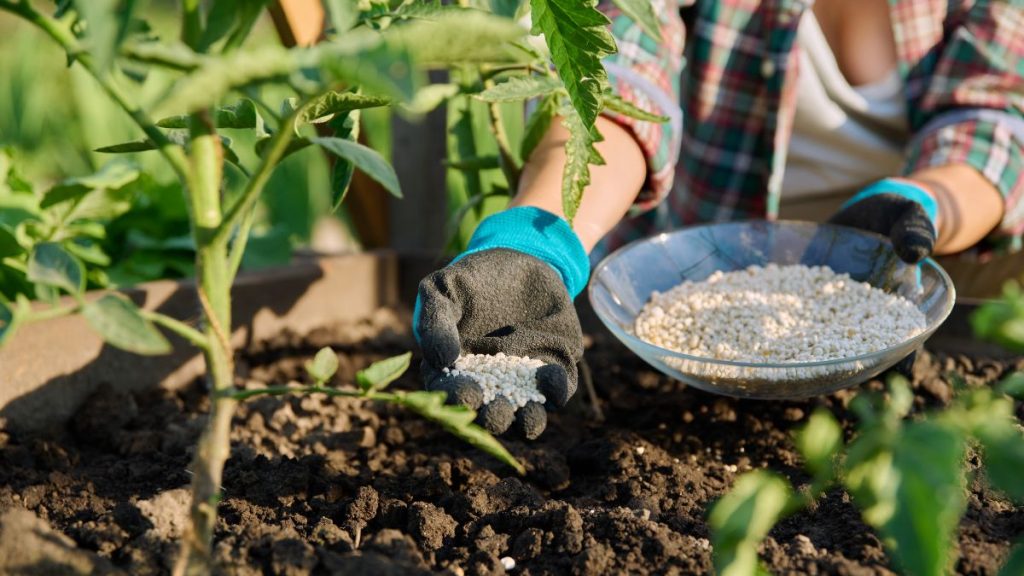
For most tomatoes planted in garden soil, start with this basic plan:
- Prepare the soil before planting.
- Use a mild starter feeding at transplanting only when needed.
- Feed again when the first tomatoes begin to enlarge.
- Add another feeding later only when growth, fruit load, and soil fertility support it.
That may mean only one or two fertilizer applications after planting.
University of Minnesota Extension recommends applying fertilizer beside the row when the first fruits begin to enlarge.
University of Maryland Extension gives similar guidance, recommending a starter fertilizer for transplants followed by a side dressing after the first fruits appear.
Utah State University Extension provides a different regional example. Its tomato guide suggests a small nitrogen side dressing at four and eight weeks after transplanting.
It also warns that overfertilizing can cause excess leaf growth and delay fruit set and maturity.
These recommendations are not truly in conflict. They show why one calendar cannot fit every garden.
Your schedule depends on:
- Existing soil nutrients
- Organic matter in the bed
- Fertilizer added before planting
- Tomato variety
- Plant size
- Fruit load
- Rain and irrigation
- Length of the growing season
- Whether the plant grows in soil or a container
The safest rule is simple: feed tomatoes at useful growth stages rather than automatically feeding every week.
Use This Simple Tomato Fertilizer Schedule
This schedule works as a starting point for tomatoes growing in raised beds or garden soil.
| Growth stage | What to do | When to skip it |
|---|---|---|
| Before planting | Add fertilizer according to a soil test | Skip phosphorus or potassium if levels are already high |
| At transplanting | Use a mild starter fertilizer if the soil is poor or the product is part of your plan | Skip it when the bed already contains fertilizer or rich compost |
| Early leafy growth | Watch the plant instead of feeding by habit | Skip nitrogen when growth is fast and foliage is dark green |
| First fruits enlarging | Apply a measured side dressing | Skip or reduce it if growth is already excessive |
| Heavy harvest period | Feed only when plants slow down and the season is still long | Skip it near the end of the season or when plants remain vigorous |
Before Planting
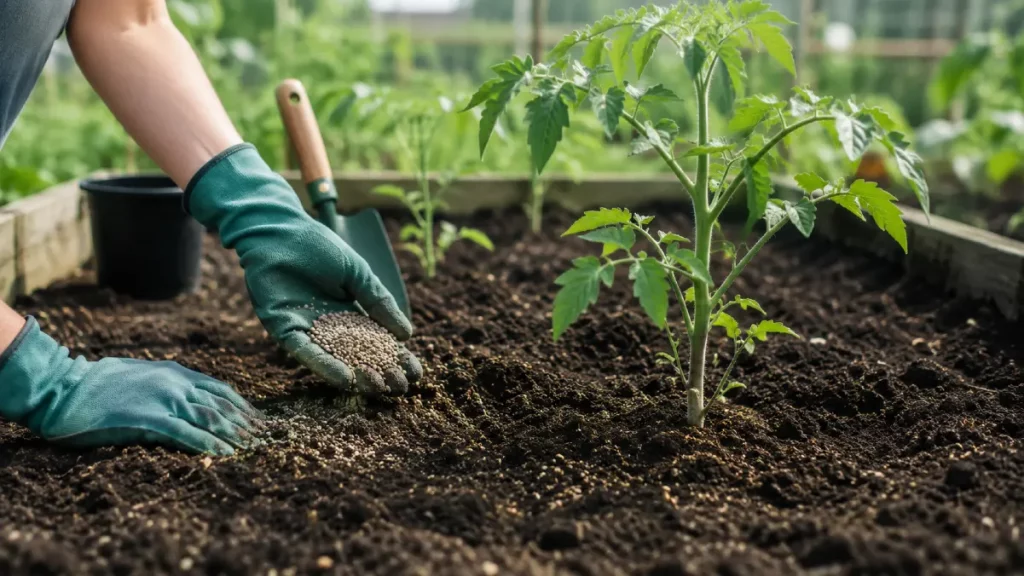
Begin with a soil test when possible.
A soil test can show whether the bed needs nitrogen, phosphorus, potassium, or a change in pH. It also helps prevent the common mistake of adding a complete fertilizer to soil that already has plenty of phosphorus and potassium.
Mixing finished compost into the bed can improve soil structure and water holding. But compost is not a precise substitute for testing. Its nutrient content varies.
Repeated heavy compost applications can also create problems. Utah State University Extension notes that applying compost based only on nitrogen needs can lead to excessive phosphorus and salt buildup over time.
At Transplanting
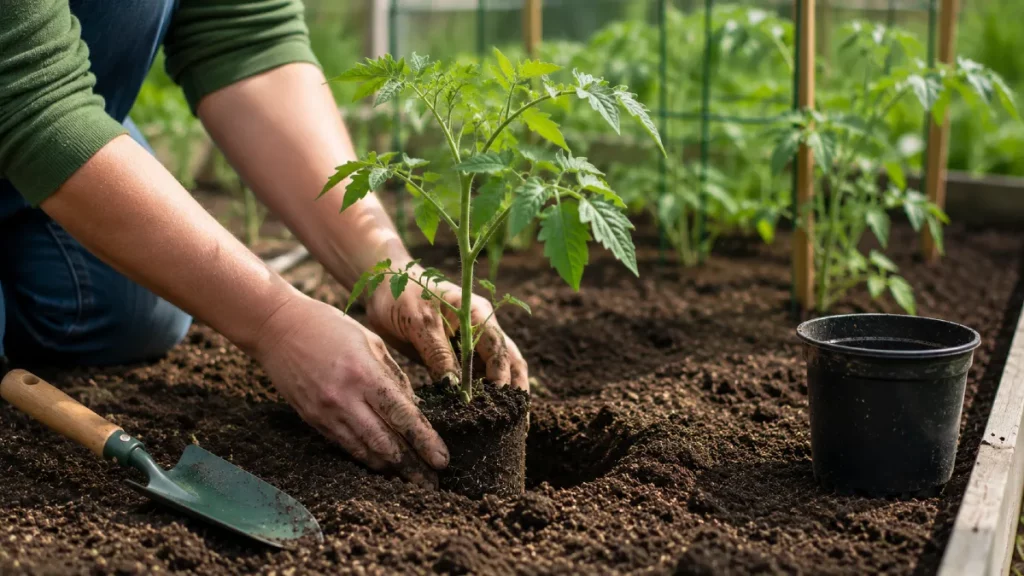
A mild starter fertilizer can help a transplant establish roots, especially in low fertility soil.
University of Minnesota Extension notes that fertilizer ratios such as 1 to 2 to 2 or 1 to 2 to 1 can suit transplants. This means the phosphorus and potassium numbers are equal to or higher than the nitrogen number.
Do not pile granular fertilizer into the planting hole unless the label clearly tells you to do so. Concentrated fertilizer touching young roots can injure them.
If you already mixed a labeled vegetable fertilizer into the bed before planting, another full dose at transplanting may be unnecessary.
During Early Leaf Growth
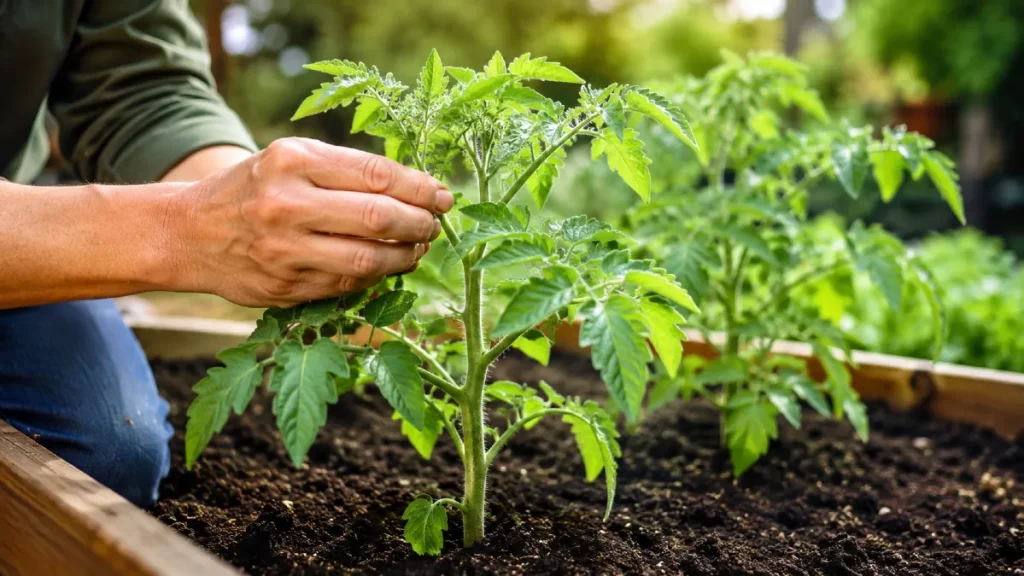
New transplants need time to build stems, roots, and leaves. Yet this is where many gardeners begin overfeeding.
Healthy green growth does not need to be pushed faster.
Hold fertilizer when the plant is:
- Growing several inches each week
- Producing large, deep green leaves
- Developing thick stems
- Reaching beyond its support
- Making very few flower clusters
These are signs that the plant already has access to plenty of nitrogen.
When the First Fruits Begin Growing
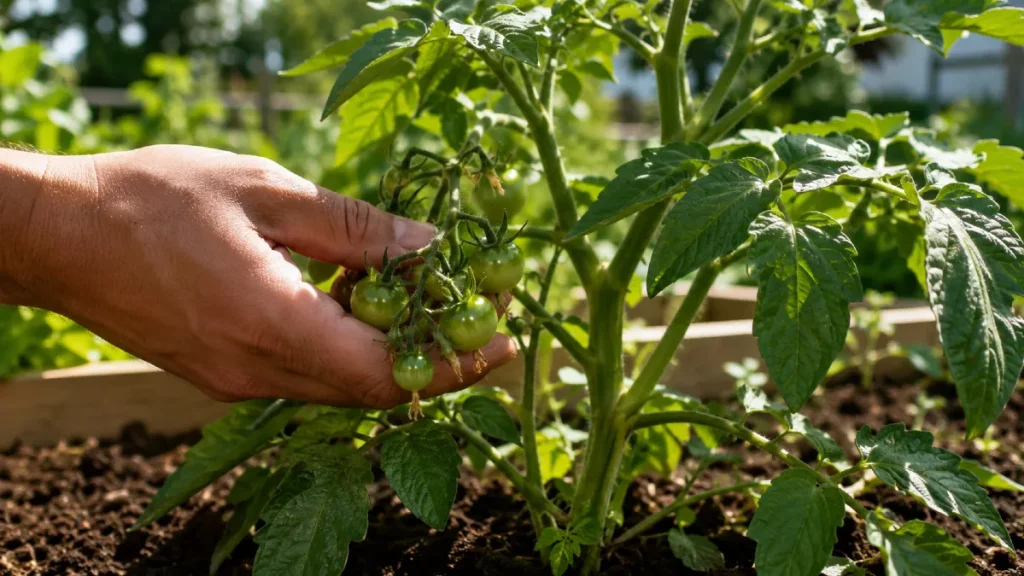
This is often the most useful time for a side dressing.
The plant is now supporting roots, leaves, flowers, and developing fruit. University of Minnesota Extension recommends feeding when the first fruits begin to enlarge.
University of Maryland Extension advises side dressing fruiting vegetables when the first fruits start to form.
Follow the amount printed on your product label. Fertilizer strength varies too much to give one safe spoon measurement for every formula.
During the Main Harvest
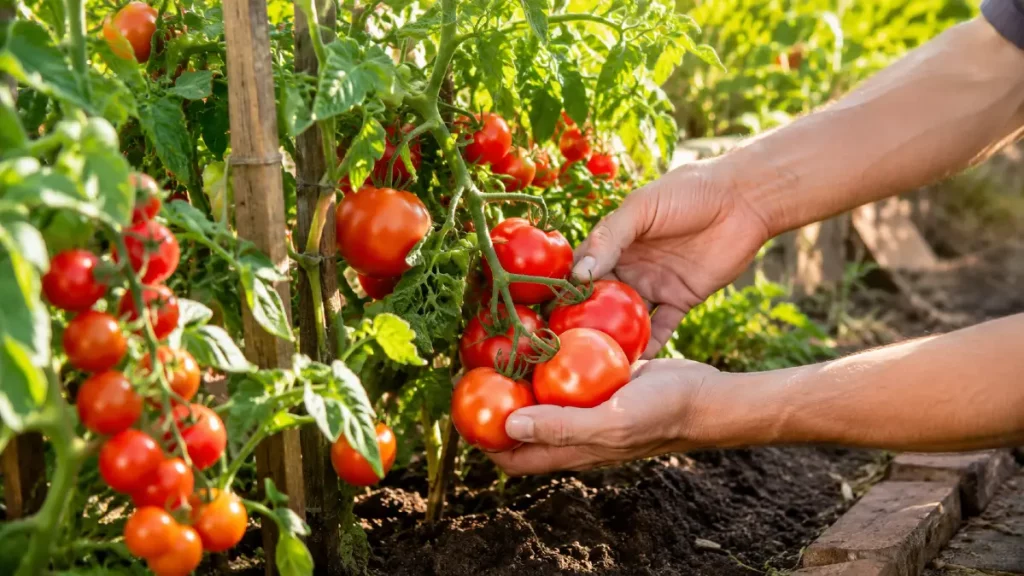
A second side dressing may help tomatoes that carry a heavy crop through a long season.
Do not apply it just because several weeks have passed. First check the plant.
Another measured feeding may be reasonable when:
- New growth has become weak
- Older leaves are losing color without signs of disease
- The plant has a heavy fruit load
- The soil is sandy and nutrients drain quickly
- Rain has been unusually heavy
- The growing season has many productive weeks left
Skip the feeding when the plant remains dark green, fast growing, and full of new stems.
Why Weekly Feeding Is Often Too Much for Garden Tomatoes
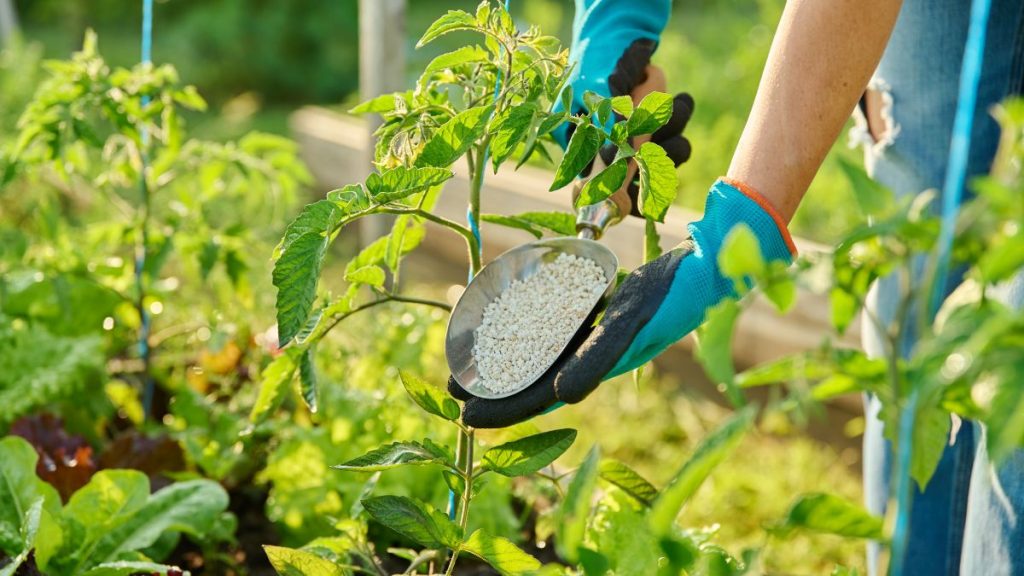
Tomatoes need nitrogen. They use it to build chlorophyll, leaves, stems, proteins, and new growth.
The problem begins when nitrogen stays available in larger amounts than the plant needs.
A heavily fed tomato may look impressive. It can become tall and lush, with thick stems and large leaves. Yet its flower production may slow, and fruit may appear late.
Penn State Extension advises against adding more fertilizer or using a high nitrogen product when tomatoes are making heavy foliage because it can delay flowering and fruiting.
Utah State University Extension also warns that overfertilizing tomatoes encourages excess leaf growth and delays fruit set and maturity.
This is why weekly feeding can be wasteful in a well prepared garden bed.
The plant may already receive nutrients from:
- Native soil
- Compost
- A fertilizer mixed in before planting
- A starter fertilizer
- Decomposing mulch
- Previous garden amendments
- Irrigation water in some areas
Adding another dose every seven days can stack one nutrient source on top of another.
More fertilizer does not force a tomato plant to make more tomatoes. The plant also needs enough sunlight, steady moisture, suitable temperatures, pollination, healthy roots, and protection from disease.
Fertilizer can support those systems. It cannot replace them.
Feed Tomatoes in Containers More Often Than Garden Plants
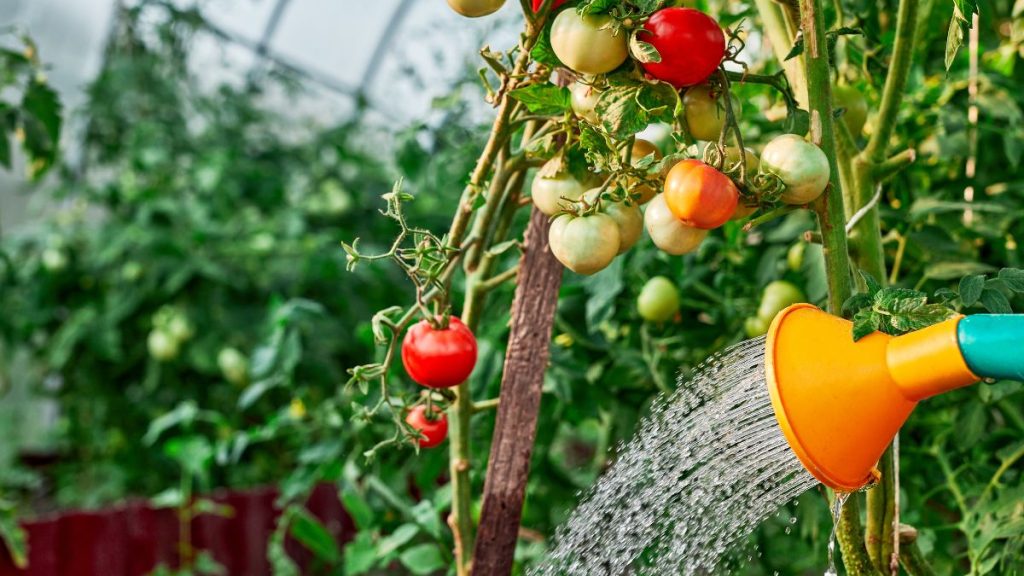
Potted tomatoes need a different plan because containers hold a limited amount of growing mix.
Each deep watering carries some soluble nutrients through the drainage holes. Hot weather can make this happen more often because containers may need daily watering.
University of Minnesota Extension recommends starting regular fertilizer applications about two to six weeks after planting container plants. The exact timing depends on the potting mix, watering pattern, and rate of growth.
A practical container schedule might look like this:
When the Potting Mix Contains Slow Release Fertilizer
Wait until the period stated on the potting mix or fertilizer label begins to end.
Do not assume you must add liquid fertilizer from the first week. Combining a full dose of slow release fertilizer with frequent liquid feeding can give the plant more nutrients than expected.
When the Potting Mix Contains No Fertilizer
Begin feeding after the plant becomes established, often within two to six weeks.
Use the tomato or vegetable directions on the product. Some liquid products call for feeding every one or two weeks. Others are stronger and need more time between doses.
When the Container Is Small
Small pots dry faster and lose nutrients faster. They also leave less room for roots.
A large tomato should generally grow in a roomy container with drainage holes. Even with regular fertilizer, a root crowded plant may struggle to take up water and nutrients.
When Growth Becomes Excessive
Pause feeding even if the calendar says another application is due.
Container tomatoes can also become overfertilized. A schedule is a guide. The plant’s growth still matters.
7 Signs You Are Fertilizing Tomatoes Too Often
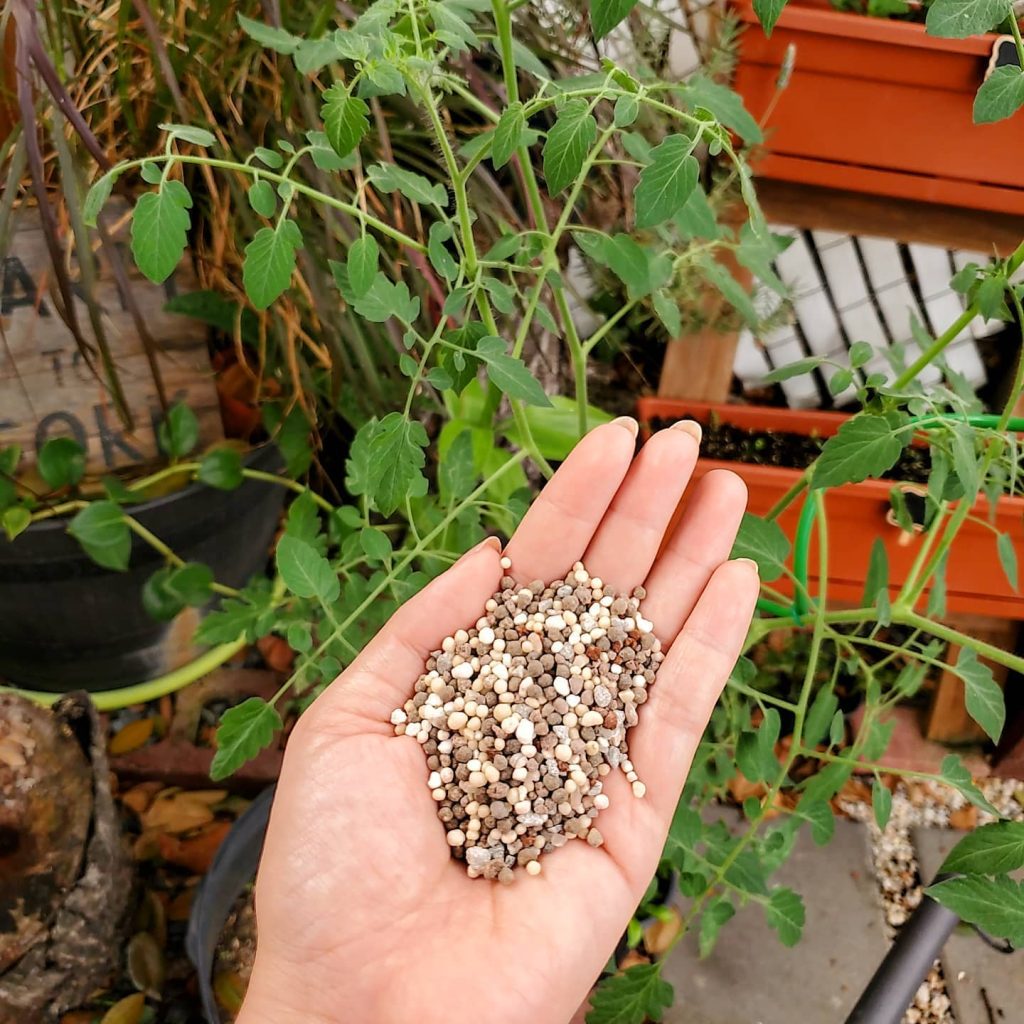
One odd leaf does not prove overfertilization. Look for a pattern across the whole plant.
1. The Leaves Are Very Dark Green
Dark green leaves can be healthy. But unusually dark, thick foliage paired with poor flowering often points to excessive nitrogen.
Compare the plant with nearby tomatoes of the same variety. Some varieties naturally have darker or larger leaves.
2. The Plant Makes Stems Faster Than Flowers
A tomato that keeps producing long stems and side shoots may be receiving more nitrogen than it needs.
Stop feeding and give the plant time to shift from leafy growth to flowering.
3. Flowering Starts Late
Temperature, shade, transplant stress, and variety can all delay flowering.
Still, excessive nitrogen is a known cause of delayed flowering and fruiting. Penn State Extension specifically warns about this pattern in tomatoes.
4. Flowers Appear but Fruit Set Is Poor
Do not blame fertilizer first.
Tomato flowers may fail to set fruit during very hot or cool weather. Poor pollination, low light, dry soil, and high humidity can also play a role.
But when poor fruit set appears beside thick, rapid, leafy growth, overfeeding becomes more likely.
5. Leaf Edges Turn Brown Soon After Feeding
Concentrated fertilizer can damage roots. This makes it harder for the plant to take up water, so leaf tips and edges may dry out.
Fertilizer injury can resemble drought stress. Check when symptoms began and whether fertilizer was recently placed close to the stem.
6. The Plant Wilts in Moist Soil
A plant that wilts while the soil remains moist may have stressed or damaged roots.
Fertilizer is one possible cause. Root disease, poor drainage, heat, and transplant damage can produce similar symptoms.
Do not add more fertilizer to a wilted plant until you know what caused the problem.
7. A White Crust Appears on the Potting Mix
A pale crust on container soil or along the pot rim can be a buildup of fertilizer salts or minerals from water.
Stop feeding for a time. Water the container thoroughly and let extra water drain away. Never let the pot sit in the drained water.
Penn State Extension recommends allowing some water to drain from fertilized containers to help reduce salt buildup.
What to Do After Overfertilizing a Tomato Plant
Act quickly, but do not add a second product to correct the first one.
For Tomatoes in Garden Soil
- Remove any visible fertilizer granules near the plant.
- Stop all feeding.
- Water the root zone deeply if the soil drains well.
- Keep moisture steady over the following weeks.
- Wait for growth to settle before deciding what the plant needs.
Do not flood heavy clay soil. Waterlogged roots can create a new problem.
For Tomatoes in Containers
- Remove loose fertilizer from the surface.
- Check that the drainage holes are open.
- Slowly run water through the pot.
- Let all extra water drain.
- Repeat only when the mix has drained well and the plant is not sitting in water.
- Pause fertilizer until normal growth returns.
Severely damaged roots may not recover at once. Avoid pruning large amounts of healthy foliage during the same period because the plant is already stressed.