
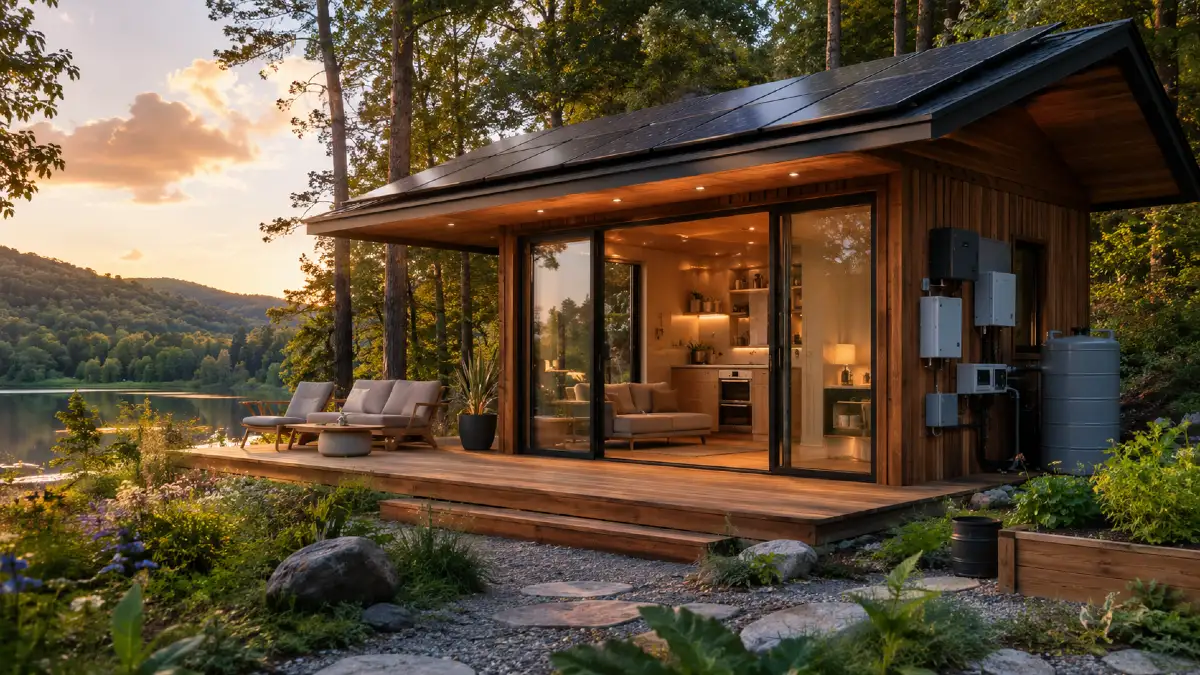
You like the idea of getting away from utility bills, crowded neighborhoods, and houses packed with things you never use.
Then you picture the other side of off grid living.
Weak water pressure. A dark cabin. Limited electricity. A tiny kitchen where you can barely cook. A bathroom that feels more like camping than living.
That does not have to be the plan.
Modern off grid homes can combine solar power, battery storage, rainwater systems, comfortable furniture, real kitchens, warm bathrooms, good lighting, and clean interiors. The U.S. Department of Energy confirms that solar paired with storage can save energy for later use, including periods when the panels are producing little or no electricity.
The trick is deciding where comfort matters most.
These ideas show how an off grid home can feel less like a survival shelter and more like a well planned modern house.
1. Let Solar Power Handle Daily Life
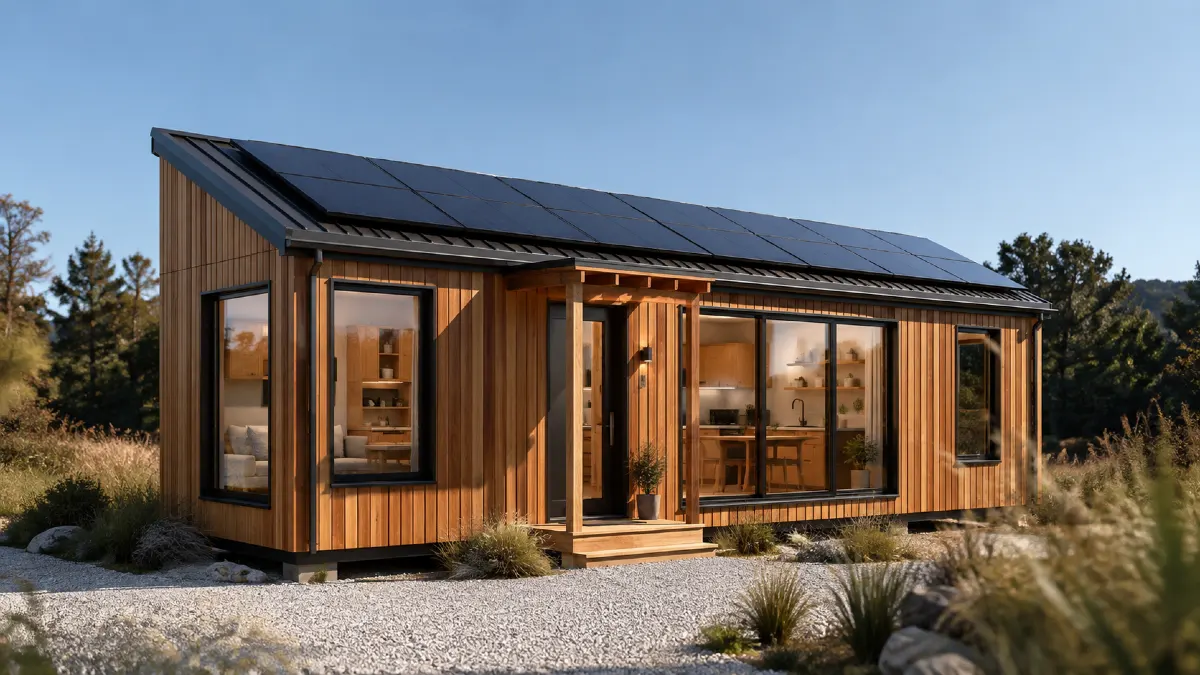
A comfortable off grid home starts with enough electricity for the life you actually live.
That means thinking about your refrigerator, lights, water pump, laptops, fans, heating equipment, cooking appliances, and other daily loads before choosing a solar system.
The Department of Energy notes that solar production changes with sunlight, shade, clouds, weather, and time of day. That is why simply filling a roof with panels is not a complete plan.
A better house starts with lower energy demand.
You might choose:
- LED lighting
- An efficient refrigerator
- Good insulation
- A smaller water heater
- Efficient ventilation
- Appliances sized for the number of people living there
The roof design matters too.
A simple shed roof gives you one clean surface for the solar array. The panels can sit together instead of looking like equipment added after the house was finished.
That small design choice makes the whole building look more intentional.
2. Store Enough Power for Nights and Cloudy Days
Solar panels solve only part of the electricity problem.
You still want lights after sunset. You may want to run a refrigerator all night. Your water pump needs to work when you turn on the tap.
That is where battery storage changes the experience.
The Department of Energy says storage lets you save electricity produced by solar panels and use it later.
Current systems can also combine several pieces of equipment. Tesla’s Powerwall 3, for example, includes an integrated solar inverter. Tesla also offers expansion units for added battery capacity.
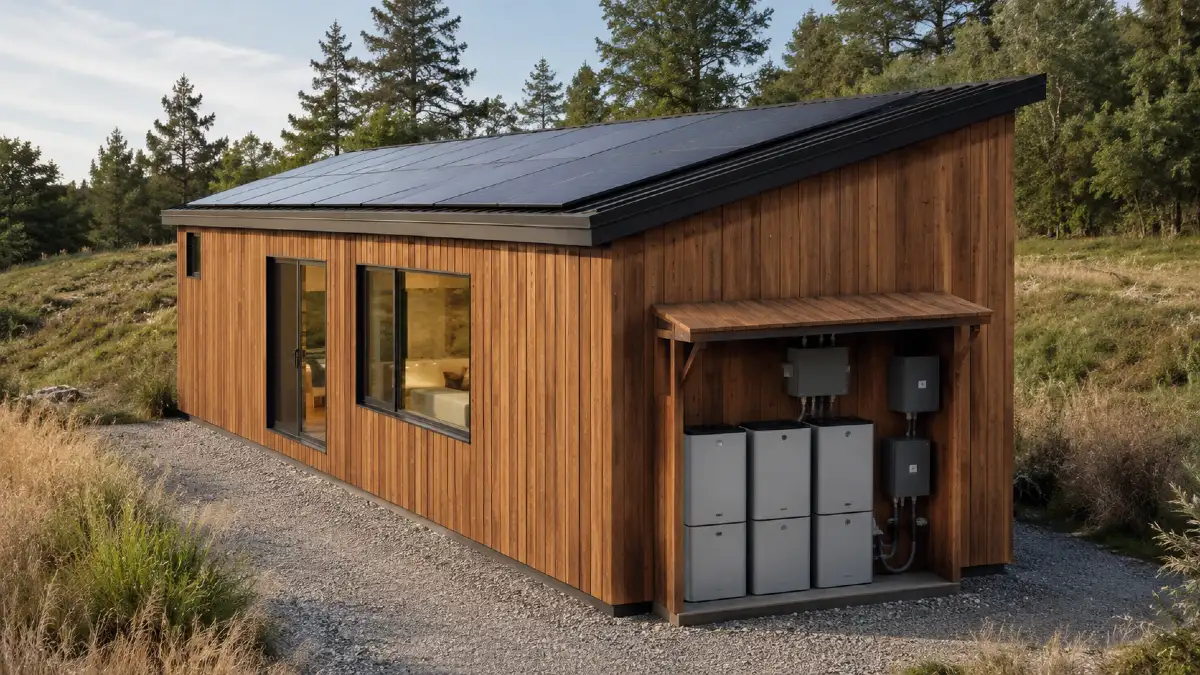
Your own system may use another brand entirely. The important part is sizing it around your real use. Also think about where the equipment goes. Batteries, disconnects, electrical panels, and controls do not need to become part of the living room decor.
A clean exterior utility wall or dedicated equipment room keeps the house quiet visually.
You still need easy access for service.
That balance matters.
3. Make Rainwater Collection Part of the Architecture
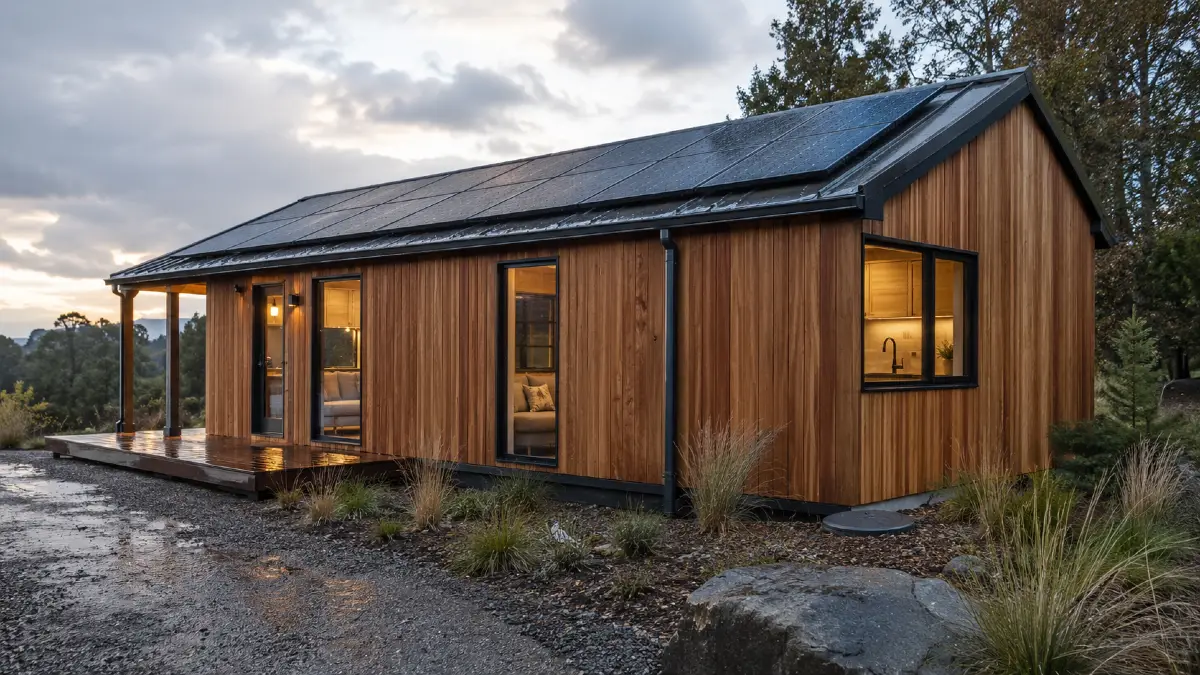
Water storage does not have to make your property look like a work site.
The roof can become part of the collection system.
Rain lands on the roof, moves through gutters, passes through the planned treatment system, and enters storage. What happens after that depends on your location and how the water will be used.
The visual trick is simple.
Hide the bulky parts.
Dwell has featured a 301 square foot cabin on Bruny Island with roof mounted solar panels and rainwater tanks placed underground. The tanks stay out of sight while the house keeps its clean form.
That is a smart lesson even if you build somewhere completely different.
Think about:
- Clean roof lines
- Simple gutters
- Easy filter access
- Tank overflow planning
- Pump access
- Local rules for drinking water
- Separate outdoor water where useful
Do not choose tank size from appearance alone.
Rainfall, roof area, household use, and the length of dry periods all matter.
4. Build a Bathroom That Uses Less Water
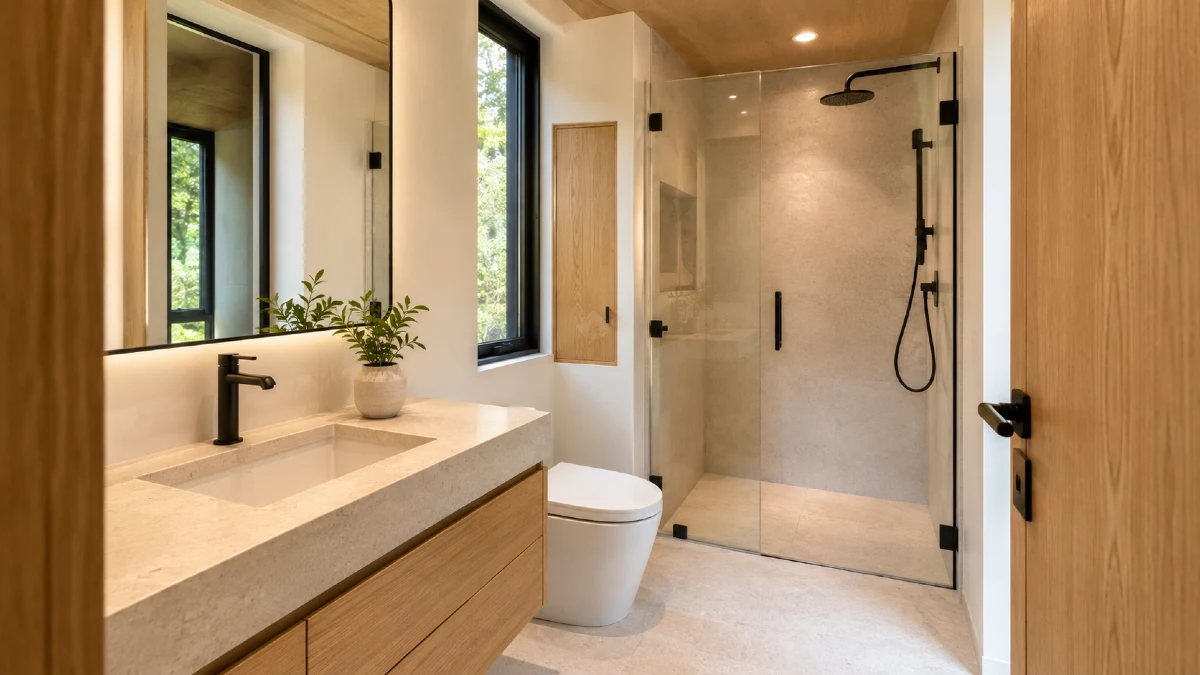
A nice shower feels even better when you are not watching the water tank drop faster than expected.
Water saving fixtures make sense in almost any house. They matter even more when you collect, pump, treat, or transport your own supply.
EPA says WaterSense labeled toilets can cut toilet water use by 20 to 60 percent compared with older inefficient toilets for the average family.
That is a useful place to start.
You can also look for an efficient shower fixture that gives you comfortable spray without using more water than necessary.
Keep the room itself simple.
A good off grid bathroom might have:
- A compact floating vanity
- A large shower
- Closed storage
- Easy to clean surfaces
- Good ventilation
- Water saving fixtures
- Access to plumbing from one service wall
Putting several plumbing fixtures near one another can simplify the system.
And you do not need to make the room look rustic just because the house is off grid.
Warm stone, natural oak, black fixtures, and soft lighting can feel every bit as finished as a bathroom in a larger house.
5. Keep a Real Kitchen Without Wasting Space
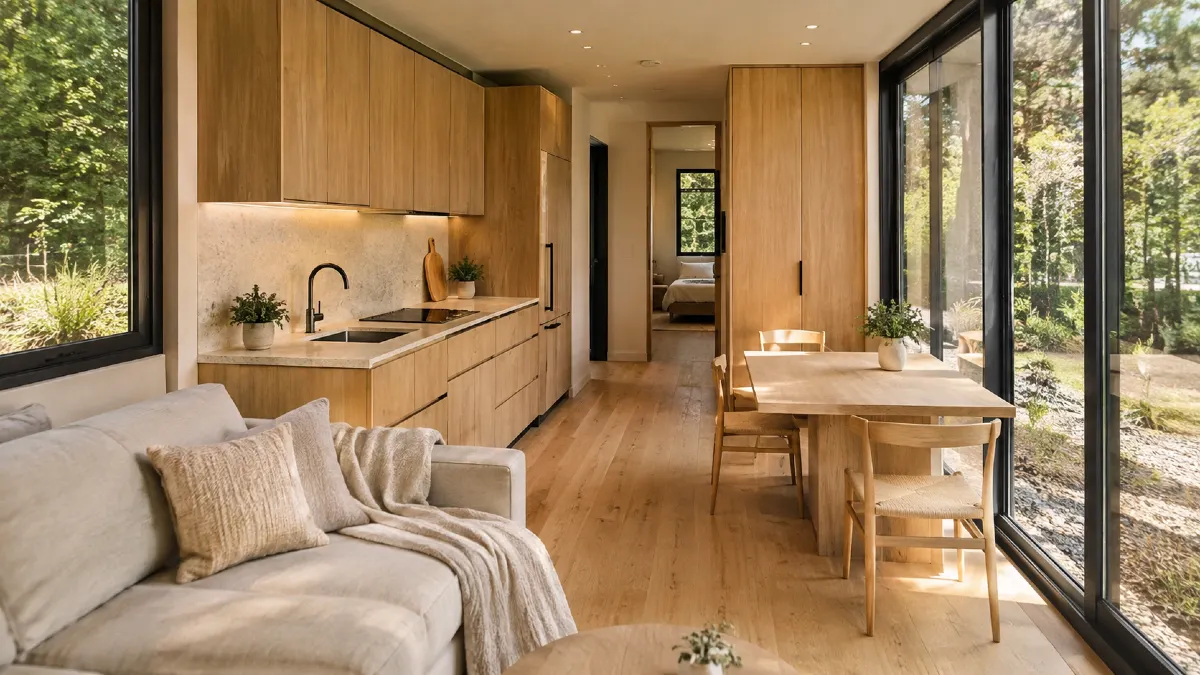
You should not have to cook like you are camping just because your home is small.
The best compact kitchens protect the jobs you perform every day.
You need enough room to wash, cut, cook, store food, and put things away.
Start with the counter.
One long clear work surface is often more useful than several tiny pieces of counter broken up by appliances.
Then use drawers below.
Deep drawers let you see pans, bowls, plates, and food without searching through the back of a dark cabinet.
A practical layout can include:
- An induction cooktop when your electrical system supports the load
- A deep sink
- A compact refrigerator
- Tall pantry storage
- Full extension drawers
- Closed upper cabinets
- A short open shelf for daily items
Your dining table can work harder too.
IKEA’s NORDEN gateleg table is a real example of this idea. It folds down to a narrow footprint, opens when more table space is needed, and includes drawers.
That is the kind of furniture that makes a small house easier to use.
6. Use the Building Shell to Stay Comfortable
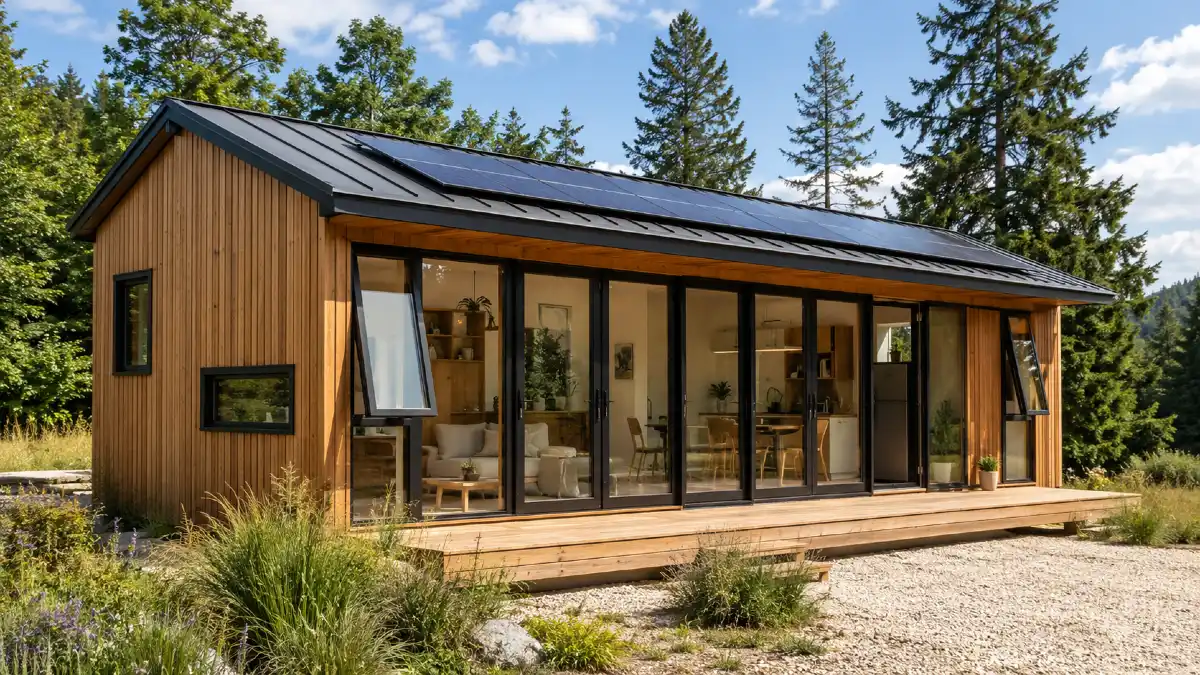
The cheapest electricity is the electricity you never need to produce.
That is why insulation, air sealing, shade, and window placement matter so much in a modern off grid house.
Poorly built shell forces the heating and cooling equipment to work harder. Then you need more power. And that may lead to more panels and more battery storage. Good windows also need good placement.
A huge wall of glass can be beautiful, but it should make sense for your climate.
You may need:
- Roof overhangs
- Exterior shading
- High quality windows
- Cross ventilation
- Thick insulation
- Careful air sealing
- Less glass on harsh exposures
Best choice depends on the site. A cold mountain location and a hot dry property do not need the same building. This is one place where looks should follow climate.
When the shell works well, the interior feels more stable and the mechanical equipment has less work to do.
That is real comfort.
7. Give the Living Room Full Size Comfort
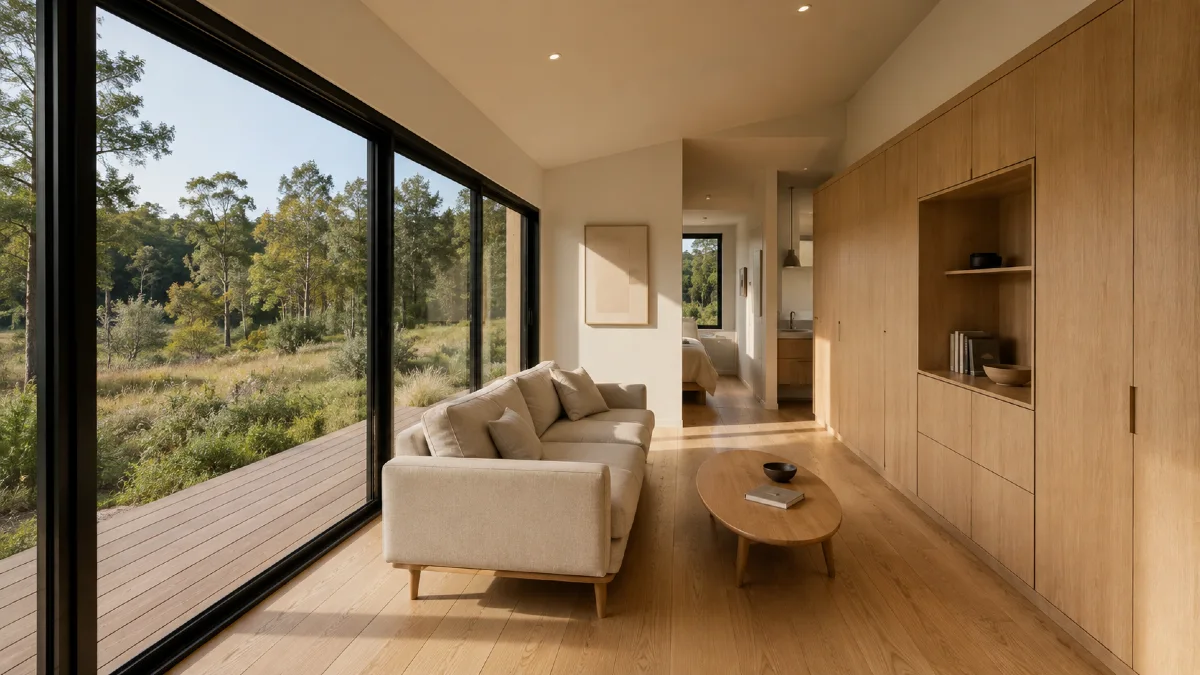
Small does not have to mean uncomfortable.
One good sofa is often better than filling a tiny living room with several small chairs, stools, tables, and storage pieces. Choose the main seat first. Then protect the walking path around it.
Furniture raised slightly above the floor can also make more of the floor visible. That helps a compact room feel less packed.
Multifunction furniture is useful when it solves a real problem.
IKEA continues to show small homes using furniture that combines seating, sleeping, and storage. Its FRIHETEN range is one example of seating that can also provide sleeping space and built in storage.
You do not need every piece of furniture to perform three jobs.
Sometimes a sofa should simply be a comfortable sofa.
Pair it with:
- One small coffee table
- A wall mounted reading light
- Closed storage
- A washable rug
- A wide view outside
That can be enough.
8. Make the Bedroom Feel Calm Instead of Cramped
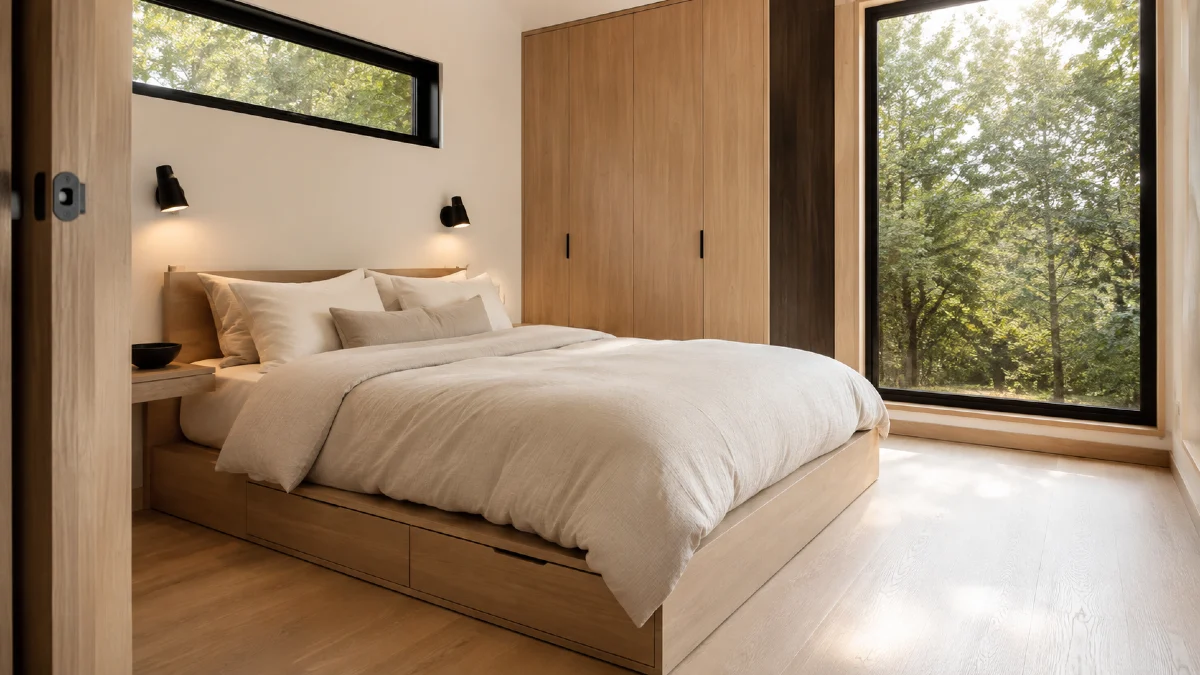
Your bedroom should be the quietest room in the house. That becomes harder when every object is visible.
Closed storage helps.
Put clothing in a full height wardrobe. Use drawers under the bed for extra bedding. Replace bulky bedside tables with narrow ledges.
Then keep the palette simple.
Warm neutrals work especially well with wood because they add softness without fighting the natural grain.
Sherwin Williams named Universal Khaki SW 6150 its 2026 Color of the Year. Its 2026 forecast also includes modern neutrals and deeper restorative colors.
Benjamin Moore went darker with Silhouette AF 655, a rich espresso shade with charcoal notes.
You do not need to copy either color.
The useful lesson is the mix.
Warm oak, creamy walls, soft beige fabric, and one deep brown or charcoal accent can create depth without making a small room busy.
Finish with two wall lights and a good window.
Then stop decorating.
The empty space is doing part of the work.
9. Hide the Mechanical Systems
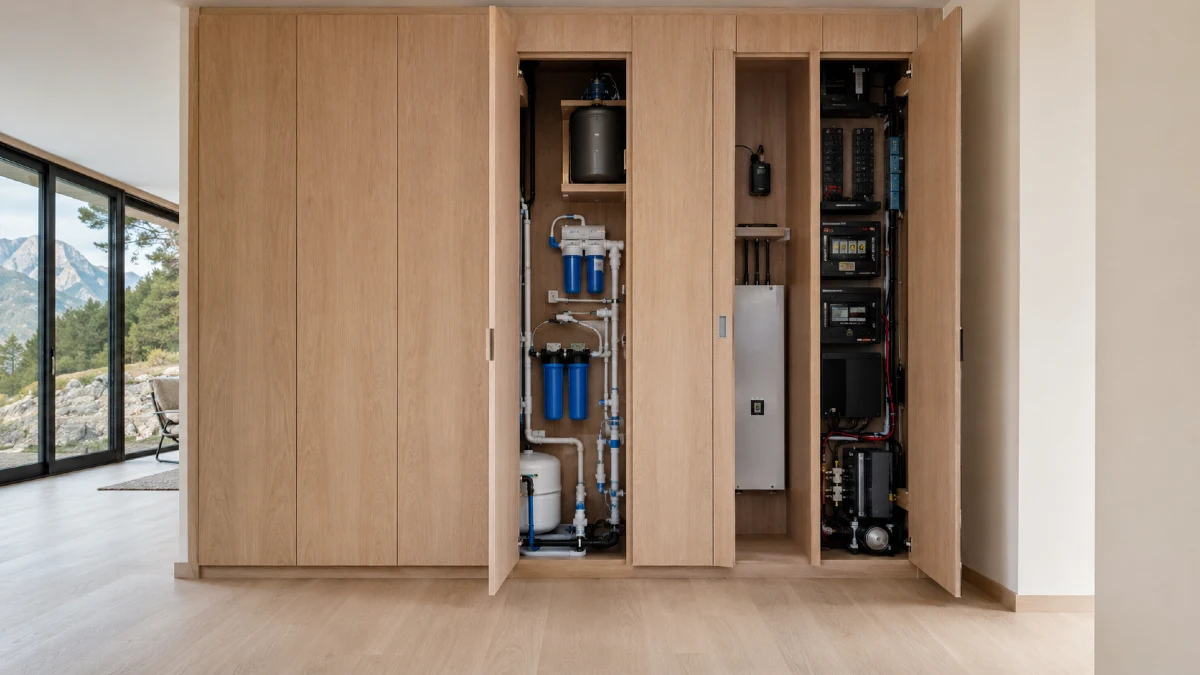
Off grid homes need equipment. That does not mean you need to stare at it all day.
The cleanest homes create a proper service zone for batteries, water pumps, filters, controls, valves, electrical gear, and other equipment.
This can be:
- An exterior utility cabinet
- A protected service room
- A mechanical closet
- A small attached utility space
Keep the noisy equipment away from the bed if you can.
At the same time, do not bury important parts behind permanent finishes. Filters need changing. Pumps may need service. Electrical equipment requires proper clearances and safe access.
The goal is hidden but reachable.
Inside the house, use cabinet fronts that match the kitchen or storage wall.
A visitor sees a simple oak wall.
You know that part of it contains the systems that keep the house running.
That is much better than placing pumps, wires, monitors, and plumbing across visible walls because there was nowhere else to put them.
Plan the service space before the pretty finishes.
10. Create a Work Zone That Barely Takes Up Space
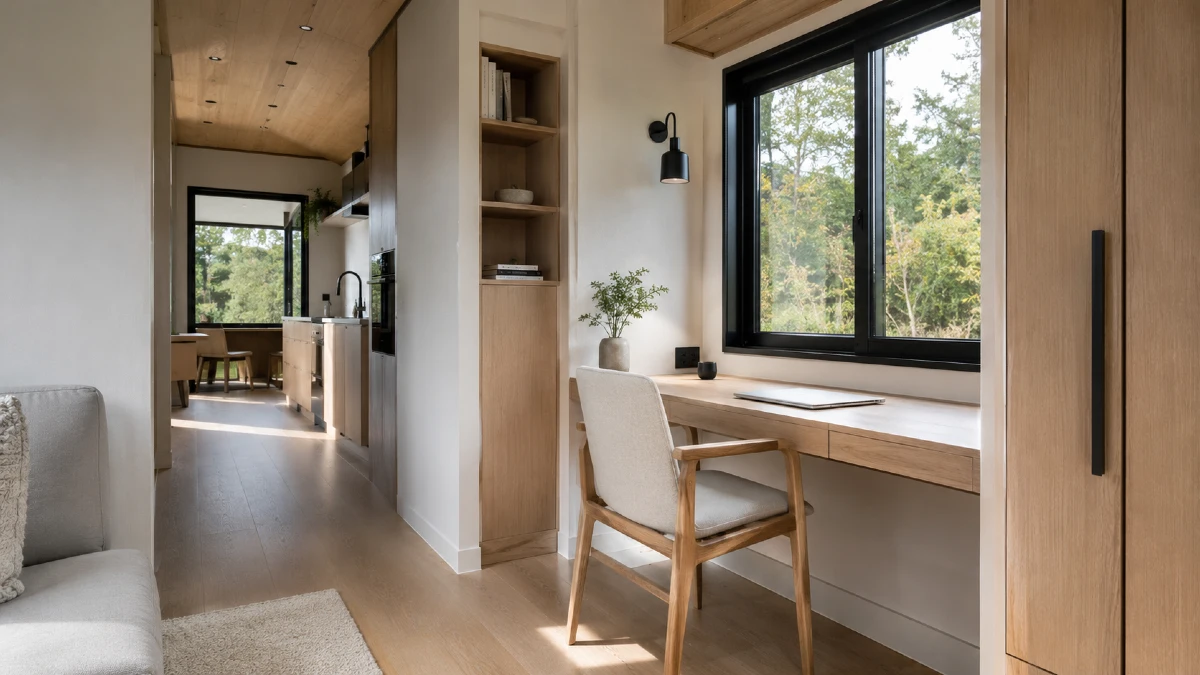
Living away from town does not mean you stop needing a desk.
A permanent work surface can be more useful than clearing the dining table every time you open a laptop.
You do not need a separate office.
A desk about the width of a small window can be enough for many people.
Give it:
- A comfortable chair
- Two electrical outlets
- USB charging
- A focused task light
- A shelf
- Closed cable storage
- Natural light
Put network equipment somewhere easy to reach.
If your internet setup uses a router, modem, satellite equipment, or another receiver, plan the wiring before the walls are finished.
Power matters here too.
Laptops and network equipment may use far less electricity than large heating or cooking loads, but they still become part of your daily energy plan.
The best workspace feels permanent without taking over the room.
Close the laptop at the end of the day, and the area should disappear into the architecture.
11. Use a Deck as a Second Living Room
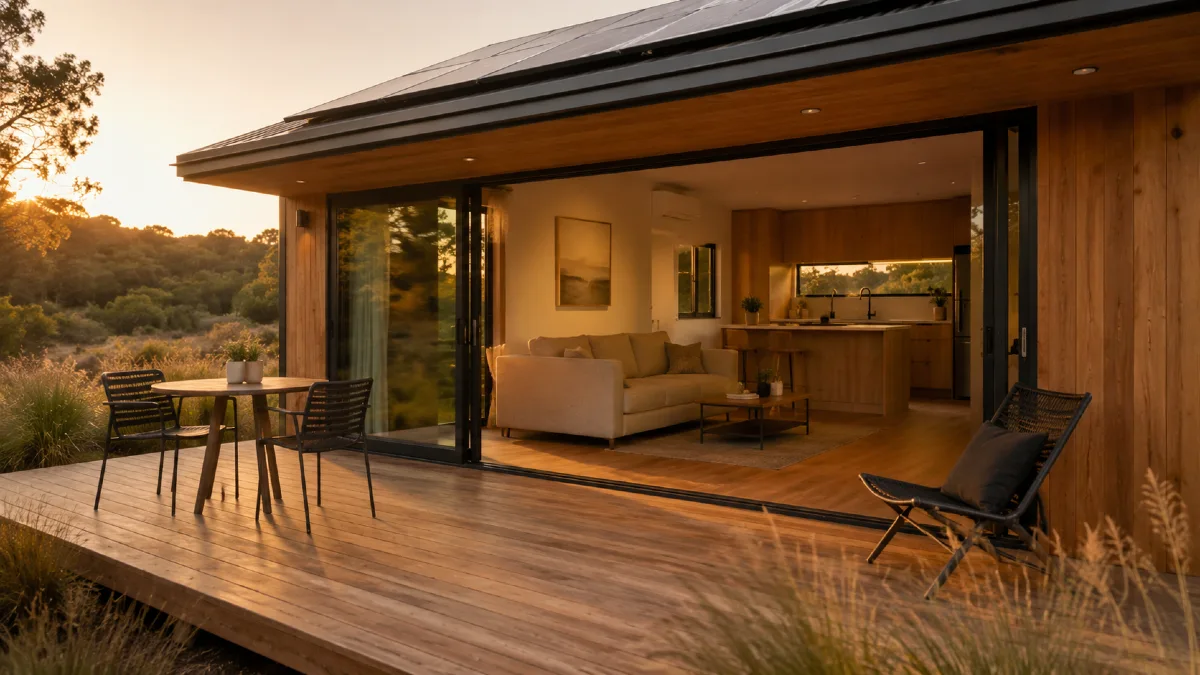
Small home feels very different when the main room can open straight outside.
Deck gives you space without heating, cooling, or building another enclosed room. Use large sliding or folding glass doors where the climate allows. Then keep the floor levels visually connected.
The interior oak does not need to match the deck exactly. It simply needs a similar warmth so the spaces feel related.
Add what you will really use.
Maybe that is:
- Two lounge chairs
- A small dining table
- A shaded bench
- A place for morning coffee
- One outdoor cooking area
You do not need to fill the deck.
Dwell has covered several off grid projects where energy and water systems sit beside strong modern architecture rather than defining the whole look. Its Ursa tiny home, for example, combines energy generation and water collection with a highly designed interior and exterior.
That is the goal.
The technology supports the life.
It does not need to become the life.
12. Make the Whole House Easy to Check and Maintain
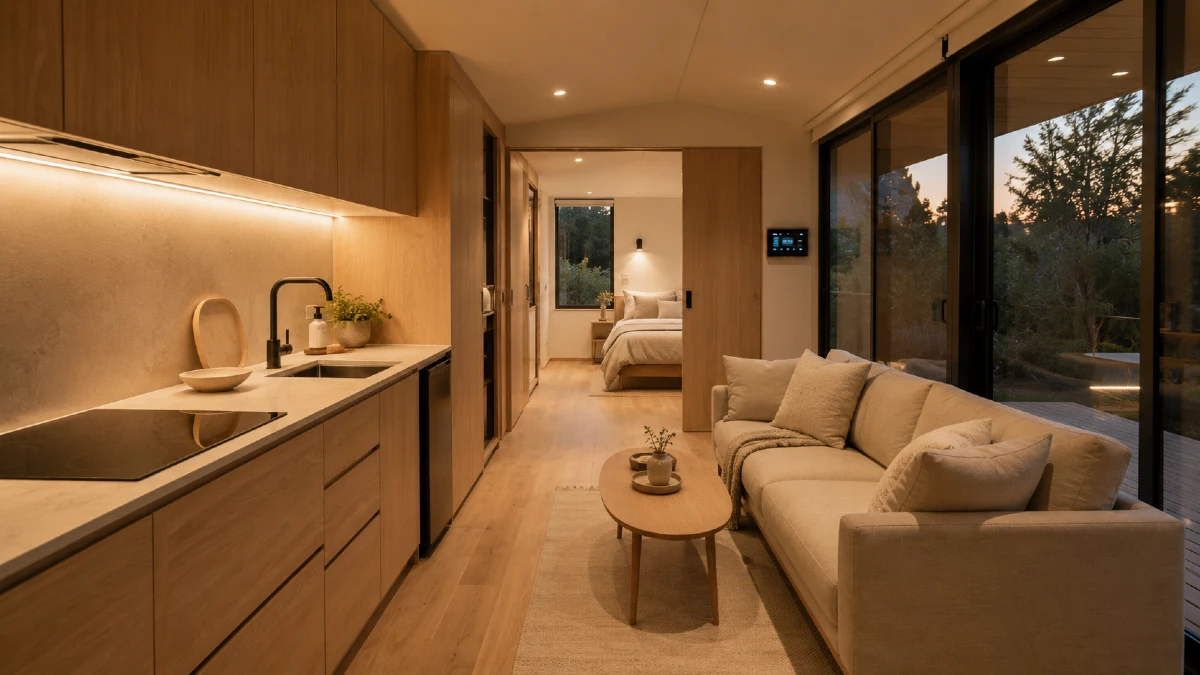
The real luxury in an off grid house is knowing what is happening.
How much battery power do you have?
How much water is left?
Is the solar system producing normally?
When was the filter changed?
Modern monitoring can answer some of those questions without turning your home into a control room.
Tesla, for example, provides app based monitoring for its Powerwall products. The Department of Energy also notes that modern solar inverters can perform monitoring and communication functions.
You can take the same idea beyond electricity. Keep gauges, valves, filters, tank level displays, and shutoffs in logical places. Label the real equipment during installation, even if the decorative interior stays visually clean.
Also keep a basic maintenance schedule.
Check the things that matter before they become problems. And do not make the system more complicated than your life requires. Every extra device is another item that may eventually need attention.
The most comfortable off grid homes often feel simple because the complicated parts were planned carefully and placed out of sight.
Off Grid Living Works Best When the House Does More With Less
Off grid living does not become comfortable because you add expensive finishes.
It becomes comfortable when the basic systems work without demanding your attention all day.
Start with a good building shell. Size the power system around real use. Save water. Create proper storage. Give mechanical equipment its own place. Then spend your remaining space on the things that make daily life better.
That might be a comfortable sofa, a good shower, a real kitchen, a quiet bedroom, or a deck facing the trees.
The best off grid homes do not feel like survival shelters.
They simply feel like good homes that happen to produce and manage much of what they need.