
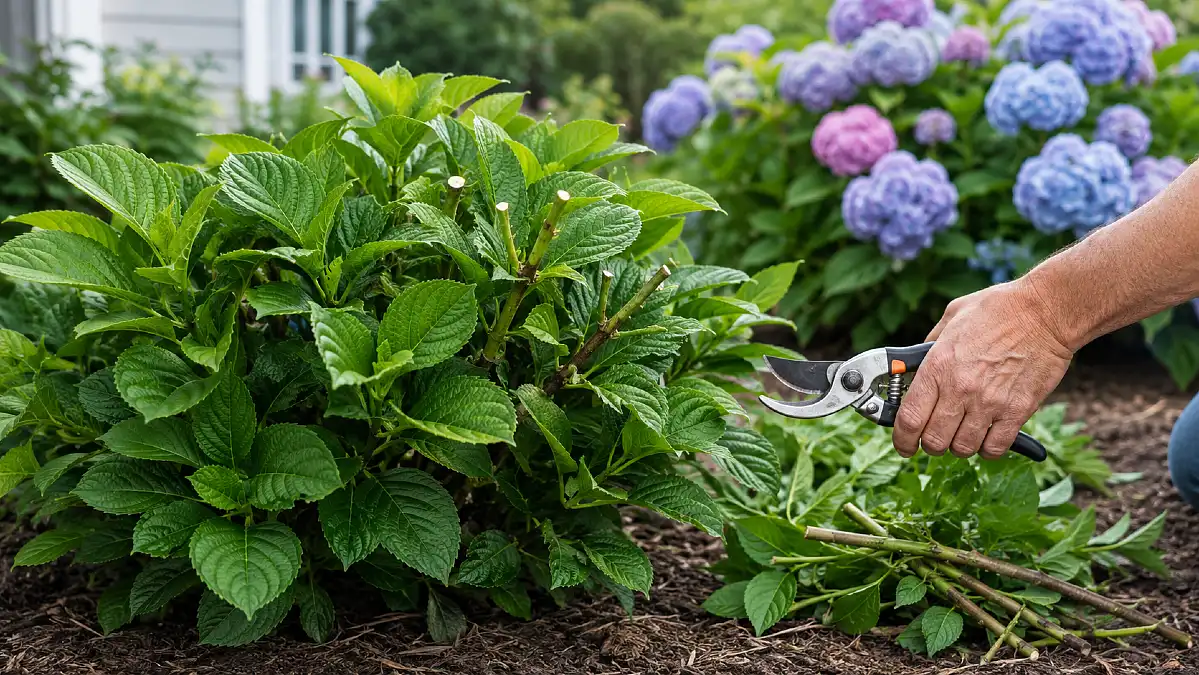
Your hydrangea is large, green, and covered in healthy leaves. There is just one problem. It has no flowers.
That can feel unfair when a nearby garden is packed with huge pink, blue, or white blooms. You may water more, add fertilizer, or trim the shrub to make it grow better. Yet those steps may make the problem worse.
The most common mistake is simple. You pruned the hydrangea at the wrong time and removed its flower buds.
Some hydrangeas form next year’s buds months before the flowers open. A quick fall cleanup or spring trim can remove every one of them. The plant survives and grows leaves, but it has nothing left to bloom from.
The Main Reason Your Hydrangeas Are Not Blooming
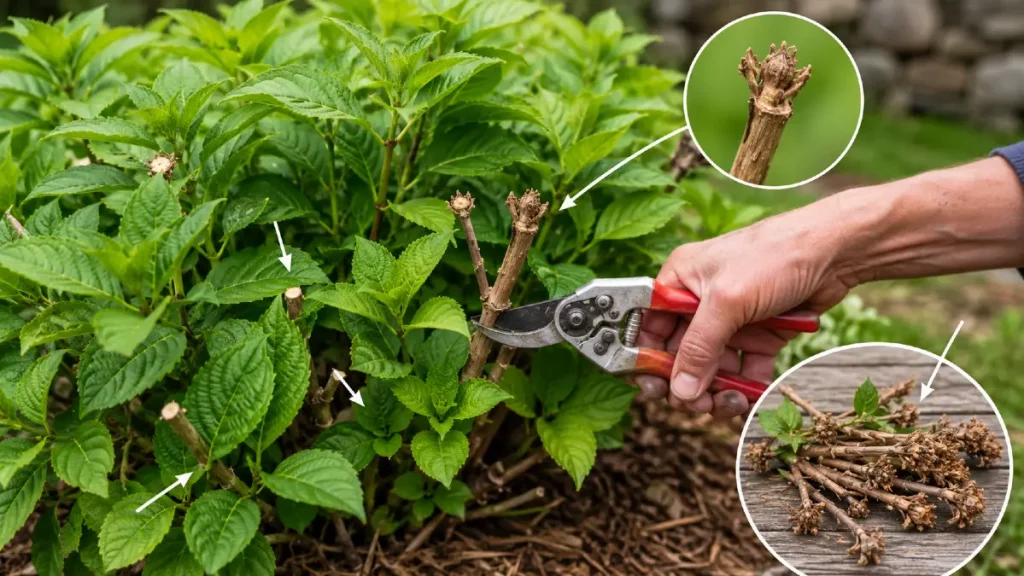
Many cases of hydrangeas not blooming begin with pruning.
The confusing part is that hydrangeas do not all form flowers in the same way. Some produce buds on old wood, which means stems that grew during the previous season. Others form buds on new wood produced during the current spring.
Bigleaf, mountain, and oakleaf hydrangeas usually flower on old wood. Their flower buds may already be sitting on the stems during fall and winter. Cutting those stems back can remove the next flower display before it has a chance to open.
Penn State Extension explains that cutting an old wood hydrangea between fall and early spring can remove its future flowers. University of Georgia Extension gives the same warning for bigleaf hydrangeas, which form buds in late summer for the following year.
This is why the mistake is easy to miss. The shrub does not look dead after pruning. Fresh green stems and leaves may appear in spring.
Those leaves can make the plant look healthy. But healthy leaf growth does not prove that flower buds survived.
Incorrect pruning is not the only possible cause. Cold weather, deep shade, excess fertilizer, and plant stress also matter. Still, checking your pruning history is the best place to start.
Ask yourself one question:
Did you cut the plant back during fall, winter, or early spring?
When the answer is yes, and the shrub is a bigleaf, mountain, or oakleaf hydrangea, you may have found the cause.
Identify Your Hydrangea Before You Cut Another Stem
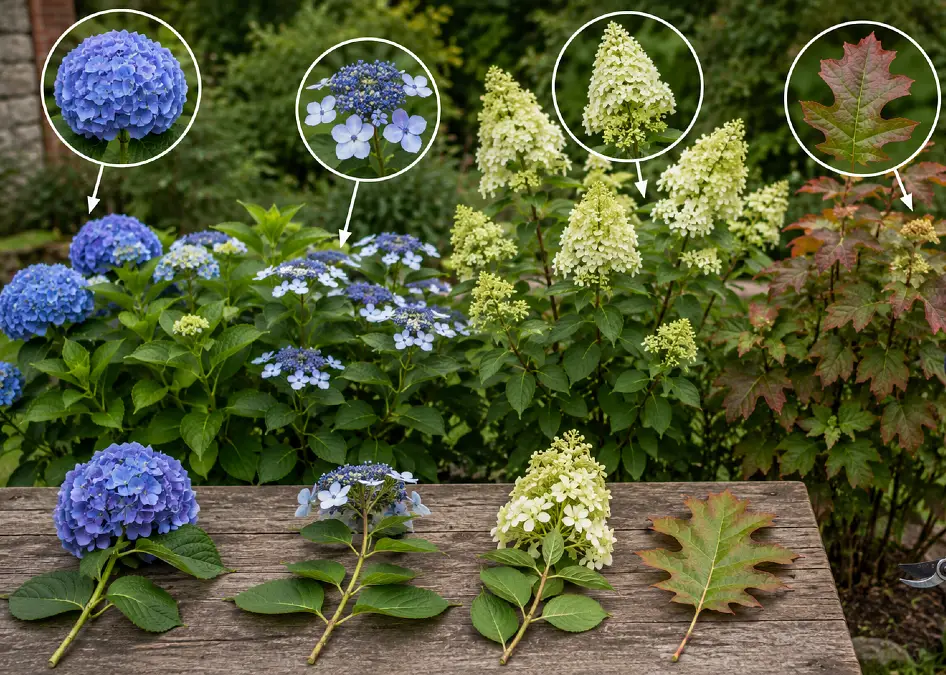
You cannot choose the right pruning time until you know which hydrangea is growing in your yard.
Start with the original plant label. It may show the species, cultivar name, mature size, and flowering habit. A nursery receipt or old garden photo can also help.
Here are the five main groups found in home gardens.
Bigleaf hydrangea
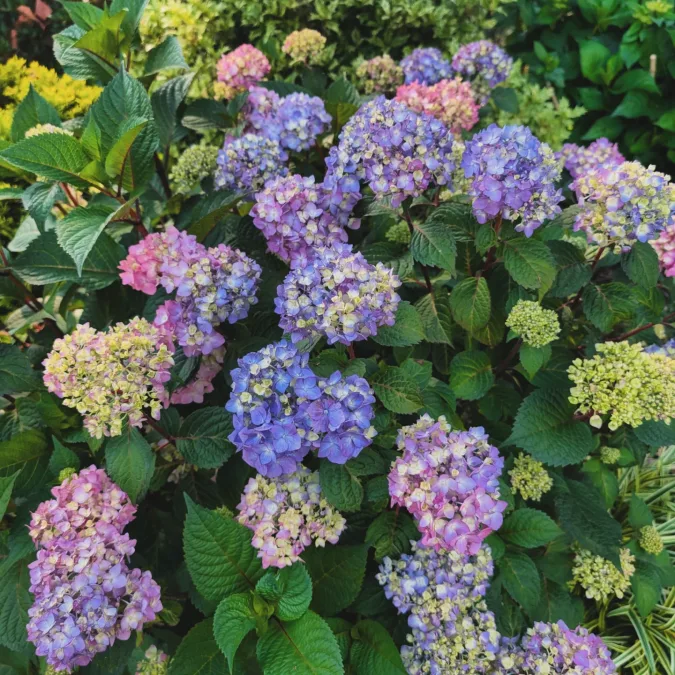
Bigleaf hydrangeas are often called mophead or lacecap hydrangeas. Many have large, rounded flower clusters in pink, purple, or blue.
Their leaves are usually broad, thick, and slightly glossy. Traditional varieties flower mainly on old wood.
Common reblooming bigleaf cultivars include Endless Summer, BloomStruck, Summer Crush, and Blushing Bride. Some reblooming varieties can flower from both old and new growth, but heavy pruning can still reduce the display.
Mountain hydrangea
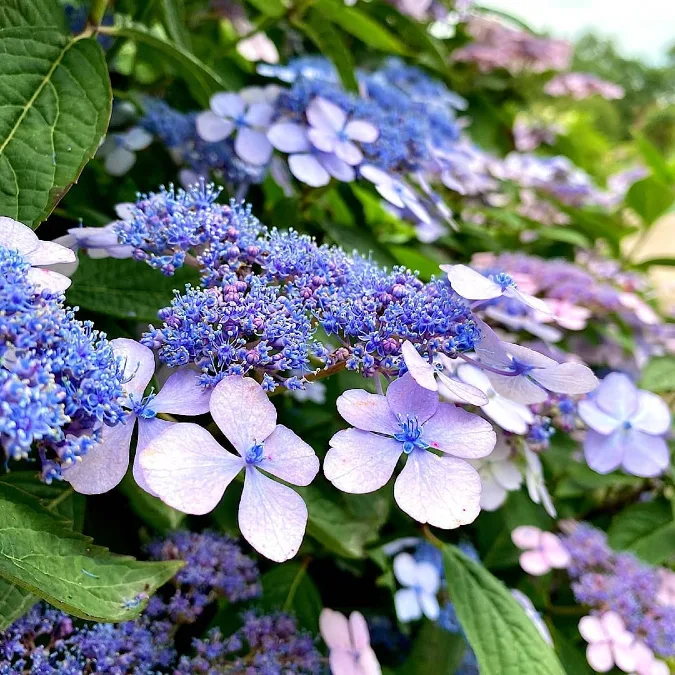
Mountain hydrangeas are closely related to bigleaf types. They often have smaller leaves and delicate lacecap flowers.
Many flower on old wood. Some newer cultivars can bloom again from new growth.
Because the exact habit depends on the cultivar, check the plant label before pruning.
Oakleaf hydrangea
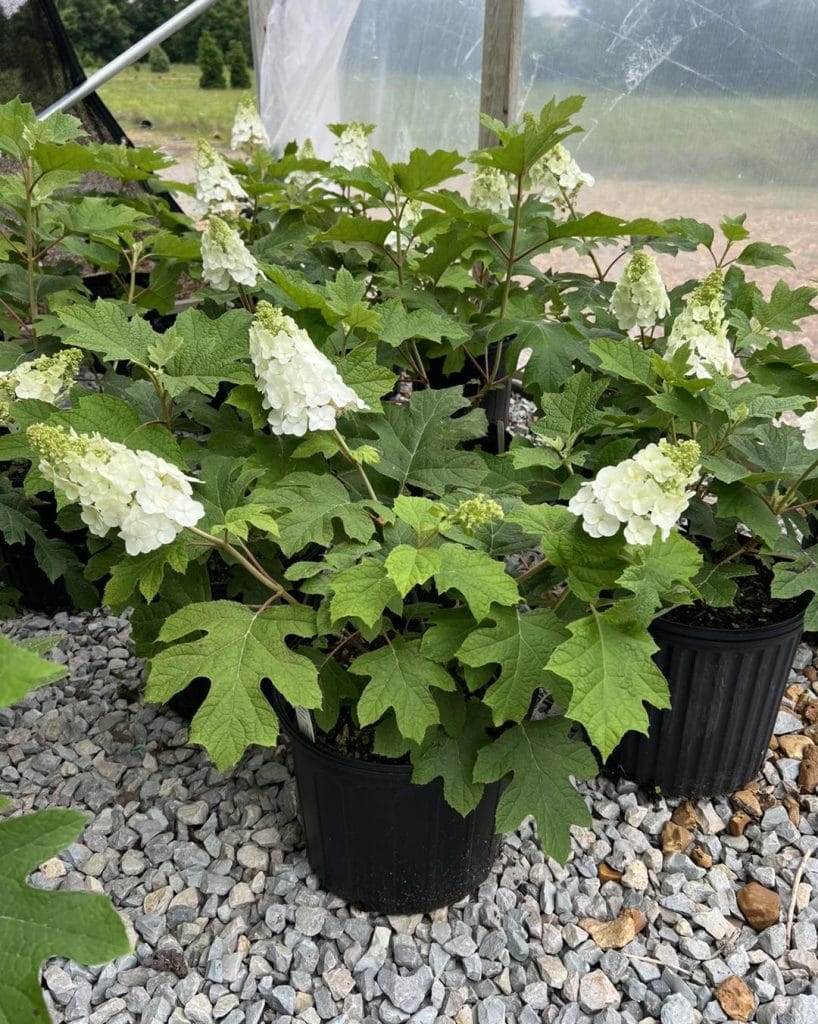
Oakleaf hydrangeas are easy to spot. Their large leaves have deep lobes that look similar to oak leaves.
The flowers often begin white and slowly turn pink or tan. The leaves may turn red, burgundy, or purple in fall.
Oakleaf hydrangeas flower on old wood and usually need little pruning. Proven Winners recommends removing only dead branches once spring growth makes them easy to identify.
Smooth hydrangea
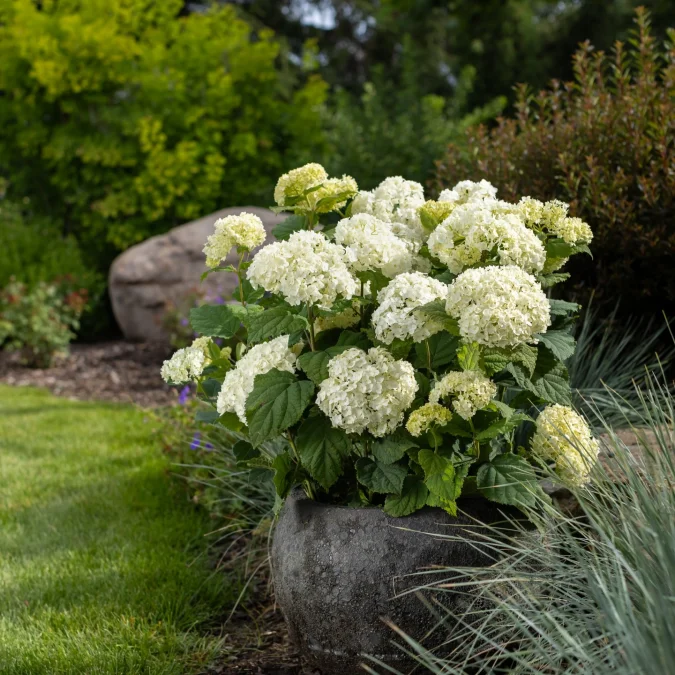
Smooth hydrangeas include the well known Annabelle cultivar. They often produce large white or pale green flower heads.
These shrubs flower on new wood. That means they can be pruned in late winter or early spring without removing the coming season’s buds.
Panicle hydrangea
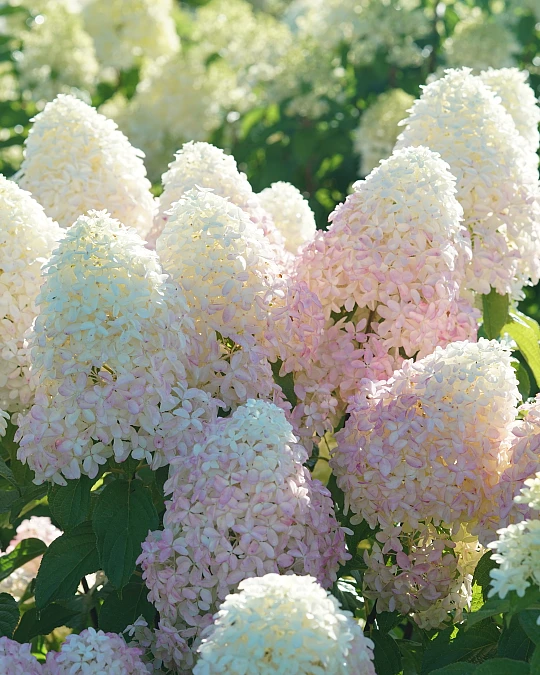
Panicle hydrangeas produce long, cone shaped flower clusters. Limelight, Bobo, and Quick Fire are familiar examples.
They also flower on new wood. Late winter or early spring pruning is usually safe, as long as it happens before the new growth is far along.
Penn State Extension confirms that smooth and panicle hydrangeas flower on new wood, while oakleaf and many bigleaf types flower on old wood.
Use This Pruning Schedule to Protect the Flowers
The safest pruning date depends on where the flower buds form.
| Hydrangea type | Flowers form on | Safest pruning time | Best approach |
|---|---|---|---|
| Bigleaf | Old wood or old and new wood | Soon after flowering | Prune only when needed |
| Mountain | Usually old wood | Soon after flowering | Keep pruning light |
| Oakleaf | Old wood | Soon after flowering | Remove dead wood and crowded stems |
| Smooth | New wood | Late winter or early spring | Lightly reduce size if needed |
| Panicle | New wood | Late winter or early spring | Shape before strong new growth begins |
Pruning old wood hydrangeas
Wait until the flowers finish. Then remove only what is needed.
You can cut out dead stems, crossing branches, and a few of the oldest stems near ground level. Avoid shearing the whole plant into a round shape.
The timing window is limited. Old wood hydrangeas begin forming future buds after flowering. Waiting too long can remove the buds for the following year.
University of Minnesota Extension advises pruning bigleaf hydrangeas after they finish flowering because they begin producing the next season’s buds in late summer or early fall.
Pruning new wood hydrangeas
Smooth and panicle hydrangeas are more forgiving.
You can shape them during late winter or early spring, before strong growth begins. University of Illinois Extension recommends this window because the shrubs will form their flowers on the new stems that follow.
Do not assume that harder pruning always produces better flowers. Removing too much growth can leave weak stems or delay flowering.
Proven Winners generally advises removing no more than about one third of a new wood hydrangea during routine pruning.
Pruning reblooming hydrangeas
Reblooming varieties can form flowers on older stems and later growth. This gives them another chance to bloom after mild winter damage.
It does not make them safe from every pruning mistake.
Heavy spring cutting can remove the first set of buds and delay the display. The safest choice is to leave a reblooming hydrangea alone unless it has dead, damaged, or badly crowded branches.
How to Recover After Cutting Off the Flower Buds
There is no product that can restore a flower bud after it has been removed.
Traditional old wood hydrangeas may need to grow through another season before they flower again. Your main job is to protect the healthy stems that will carry the next set of buds.
Follow these steps:
- Stop shaping the shrub.
Leave healthy stems in place for the rest of the growing season. - Remove only clearly dead wood.
Wait until the plant has leafed out. Scratch a small area of bark with a clean fingernail. Green tissue suggests that the stem is alive. - Water the root area deeply.
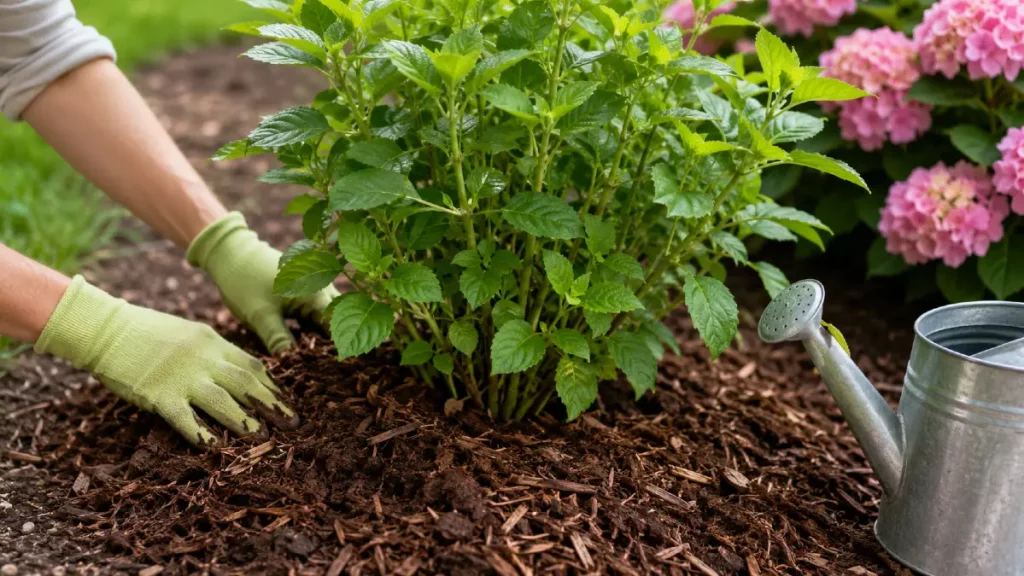
Check the soil several inches below the surface. Water when it begins to feel dry rather than following a fixed daily schedule. - Add a layer of mulch.
Organic mulch helps slow moisture loss and protects shallow roots. Keep it a few inches away from the main stems. - Skip heavy feeding.
Extra fertilizer will not replace lost buds. Too much nitrogen may push soft leaf growth instead of supporting balanced flowering. - Leave the stems standing through winter.
Do not cut them down during fall cleanup.
The plant may look untidy for a while. That is better than removing another year of flowers.