
You planted flowers beside your vegetables because they looked cheerful and promised more pollinators. Now your tomato tips are curled, beetles are chewing the beans, and something keeps eating the lettuce overnight.
It is easy to blame every bug on the nearest flower.
The truth is more useful. No single flower attracts every pest in the neighborhood.
However, some flowers can host aphids, beetles, thrips, or slugs. Others create thick shade, hold too much moisture, or become a problem when used as an unmanaged trap crop.
Before Removing Flowers, Know What Really Attracts Pests
A flower does not create a pest problem by itself.
Insects arrive because they find a suitable host, food, water, shelter, or a place to reproduce. A crowded garden can provide all five.
Flowers can also help your vegetables. Colorado State University Extension explains that many beneficial insects need pollen or nectar as adults.
Hoverflies, lacewings, and parasitic wasps may then help control aphids, caterpillars, and other small pests.
University of Minnesota Extension also notes that companion planting claims should be judged carefully. Some plant pairings have research behind them, while many popular combinations have weak or mixed evidence.
Before moving a flower, ask four questions:
- Is the flower hosting a pest right now?
- Can that pest also attack your vegetables?
- Is the flower blocking light or air?
- Are you willing to inspect and manage it?
The answers matter more than a simple good plant or bad plant label.
1. Roses Can Draw Beetles and Aphids Beside Food Crops
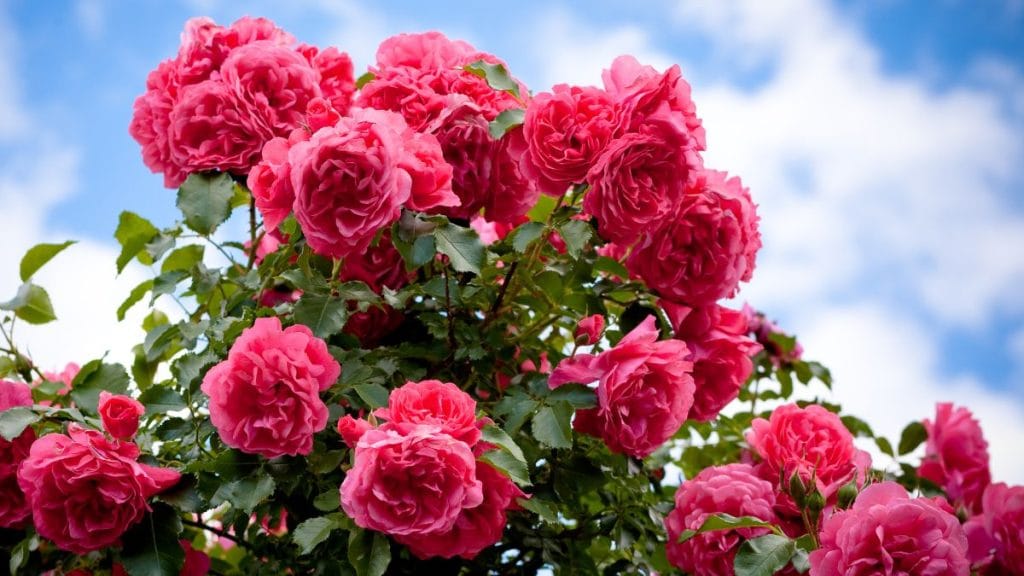
Roses are beautiful, but they can support several pests that also feed on food plants.
Japanese beetles are one of the main concerns in regions where they are established. The adults feed on roses, but they may also damage beans, raspberries, peaches, grapes, and other garden crops.
Penn State Extension warns that Japanese beetles can move between ornamental gardens, vegetable beds, and fruit plantings.
Aphids are another concern.
Colorado State University Extension lists roses as hosts for potato aphids. These aphids can also feed on potatoes, tomatoes, and many other garden plants.
This does not mean a rose bush will automatically infect your tomatoes with aphids. It means you should avoid creating one crowded strip containing roses, tomatoes, potatoes, and beans.
Move roses farther away when:
- Japanese beetles are common in your area
- Aphids cover new rose growth each spring
- The rose blocks access to vegetable plants
- Fallen petals and leaves collect around crop stems
A sunny ornamental border is often a better location. Leave enough room to inspect both sides of the rose.
Do not hang Japanese beetle bag traps beside the vegetable garden. Penn State Extension notes that these traps can attract more beetles into the area.
2. Dahlias May Become a Feeding Station for Beetles and Slugs
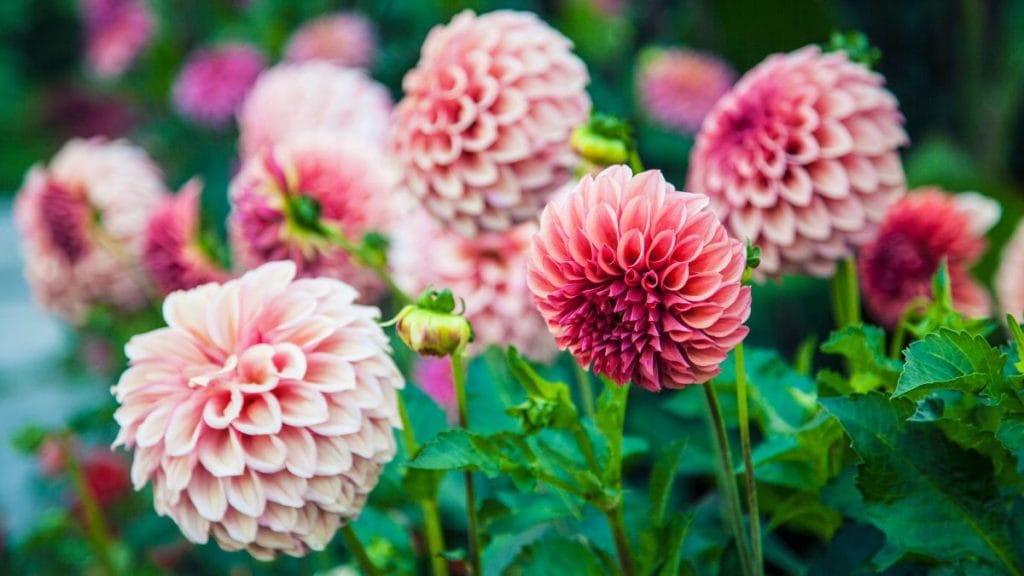
Dahlias produce large flowers, strong stems, and dense leafy growth. That makes them attractive, but it can also make pest checks harder.
Penn State Extension has reported Japanese beetle feeding on dahlias in cut flower plantings.
That matters when dahlias sit beside beans, berries, grapes, or other plants Japanese beetles also enjoy. The flower does not cause the beetles to exist, but it may give them another food source close to your crops.
Dahlias can also create cool, damp hiding places near the soil. Slugs prefer moist shelter and may feed on both flowers and vegetable seedlings.
Colorado State University Extension describes slugs as damaging pests of vegetable and flower gardens. Young plants are especially at risk. Reducing excess moisture is one of the best ways to lower slug pressure.
Place dahlias in a separate cutting bed when possible.
Keep the base open by removing weak lower leaves. Water the soil in the morning rather than soaking the whole area late in the evening.
Check underneath boards, pots, thick mulch, and low leaves after sunset. That is when many slugs become active.
3. Hollyhocks Can Bring Beetles and Heavy Shade
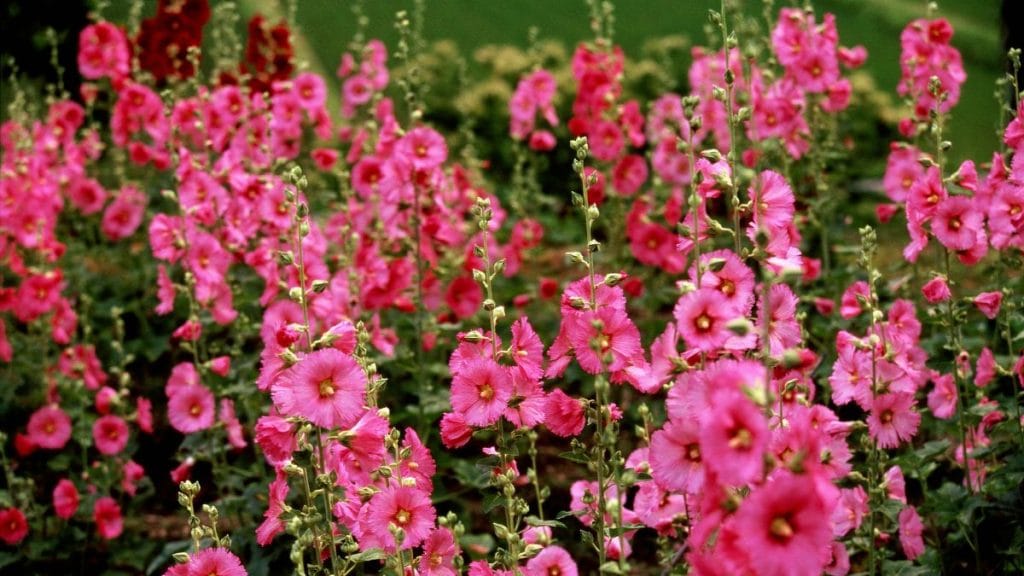
Hollyhocks are tall enough to change the growing conditions around a vegetable bed.
A mature row can block hours of direct sun. Tomatoes, peppers, squash, cucumbers, and beans may produce fewer flowers and fruits when they receive too little light.
The stalks can also slow air movement. Leaves remain wet longer after rain or watering, which can make plant disease harder to manage.
Japanese beetles may feed on hollyhock leaves and flowers. In an area with heavy beetle pressure, a large stand beside beans or fruit crops gives the adults more plants to visit.
Hollyhocks also develop a disease called rust. The disease mainly affects hollyhocks and related plants in the mallow family. It is not a reason to fear for every vegetable, but infected leaves should still be removed rather than left on the soil.
The safest spot is often beside a fence away from the main vegetable patch.
In the Northern Hemisphere, place tall flowers north of shorter crops when possible. This keeps the stalks from casting their longest shadows across the vegetables.
Leave a walking path between the hollyhocks and food plants. The path improves light, air, and access for pest checks.
4. Petunias Can Host Aphids, Thrips, and Plant Viruses
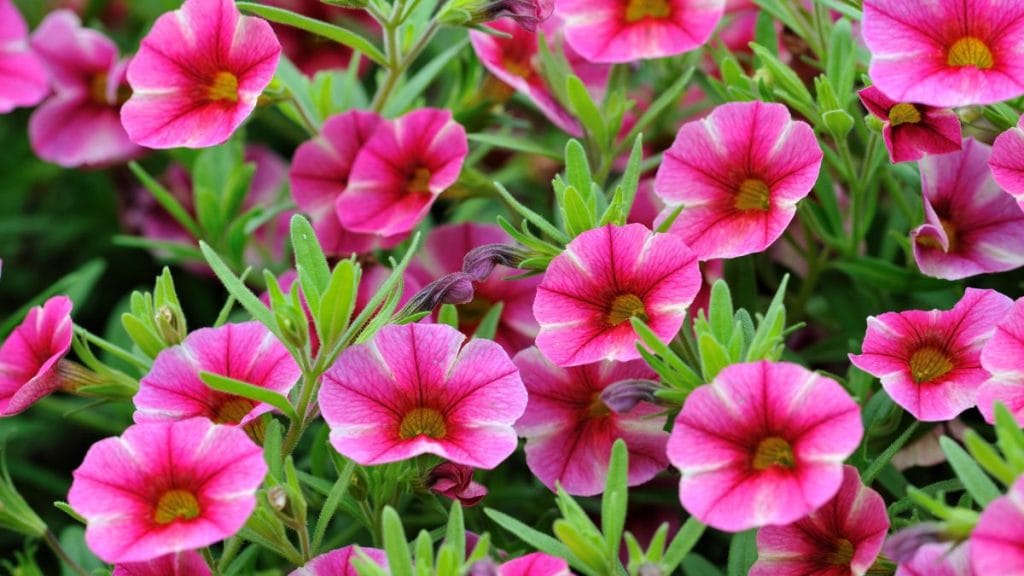
Petunias are often sold beside vegetable transplants at garden centers. That does not always make them safe neighbors.
Petunias may host aphids, thrips, whiteflies, and spider mites. A healthy plant with a few insects may cause no serious problem. A stressed nursery plant covered in pests is different.
Thrips deserve special attention near tomatoes and peppers.
These tiny insects can spread tomato spotted wilt virus between susceptible plants. Colorado State University Extension notes that tomato spotted wilt can affect vegetables as well as ornamental plants.
Aphids can also move among flowers and vegetables. University of Minnesota Extension explains that aphid transmitted viruses can infect crops such as cucumber, squash, pumpkin, beans, spinach, tomato, lettuce, and beets. Some annual flowers can also serve as hosts.
Before planting petunias near vegetables:
- Look under every leaf.
- Check flower buds for tiny moving insects.
- Avoid plants with silver streaks, distorted growth, or spotted leaves.
- Keep new purchases separate for several days.
- Remove a sick plant instead of trying to save it inside the crop bed.
Petunias can stay in containers on a patio or along a path. Just do not press an uninspected plant against young tomatoes or peppers.
5. Impatiens Can Create a Damp Pest Shelter
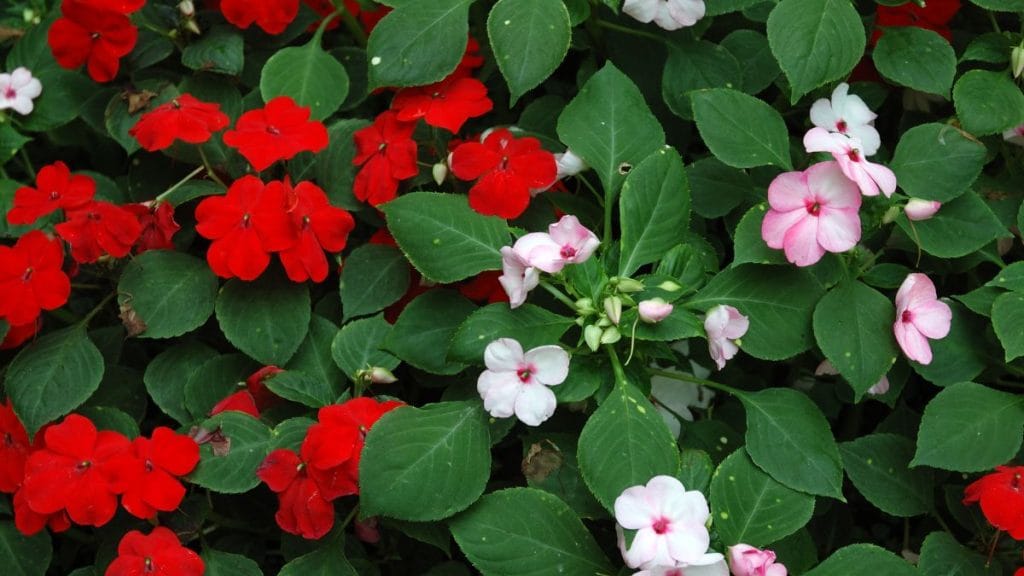
Impatiens grow best with regular moisture and protection from strong afternoon sun.
Those needs can conflict with vegetables that prefer bright light and open air. A thick border of impatiens may keep the edge of a raised bed damp for long periods.
That damp shelter can suit slugs.
Slugs feed on many flowers and vegetables. They can destroy small lettuce, cabbage, pepper, and cucumber seedlings before the plants have time to recover. Colorado State University Extension recommends reducing humidity and excess moisture as a key part of slug control.
Impatiens can also host aphids. Certain ornamental and vegetable plants may share aphid transmitted viruses, although the exact risk depends on the aphid species and virus involved.
Keep impatiens in a shaded ornamental bed rather than packing them around lettuce or brassica seedlings.
You should also:
- Water early in the day
- Avoid thick mulch against vegetable stems
- Remove dead leaves
- Thin crowded plants
- Check for slime trails in the morning
A dry walking strip between the flowers and vegetables can make a large difference.
6. Four O’Clocks Can Attract Japanese Beetles
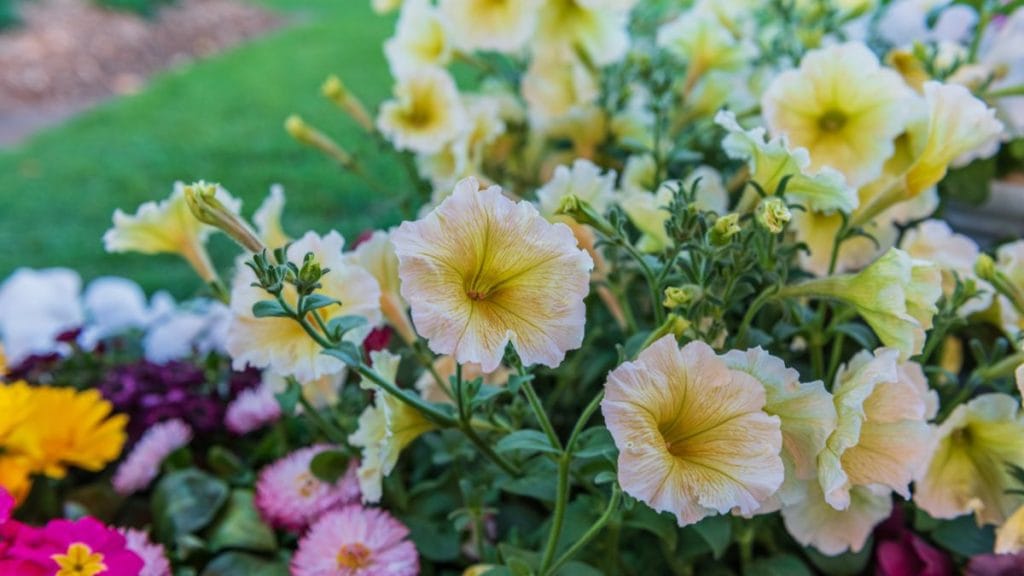
Four o’clocks open their trumpet shaped flowers late in the day. They are fragrant, colorful, and easy to grow.
They may also attract feeding Japanese beetles.
You may see online claims that four o’clocks poison and kill every beetle that eats them. Do not use that idea as your pest control plan. Evidence for reliable Japanese beetle control from the living plant is weak, and a heavily visited flower can still bring feeding beetles close to other plants.
Japanese beetles may then move to beans, raspberries, grapes, roses, peaches, or other preferred hosts. Penn State Extension recommends regular inspection and removal when beetles appear on home fruit plants.
Four o’clocks may also drop seed and spread into open soil in suitable climates. Extra seedlings can crowd the edge of a small vegetable bed.
Plant them in a separate ornamental area.
Inspect the flowers and leaves early in the morning. Japanese beetles are often easier to collect when temperatures are cooler and the insects are less active.
Drop the beetles into a container of soapy water. Do not shake them onto the soil beside your crops.
7. Nasturtiums Become a Problem When Used as an Unmanaged Trap Crop
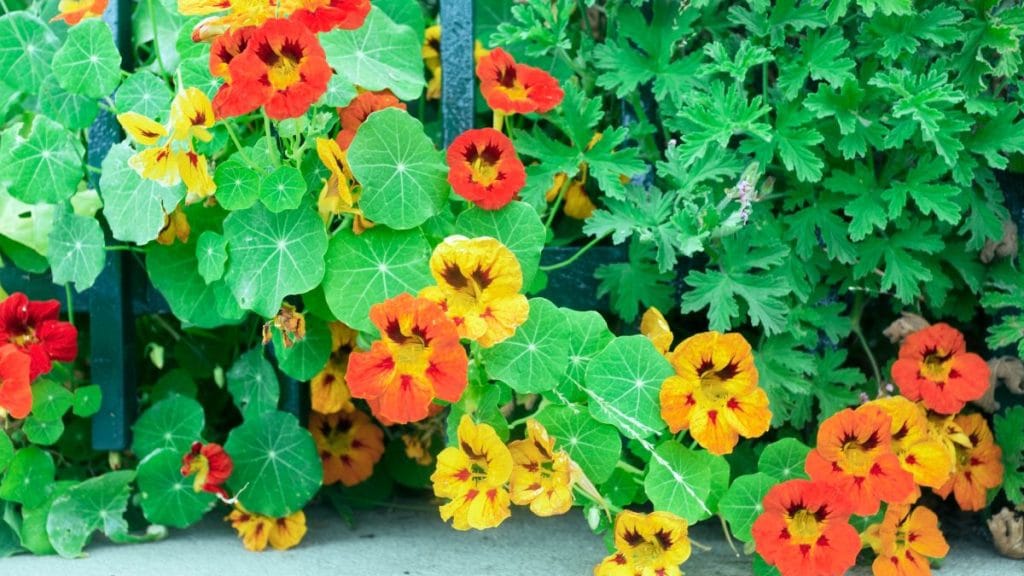
Nasturtiums are often recommended as vegetable garden companions.
University of Minnesota Extension even describes them as useful additions to vegetable gardens. Their flowers can support pollinators, and the annual plants fit easily around seasonal crops.
So why are they on this list?
Because many gardeners use nasturtiums as trap crops without managing the trap.
Nasturtiums may attract aphids and some caterpillars. That can be helpful when the pests gather on the flower instead of the crop. However, the method works only when you inspect the plant and remove pests before their numbers become too high.
University of Minnesota Extension cautions that popular trap crop combinations do not always perform as expected. Results can change by pest, location, timing, and plant arrangement.
An aphid covered nasturtium left beside cabbage, squash, beans, or tomatoes is no longer protecting the garden. It is supporting a growing aphid colony.
Aphids reproduce quickly. Their predators may eventually catch up, but this can take time.
Keep nasturtiums when you are willing to:
- Check the stem tips twice each week
- Look under the leaves
- Wash off small aphid groups with water
- Remove badly infested stems
- Pull the whole plant when pests keep returning
Nasturtiums are not bad companion flowers. Unmanaged nasturtiums are the problem.
8. Large Sunflowers Can Shade Crops and Pull Seed Feeders Closer

Sunflowers are valuable garden plants.
They provide pollen, nectar, seeds, and strong visual height. Their flowers can support bees and other pollinators, which may help crops such as squash, cucumber, melon, eggplant, and pepper.
Utah State University Extension explains that bees play an important role in the yield and quality of many fruiting vegetables.
The problem is placement.
A row of large sunflowers can shade vegetables for much of the day. This is especially serious when the sunflowers grow along the south side of a bed in the Northern Hemisphere.
Their large stems and root systems also take up valuable space and water in a small garden.
Once seeds begin to mature, the heads may attract birds and squirrels. These animals may then investigate nearby tomatoes, corn, berries, melons, or newly planted seeds.
You do not need to avoid sunflowers. Use them with a clear layout.
- Plant tall varieties north of the vegetable bed
- Leave a walking path between the plants
- Choose dwarf varieties for small spaces
- Support stalks before summer storms
- Harvest seed heads before animals scatter seeds
- Water deeply rather than wetting the whole surface each day
Sunflowers can be excellent companions when they do not block light or crowd the crops.
Which Flower Creates the Greatest Pest Risk?
The answer depends on where you live.
In regions with Japanese beetles, roses may present the widest concern on this list. The beetles feed on rose foliage and can also move into beans, fruit crops, berries, and grapes. Roses may support aphids that also use tomatoes and potatoes.
That still does not make roses the flower that attracts “every pest.”
No plant does that.
Here is a more accurate comparison:
| Flower | Main concern | Crops that may be affected nearby | Best response |
|---|---|---|---|
| Roses | Aphids and Japanese beetles | Beans, tomatoes, potatoes, berries | Move away from food crops and inspect often |
| Dahlias | Beetles, slugs, dense growth | Beans and young seedlings | Use a separate cutting bed |
| Hollyhocks | Shade, beetles, crowded air | Sun loving vegetables | Place beside a distant fence |
| Petunias | Thrips, aphids, possible virus hosts | Tomatoes and peppers | Inspect and isolate new plants |
| Impatiens | Damp slug habitat | Lettuce and young seedlings | Keep in a separate shade bed |
| Four o’clocks | Japanese beetle feeding | Beans, fruit, berries | Grow away from crop rows |
| Nasturtiums | Unmanaged trap crop pests | Brassicas, squash, beans | Inspect and remove infestations |
| Sunflowers | Shade, competition, seed feeders | Most small or sun loving crops | Plant north of the bed |