

Your strawberry plant may look healthy on the kitchen windowsill. It has bright leaves, fresh growth, and perhaps several flowers. Yet the berries never arrive.
That is the problem with growing strawberries indoors. A green plant is not always a productive plant.
Strawberries need strong light, healthy roots, cool conditions, and successful pollination. Outdoor plants receive much of this naturally. Inside your home, you must provide it.
The good news is that you do not need a large greenhouse. A few well placed pots, a useful grow light, and a simple care routine can support a small but steady crop.
Choose Strawberry Plants That Keep Making Flowers
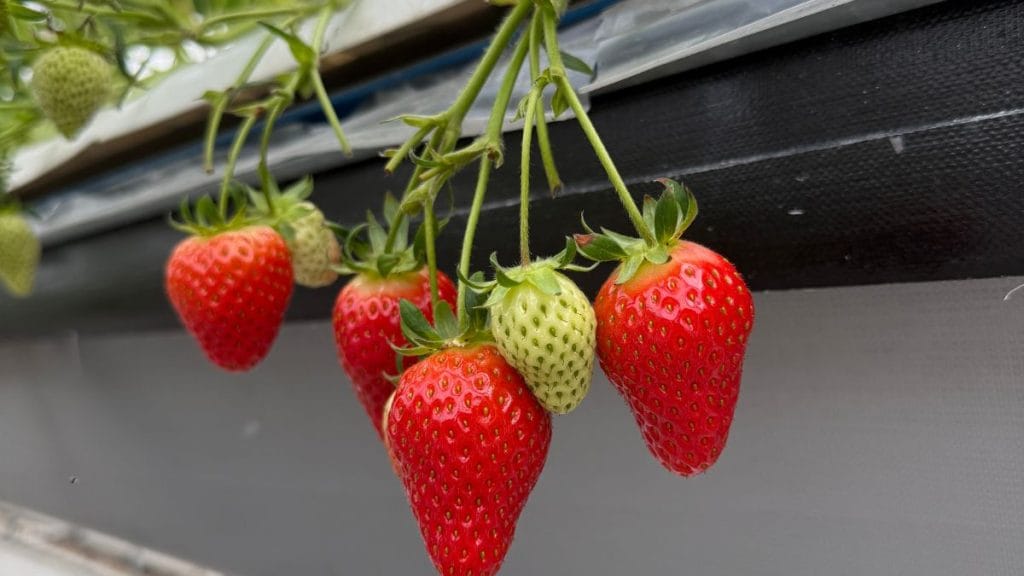
The type of strawberry you choose has a major effect on your harvest.
June bearing plants produce one large seasonal crop. This works well in a garden, but it is less useful when your goal is a steady indoor supply.
Everbearing plants usually produce two main crops. Day neutral plants can continue forming flowers for a longer period when temperatures remain suitable. The University of Minnesota describes day neutral plants as types that produce through much of the normal growing season.
For indoor growing, start with a day neutral variety.
Iowa State University lists several day neutral strawberries that grow well in containers:
- Albion
- Cabrillo
- Everest
- Seascape
It also lists Ozark Beauty as an everbearing choice for containers.
Albion and Seascape are often sold by fruit nurseries. Availability varies by region, so choose healthy plants from a trusted local seller when those names are not available.
Look for plants with:
- Firm green crowns
- Several healthy leaves
- White or pale roots
- No webs or sticky insects
- No brown spots spreading across the leaves
Young plants are usually easier than seeds. Seed grown strawberries can take longer to mature, and the resulting fruit may differ from the parent plant.
Keep your expectations sensible. An indoor strawberry setup is more likely to provide handfuls of fresh berries than bowls of fruit every day.
Give Each Plant Enough Root Space
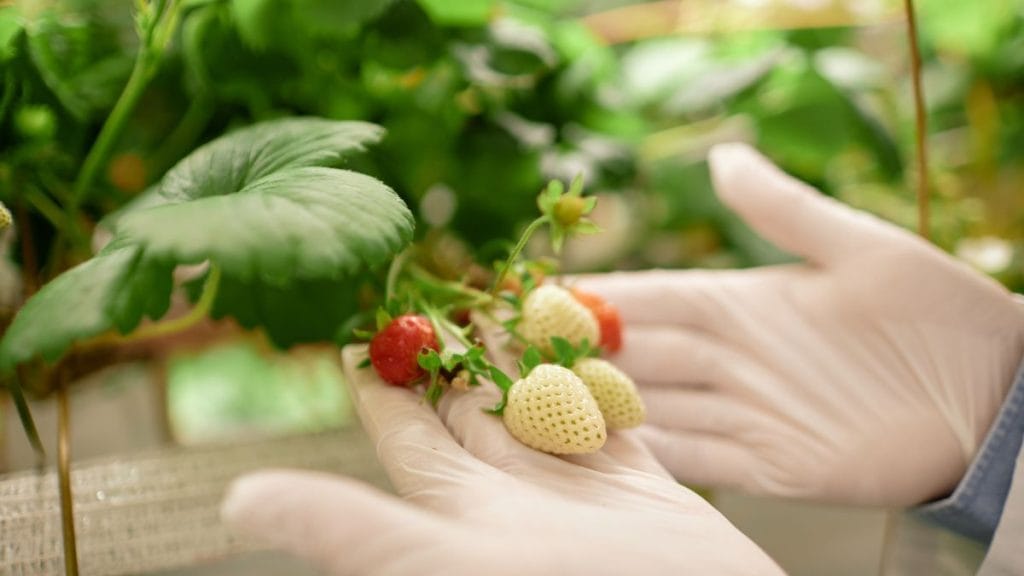
A decorative pot will not help if it traps water around the roots.
Choose a container with several drainage holes. A pot about five to eight inches wide can hold one young plant. Larger planters can hold several plants when each crown has room for light and airflow.
Hanging baskets and strawberry pots also work. The Royal Horticultural Society confirms that strawberries can grow in individual pots, strawberry planters, and hanging baskets.
Use fresh container potting mix. Do not fill the pot with dense soil from the yard. Garden soil can become packed inside a container and may carry pests or disease.
A suitable mix should:
- Hold some moisture
- Drain freely
- Feel loose after watering
- Contain no strong smell or visible mold
Place the plant so its crown sits at the soil surface. The crown is the short central point where the leaves meet the roots.
Do not bury it deeply. A covered crown can remain wet and rot.
Do not leave the roots exposed either. Spread them gently through the potting mix, then press the mix around them without packing it hard.
Set a saucer under the pot to protect furniture. Empty the saucer after watering so the roots do not sit in standing water.
Use Grow Lights When a Window Is Not Enough
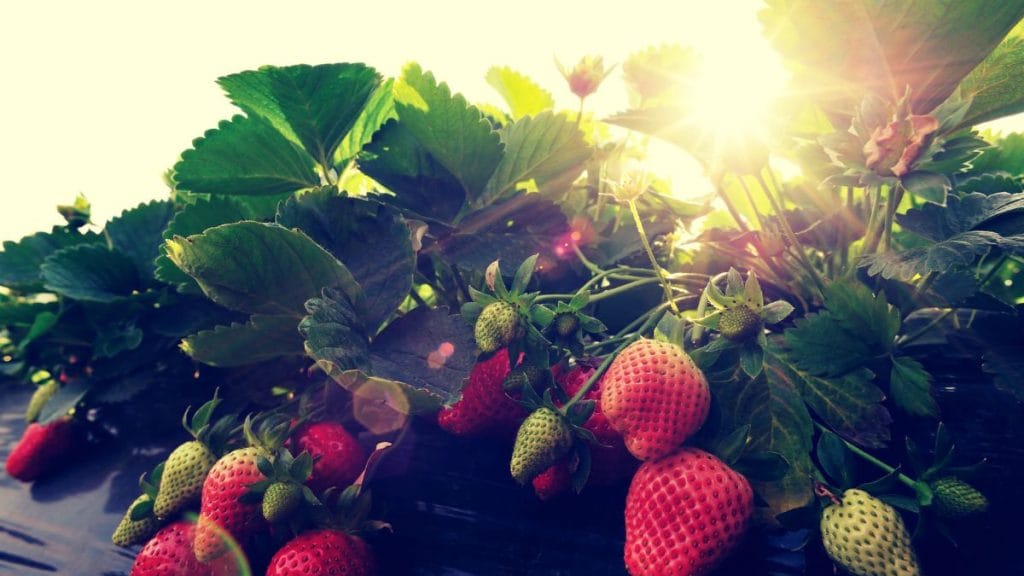
Light is often the main reason indoor strawberry plants fail to fruit.
The University of Minnesota says strawberries need at least six hours of direct sun, while ten or more hours is better for strong fruit production.
A bright window may appear sunny to you but still give the plant weak or uneven light. Winter days, tinted glass, buildings, trees, and window direction can reduce the useful light reaching the leaves.
Ordinary ceiling bulbs do not solve this. The Royal Horticultural Society notes that normal household lighting does not provide suitable light for plant growth.
A full spectrum LED grow light is the most reliable indoor option.
Set Up the Light This Way
- Place the light directly above the leaves.
- Follow the maker’s distance guide.
- Connect it to a timer.
- Give the plants a regular light and dark cycle.
- Raise the fixture as the plants grow.
A daily schedule of about 12 to 14 hours is a practical starting point for many home setups. University of Delaware researchers used 12 to 14 hours of light while testing day neutral strawberries inside a converted poultry building.
The exact result depends on the strength of your fixture. A weak lamp may provide little useful energy even when left on for many hours.
Ohio State University gives commercial growers detailed light targets. Its controlled environment strawberry guidance lists a minimum daily light integral of about 10 to 12 moles per square meter per day and a stronger target near 20 to 25.
You do not need to calculate this for a small home project. Instead, watch the plant.
Signs the light is too weak include:
- Long, thin leaf stems
- Leaves leaning hard toward the window
- Few flowers
- Pale new growth
- Small berries that ripen slowly
Signs the lamp may be too close include:
- Dry leaf edges
- Bleached patches
- Leaves curling away from the fixture
- Potting mix drying very fast
Move the lamp a little at a time. A small change can make a large difference.
Keep the Room Cool Enough for Flowers
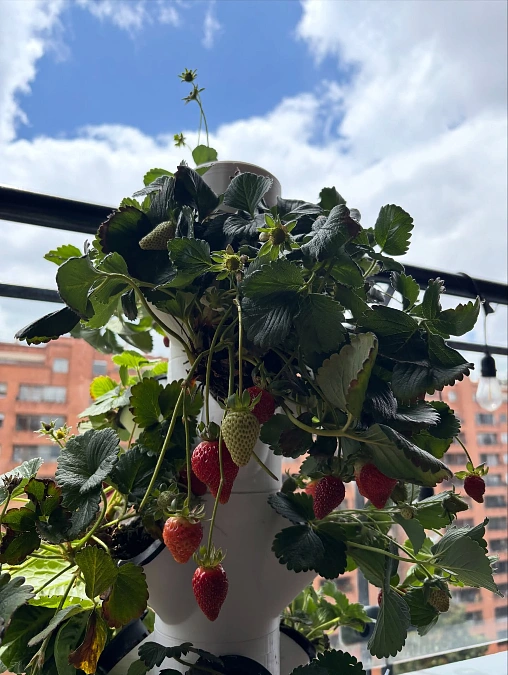
Strawberries like bright light, but they do not need a hot room.
Utah State University explains that day neutral plants can form flower buds regardless of day length when temperatures stay below about 70°F.
University of Minnesota guidance places the broad growing range for many day neutral varieties between 45°F and 85°F. Growth can stop outside that range, and high heat can reduce flower production.
For a home setup, aim for a comfortable room that is cool rather than stuffy. Temperatures near 60°F to 75°F are easier to manage than constant heat above 80°F.
Avoid placing the plants:
- Above a radiator
- Beside a heater
- Against a hot appliance
- In direct air from a heating vent
- Inside a closed glass cabinet
Warm air can also dry the pot quickly while the lower soil stays wet. This makes watering harder to judge.
A small fan can improve air movement around the leaves. Use a low setting and point it across the area rather than straight at one plant.
Gentle airflow helps moisture leave the leaf surface. It also makes the space less welcoming to some molds and flying pests.
The leaves should move slightly. They should not shake hard all day.
Water the Roots Without Soaking the Crown
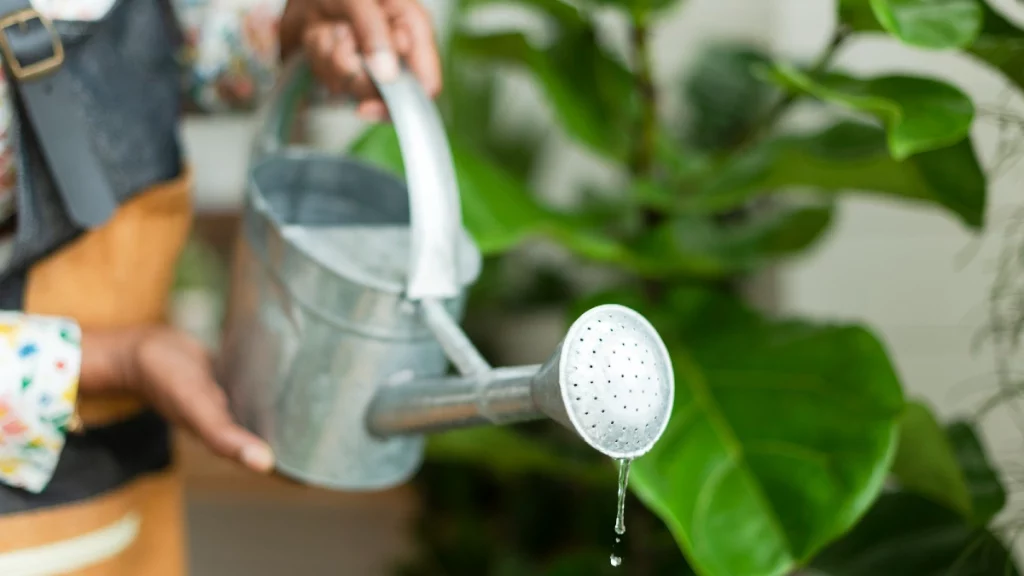
Strawberries have shallow roots. They can dry quickly in small pots, but they also suffer when the potting mix stays soaked.
Check the mix before watering. Push a finger about one inch below the surface. Water when that upper layer feels slightly dry.
Pour water slowly across the soil. Stop when excess begins to drain from the holes.
Then empty the saucer.
Do not water on a fixed calendar without checking the pot. A plant may need water more often under a strong lamp and less often during cool, cloudy weather.
Signs of Too Little Water
- Drooping leaves
- Dry potting mix pulling from the pot edge
- Crisp leaf tips
- Flowers drying before they open
- Small fruit that stops swelling
Signs of Too Much Water
- Constantly wet soil
- Soft brown crown tissue
- Yellow lower leaves
- Sour smelling potting mix
- Tiny flies around the container
Water the soil rather than pouring water into the crown. Wet flowers and fruit can also develop problems when airflow is poor.
You can place clean straw, a small plant support, or a safe reusable fruit rest under hanging berries. This keeps ripe fruit away from damp potting mix.
Feed for Flowers Instead of Excess Leaves
Container plants cannot search a large area for nutrients. They rely on what is available in the pot.
Start with a fresh potting mix that contains a mild plant food. After the first few weeks, use a balanced liquid fertilizer made for edible container plants.
Follow the label. More fertilizer does not mean more fruit.
Heavy feeding can create a large mass of leaves while flowering remains weak. It may also leave fertilizer salts in the potting mix.
A simple routine is to use a diluted liquid feed during active growth. Apply it only as often as the product directs.
Stop and inspect the plant when you see:
- Brown leaf edges
- White crust on the soil
- Sudden wilting after feeding
- Very dark soft leaves
- Little flowering despite fast leaf growth
White buildup on the soil or pot may be a sign of mineral salts. Water the pot deeply and allow the excess to drain. Repeat with plain water later if needed.
Never let fertilizer water collect in the saucer.
The Royal Horticultural Society recommends feeding container strawberries through the growing season. It also recommends regular watering while the plants are actively growing.
Pollinate Every Flower by Hand
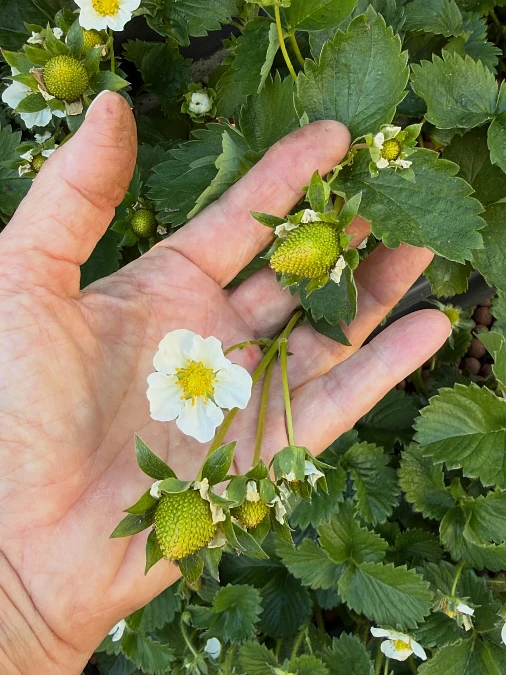
A strawberry flower can contain both male and female parts, but pollen still needs to move across the flower.
Outside, bees and other insects do much of this work. The University of Minnesota notes that strawberries are self fertile but still benefit from bee activity for pollination.
Inside your home, you must take over that job.
The Soft Brush Method
Use a clean, soft artist brush.
- Touch the center of one open flower.
- Move the brush around the full flower center.
- Repeat on every open flower.
- Move between flowers on different plants.
- Repeat every day or two while flowers remain open.
A clean cotton swab can also work, though a soft brush reaches the flower surface more evenly.
Another option is gentle vibration. Tap the flower stem lightly or let a small fan create mild movement. Brushing is more controlled and costs very little.
Good pollination matters because each visible seed on the berry connects with a small part of the fruit. Poor pollen movement may lead to uneven swelling.
A badly pollinated strawberry may look:
- Crooked
- Flat on one side
- Lumpy
- Small at the tip
- Partly green when the rest turns red
Do not expect every flower to become fruit. Temperature stress, weak light, damaged roots, and low plant energy can also cause flowers to drop.
Remove Runners and Manage the First Flowers
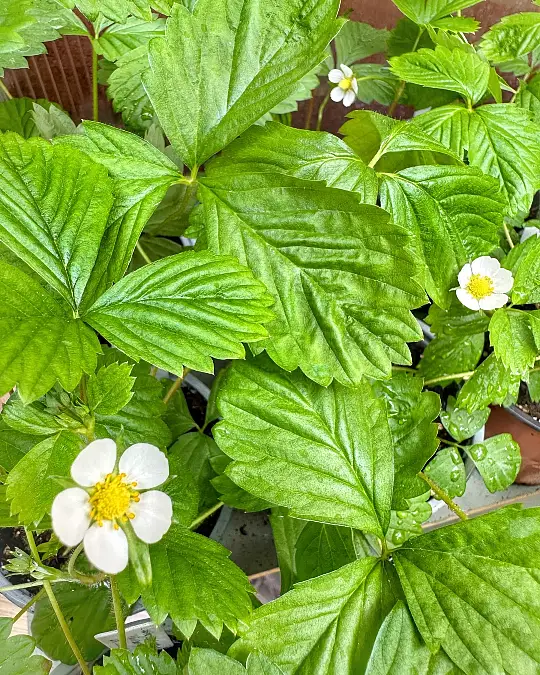
A runner is a long stem that grows away from the main crown. It can form a new daughter plant.
This is useful when you want more strawberry plants. It is less useful when your main goal is fruit.
Runners require energy. In a small indoor pot, that energy is usually better spent on roots, leaves, flowers, and berries.
Cut unwanted runners near the main plant with clean scissors.
The University of Minnesota advises removing runners as needed because vigorous strawberry plants can spread quickly.
New plants also need time to build a strong crown. Oregon State University recommends removing the first flower stem from newly planted everbearing and day neutral strawberries. This allows the roots, crown, and leaves to develop before the plant carries fruit.
Remove the first flowers when:
- The plant was recently moved into a pot
- The crown is small
- The plant has only a few healthy leaves
- The roots were damaged during planting
- The plant is weak after shipping
It can feel wasteful to remove flowers. Yet a stronger plant often produces better flowers later.
Once the plant has several full leaves and firm new growth, allow the next flowers to remain.
Remove only dead, yellow, or badly damaged leaves. Healthy leaves provide the energy needed to develop sweet fruit.
Stop Indoor Pests Before They Spread
Indoor plants are not protected from pests. In fact, warm rooms can allow small pests to reproduce quickly.
Check every new plant before placing it near your collection. Keep it apart for at least several days while you inspect it.
Look under the leaves and around the crown.
Common Indoor Strawberry Problems
| Problem | What You May Notice | First Step |
|---|---|---|
| Aphids | Soft insects, curled growth, sticky leaves | Isolate the plant and rinse pests away |
| Spider mites | Fine webbing, pale dots, dusty leaves | Increase inspection and isolate the plant |
| Fungus gnats | Tiny dark flies near wet soil | Let the top layer dry slightly |
| Powdery mildew | Pale dusty coating on leaves | Improve airflow and remove badly affected tissue |
| Gray mold | Soft gray growth on flowers or fruit | Remove affected fruit and reduce surface moisture |
| Crown trouble | Soft dark tissue at soil level | Reduce moisture and inspect drainage |
Yellow sticky cards can help you notice adult flying insects. They do not solve problems affecting the roots or leaf undersides.
Do not spray a random product before identifying the pest. Some treatments can damage strawberry leaves, flowers, or edible fruit.
When treatment is needed, choose a product labeled for the pest and for use on edible strawberries. Follow its harvest interval and all safety directions.
Simple prevention often works better:
- Remove dead leaves
- Pick ripe fruit quickly
- Empty standing water
- Keep pots apart
- Wash your hands after handling infested plants
- Clean scissors between plants
- Give the leaves gentle airflow
Inspecting for one minute twice a week can prevent a much larger problem.
Build a Simple Year Round Harvest Cycle
One plant is unlikely to provide a steady harvest all year.
Flowers and berries develop in cycles. A plant may produce several berries, rest, then begin flowering again.
Ohio State University reports that the development from tiny flower initials to harvestable fruit can take about eight to ten weeks, depending on the plant and its growing conditions. Plants with little leaf growth may need another four to five weeks to build enough strength before carrying fruit.
That means patience is part of the process.
For a more regular supply, keep three to six day neutral plants at different stages.
A Practical Indoor Cycle
Plant group one: Recently potted plants building roots and leaves
Plant group two: Strong plants making flowers
Plant group three: Plants carrying green and ripe fruit
Do not force a weak plant to produce. Let it rest, grow fresh leaves, and rebuild its crown.
Record these dates in a simple notebook:
- Planting date
- First new leaf
- First flower
- Pollination dates
- First green fruit
- First ripe berry
- Fertilizer dates
- Pest sightings
This record helps you find patterns. You may discover that flowers fail during a hot month or that berries improve after moving the light closer.
You can also root selected runners to replace older plants.
Set a small pot of moist mix beside the parent. Press the young runner plant against the surface while it remains attached. Once it has roots and new growth, cut the connecting stem.
Do not keep every runner. Choose only the healthiest ones from productive plants.
The Royal Horticultural Society suggests replacing container strawberry plants after about three years because vigor can fall over time.
Indoor conditions differ, so replace a plant sooner when it repeatedly produces weak leaves, few flowers, or poor fruit despite good care.
Your Indoor Strawberry Setup at a Glance
| Growing Need | Practical Home Target |
|---|---|
| Plant type | Day neutral strawberry |
| Container | One plant in a draining pot |
| Potting mix | Loose container mix |
| Light | Strong window light plus a grow light when needed |
| Light schedule | About 12 to 14 hours as a starting point |
| Temperature | Cool room, often near 60°F to 75°F |
| Water | Moist roots without standing water |
| Feeding | Diluted fertilizer according to the label |
| Pollination | Soft brush every day or two during flowering |
| Pruning | Remove runners and dead leaves |
| Monitoring | Check leaf undersides twice a week |