
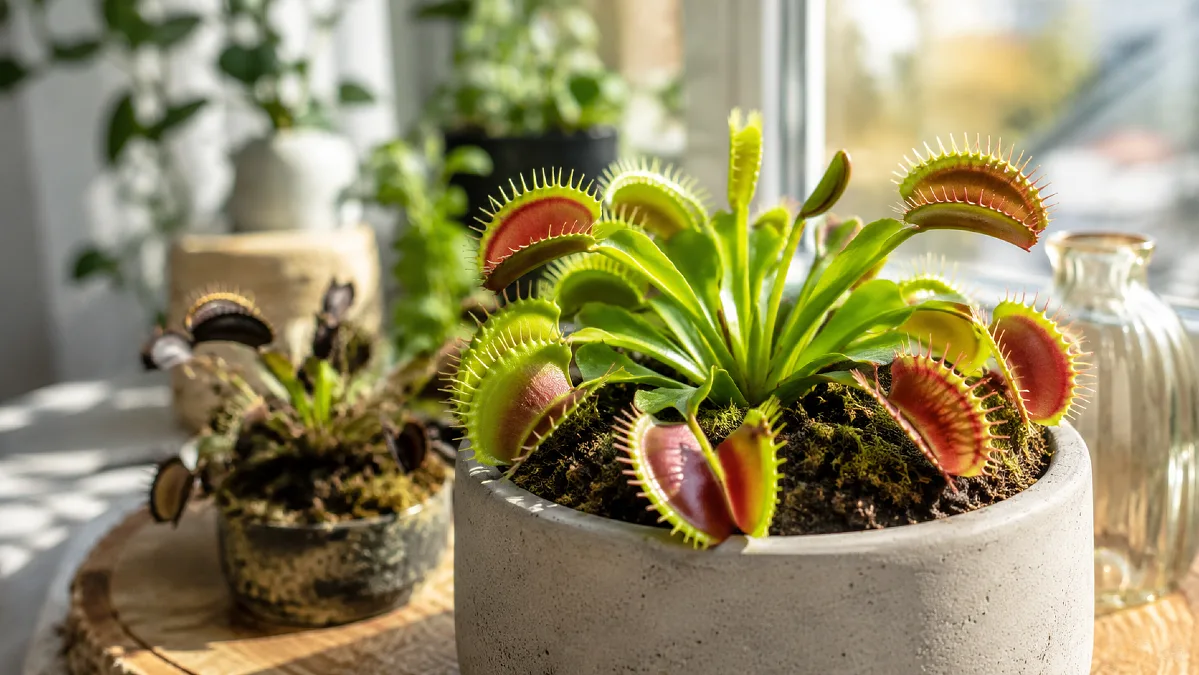
Your Venus flytrap looked sharp and healthy when you brought it home. A few weeks later, the traps began turning black. New leaves stayed small, and the plant seemed to stop growing.
You may have watered it, moved it to a pretty pot, and even fed it a few flies. Yet nothing helped.
The problem is often the care itself.
A Venus flytrap is not a normal houseplant. It comes from wet, sunny, acidic land in parts of North Carolina and South Carolina.
It needs strong light, mineral free water, poor soil, and a cool winter rest. Those needs are very different from the care given to pothos, ferns, or peace lilies.
Why Venus Flytraps Struggle Inside Most Homes
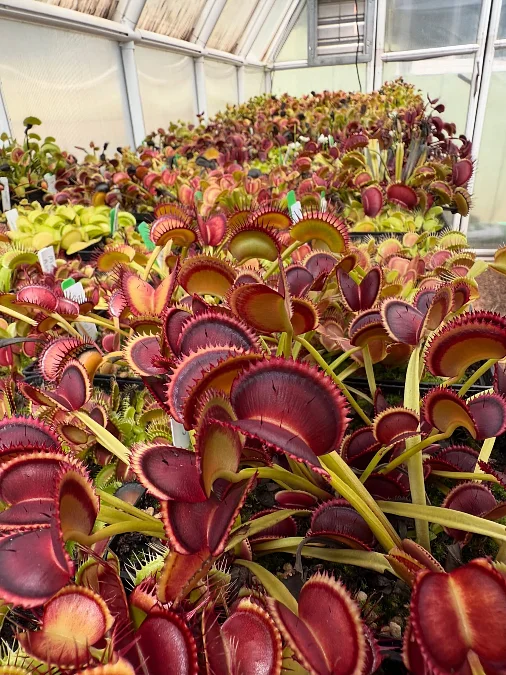
Venus flytraps are often sold beside tropical houseplants. That placement can be misleading.
They are perennial wetland plants. They grow in open places where they receive strong sun, wet roots, poor soil, and changing seasons.
Missouri Botanical Garden notes that they naturally grow in sandy, acidic, boggy areas within a small native range in the Carolinas.
A normal indoor plant routine can cause several problems.
You may place the plant several feet from a window because the room looks bright. The plant may still receive too little useful light.
You may use tap water because it works for your other plants. Minerals can then collect around the sensitive roots.
You may add plant food to help it grow. Fertilizer can damage or kill a Venus flytrap because its roots are adapted to low nutrient soil.
You may also keep it warm all winter. This prevents the normal seasonal slowdown that many growers use to maintain strong plants over the long term.
The goal is not to give your plant more care. It is to give it the right care.
Give Your Venus Flytrap Enough Light to Build Strong Traps
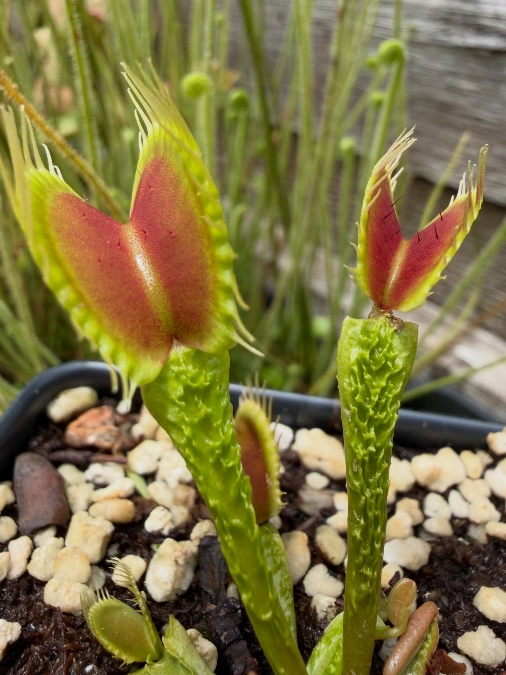
Strong light is the first thing to fix.
A Venus flytrap uses sunlight to make its energy. Insects supply extra nutrients, but they do not replace light.
The International Carnivorous Plant Society recommends plenty of light and says outdoor full sun is best when local conditions allow it. The RHS also notes that full sun supports healthy growth and helps the traps develop red color.
Choose the brightest indoor location
Place your plant directly beside your brightest sunny window. A south facing window is often the strongest choice in the Northern Hemisphere.
Do not judge light by how bright the room looks. Human eyes adjust well to dim spaces. Plants cannot.
A shelf across the room may look bright but provide only a small part of the light available beside the glass.
Watch for these signs of weak light:
- Long, thin leaves
- Small traps
- Pale green growth
- Wide, floppy leaves
- Traps that fail to color
- New growth that leans toward the window
Some healthy varieties stay mostly green, so color alone is not a perfect test. Look at the strength and shape of the whole plant.
Add a grow light when the window is not enough
A full spectrum LED grow light can make indoor care much easier. Place it close enough to give strong light without heating the leaves.
The correct distance depends on the light. Follow the maker’s instructions, then watch the plant.
Weak, stretched growth means the lamp may be too far away. Bleached patches or heat damage may mean it is too close.
A timer also helps. It gives the plant a steady daily light cycle without requiring you to remember the switch.
Introduce direct sun slowly
A plant grown under weak store lighting can burn when moved straight into intense sun.
Start with gentle morning sun. Add more direct exposure over one or two weeks.
Old leaves may still decline during the move. Judge the setup by the new growth that appears after the plant adjusts.
Stop Using Tap Water Before It Damages the Roots
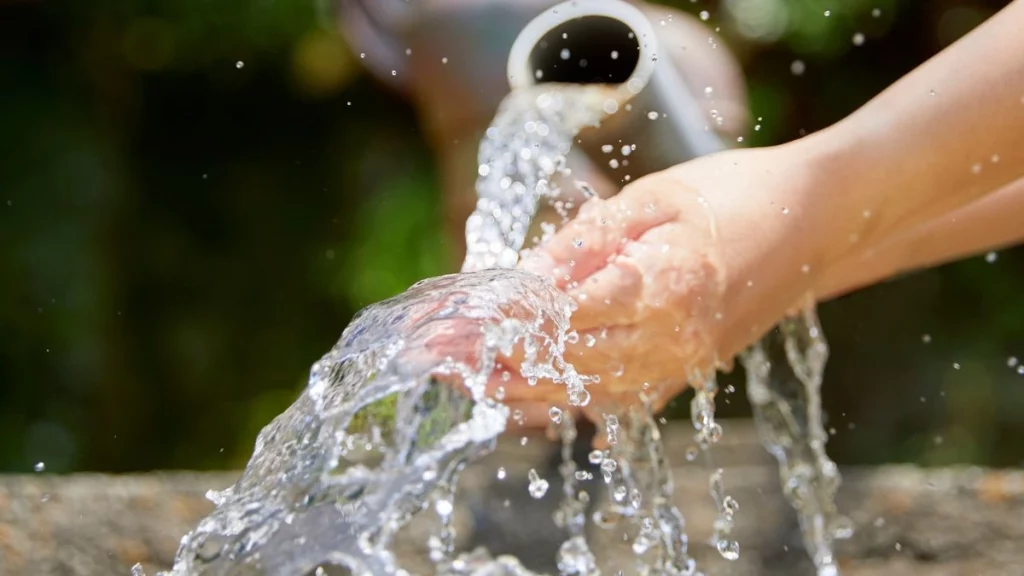
Changing the water is one of the fastest ways to improve Venus flytrap indoor care.
Venus flytraps grow in land with very few dissolved nutrients. Their roots are not built to handle the level of minerals found in many public water supplies and wells.
The RHS advises using rainwater rather than tap water. Missouri Botanical Garden recommends rainwater, distilled water, or reverse osmosis water.
Use one of these safe options
- Distilled water
- Clean rainwater
- Reverse osmosis water
Do not assume bottled drinking water is safe. Many drinking waters have minerals added for taste.
Spring water is also a poor choice. It may contain more dissolved minerals than your tap water.
Water from a shallow tray
Keep the nursery pot in a shallow tray during active growth. Add enough pure water to cover the bottom of the pot by about one centimetre.
The growing mix will pull water upward through the drainage holes.
The RHS recommends keeping Venus flytraps in a saucer of rainwater and reducing the water depth during winter. Botanic Gardens of Sydney also advises keeping the plant in water from spring through autumn, then keeping it damp during winter rest.
Check the tray often during hot weather. Small pots can dry quickly.
Keep the soil wet, but watch the crown
The growing mix should remain moist. It should never become dry and dusty.
However, the plant’s central crown should not be buried or held below deep water. A very deep tray can reduce air around the roots and may encourage rot in a warm indoor room.
Use a shallow tray and refresh the water often. Clean the tray if you see slime or a strong smell.
Use Soil That Looks Poor but Keeps the Plant Healthy
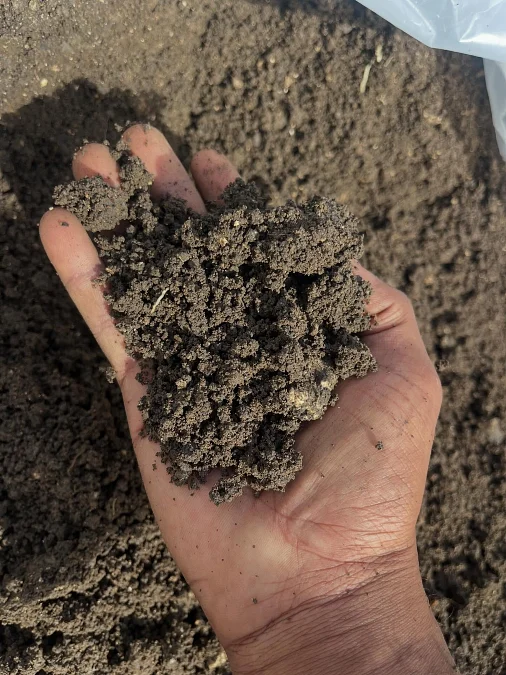
Rich soil helps many garden plants. It harms Venus flytraps.
Do not use:
- Standard houseplant soil
- Garden soil
- Compost
- Manure
- Soil with slow release fertilizer
- Orchid fertilizer
- Liquid houseplant food
Missouri Botanical Garden recommends an acidic, unfertilized mix and gives sand with peat moss as one traditional option. The RHS now promotes sustainably grown sphagnum moss or peat free carnivorous plant compost.
Pick a ready made carnivorous plant mix
For a beginner, a bag marked for carnivorous plants is usually the simplest choice.
Read the label before buying it. The mix should not contain fertilizer or rich compost.
Peat free choices are becoming easier to find. Sustainably farmed sphagnum can also work when prepared for carnivorous plants.
Choose a safe pot
A plastic nursery pot is simple and reliable. It holds moisture and does not release minerals into the growing mix.
A glazed ceramic pot can also work when the inner surface is fully sealed.
Avoid unglazed terracotta. Water moves through its walls, which can dry the mix faster. The clay may also release minerals.
The pot must have drainage holes so it can draw water from the tray.
A decorative outer pot is fine, but do not let old water sit unseen inside it for weeks. Lift the nursery pot out and clean the container often.
Repot only when needed
A newly purchased plant does not always need immediate repotting.
The RHS says new plants may not need repotting for at least a year and advises doing the job in spring when needed.
Consider repotting when:
- The growing mix smells sour
- The soil has become packed and muddy
- Mineral crust appears on the surface
- Roots fill the pot
- The plant has divided into several crowded crowns
- You know it was planted in fertilized soil
Handle the roots and rhizome gently. Do not bury the growing point in the center of the plant.
Feed Your Venus Flytrap Less Than You Think
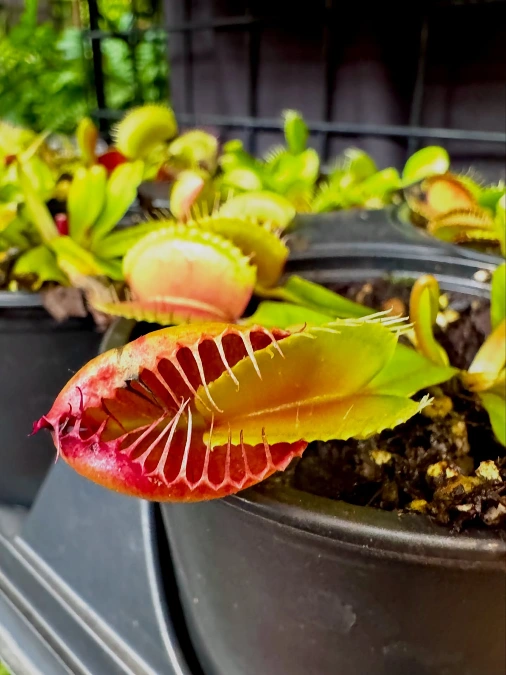
A Venus flytrap does not need a daily supply of insects.
It is still a green plant. It makes energy through photosynthesis. Insects provide nutrients that are scarce in its native soil.
Botanic Gardens of Sydney states that feeding live insects is not essential for survival, though catching prey can support growth. The RHS says Venus flytraps need only a few insects a year and can survive for months without one.
Let outdoor plants catch their own food
A plant kept on a sunny patio or balcony will often catch small insects without your help.
Do not fill every open trap. The plant does not need that much food.
Feed an indoor plant only when it is healthy
Light and water problems must be corrected before feeding.
A weak plant cannot be rescued with more bugs. Feeding creates extra work for the trap. The plant needs enough energy to close, seal, digest, and reopen.
When feeding is needed, use a small live insect that fits easily inside the trap. The insect should be much smaller than the trap so the edges can close fully.
Feed one trap, then leave the plant alone for several weeks.
Never give it human food
Do not feed a Venus flytrap:
- Raw meat
- Cooked meat
- Cheese
- Chocolate
- Fruit
- Pet food
- Bread
- Fertilizer
The RHS warns against feeding dead insects and human food because the trap depends on movement from live prey to continue the digestive process.
A trap that closes around unsuitable food may fail to seal. The food can rot and cause the trap to blacken.
Stop touching the traps for fun
Closing a trap uses stored energy.
The RHS notes that each trap can close only a limited number of times before it dies. Repeatedly triggering empty traps can weaken the plant.
One accidental touch will not kill a healthy plant. Constant poking can cause real stress.
Give Your Plant a Cool Winter Rest
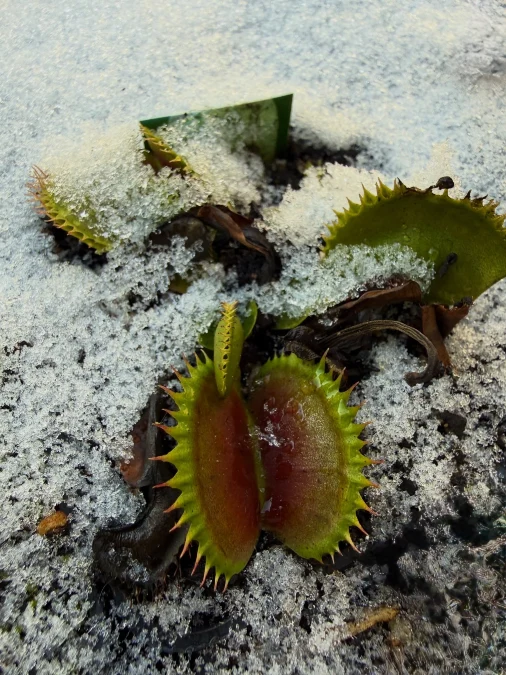
Winter dormancy is the part of indoor care that causes the most confusion.
Venus flytraps naturally slow down as autumn days become shorter and temperatures fall. Missouri Botanical Garden says dormancy is usually triggered when temperatures begin dropping below 50°F, or 10°C, along with shorter days.
During this period, the plant may look less attractive.
Old summer traps turn black. New leaves become shorter and stay close to the soil. Growth may almost stop.
This does not always mean the plant is dying.
Choose a cool, bright winter spot
A cool porch, bright garage window, unheated sunroom, or sheltered outdoor area may work. The correct option depends on your winter climate.
The RHS recommends a cooler rest period and warns against keeping the plant in a warm room throughout winter. Missouri Botanical Garden suggests a sunny, cool indoor space around 40°F to 50°F, or about 4°C to 10°C, for overwintering containers.
Protect a small pot from a hard freeze. Roots in containers lose heat faster than plants growing in the ground.
Reduce water without drying the plant
During active summer growth, the pot can sit in a shallow water tray.
During winter rest, lower the water level. Keep the growing mix damp rather than deeply flooded.
Never let it become fully dry.
Do not force food during winter
Dormant plants do not need insects.
Wait until active spring growth returns before considering feeding.
You may remove fully black leaves with clean scissors. Leave any green tissue attached to the plant.
Fix the 7 Mistakes That Kill Indoor Venus Flytraps
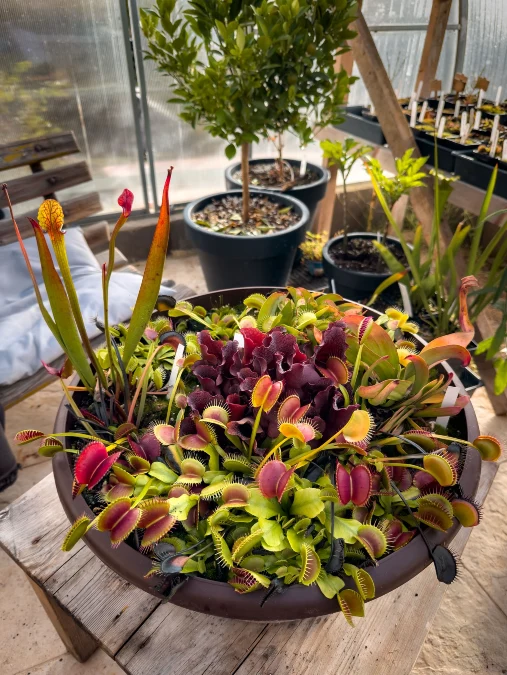
When you are asking, “Why is my Venus flytrap dying?” check these seven problems first.
1. The plant is too far from the window
A bright room is not the same as direct plant light.
Move the pot beside your sunniest window or add a strong grow light. Watch the next leaves rather than expecting old weak leaves to recover.
2. You are watering with tap water
Mineral buildup can damage the roots over time.
Switch to distilled, rain, or reverse osmosis water. If the plant has received hard water for months, repotting into fresh carnivorous plant mix may also help.
3. It is planted in normal potting soil
Rich soil can burn sensitive roots.
Remove the plant carefully and place it in an unfertilized carnivorous plant mix. Do not add compost to make the soil look healthier.
4. You added fertilizer
Venus flytraps evolved to live in soil with few nutrients.
The RHS specifically warns against fertilizer because nitrogen rich products can kill the plant.
Stop all feeding through the roots. If fertilizer was recently added, repot the plant and rinse the roots gently with pure water.
5. Everyone keeps closing the traps
A trap is a working leaf, not a toy.
Place the plant where children and visitors can see it without touching it. A single demonstration may seem harmless, but repeated empty closures drain energy.
6. The plant is sealed inside a terrarium
Venus flytraps do not require a closed glass dome.
A sealed container can trap heat and stale air. It can also encourage mold when the soil remains wet.
The International Carnivorous Plant Society checklist advises growers to remove the common plastic cup terrarium sold with many flytraps.
Humidity is rarely the first problem to solve. Strong light, pure water, and healthy roots matter more.
7. It stays warm all year
Constant indoor warmth can prevent a proper seasonal slowdown.
Plan a safe cool rest based on your climate. Keep the plant damp and protect the pot from severe freezing.