
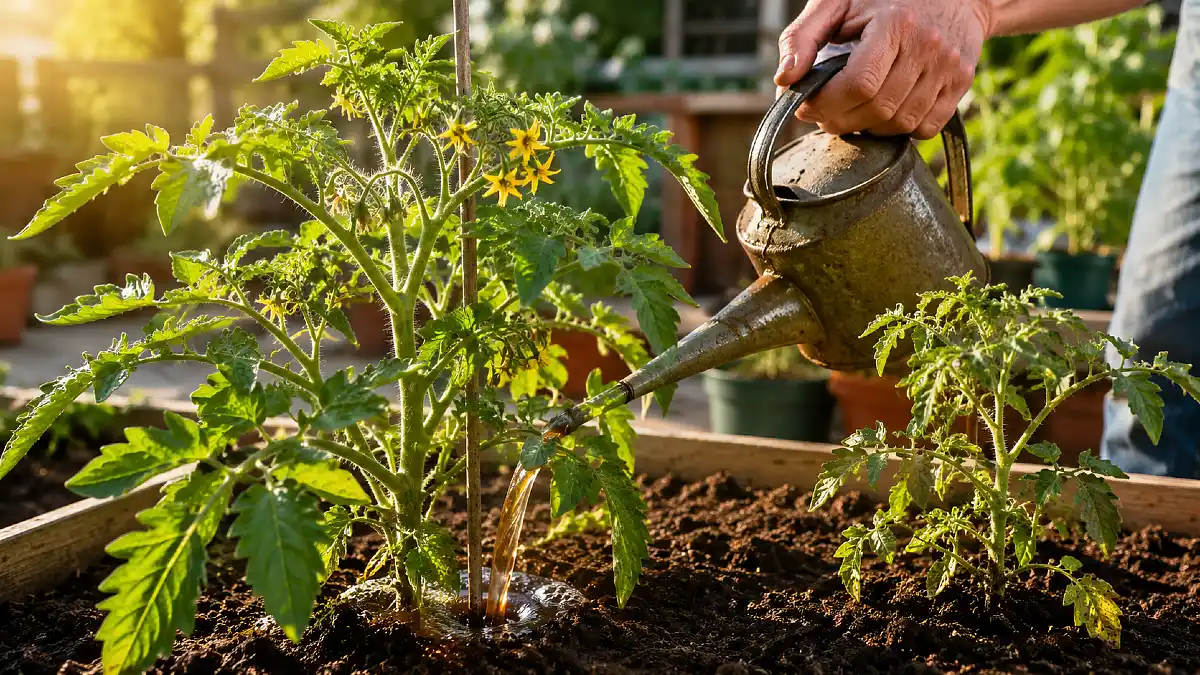
A tomato plant with no flowers is not always hungry.
Sometimes it is simply too young. Newly transplanted tomatoes often spend their first few weeks building roots and adjusting to outdoor conditions. Growth above the soil may slow while this happens.
Temperature can also delay development. Penn State Extension says tomatoes prefer daytime temperatures near 70°F to 80°F and nighttime temperatures above 60°F.
Heat creates a different problem. Tomatoes may form flowers during hot weather, but those flowers can drop before fruit develops.
The One Natural Feed Worth Trying Is Comfrey Liquid
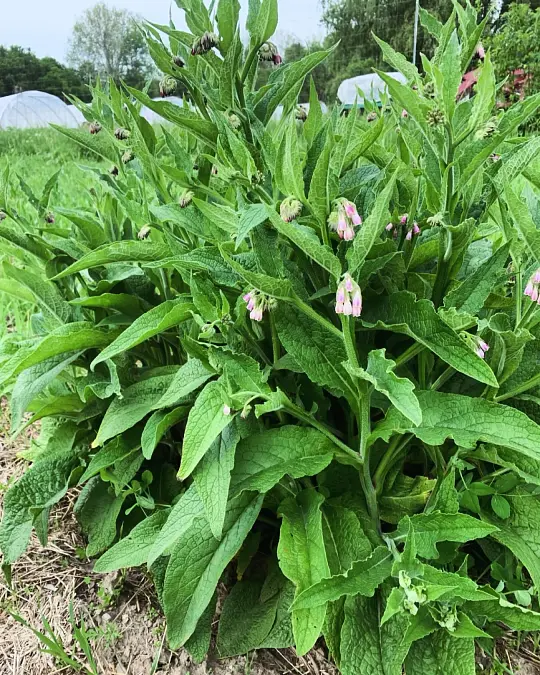
Comfrey is a leafy perennial plant often grown in wildlife gardens and vegetable plots. Its leaves can be broken down in water to create a dark liquid fertilizer.
Why use it for tomatoes?
A 2026 Garden Organic comparison found that nettle feeds contained significantly more nitrogen than comfrey feeds. The tested comfrey feeds contained slightly more potassium, although that difference was small and was not statistically significant.
That detail matters.
Nitrogen pushes leafy growth. Potassium supports many plant processes linked with flowering, water control, and fruit development.
University of Minnesota Extension recommends choosing a feed with more phosphorus or potassium relative to nitrogen when the goal is flower or fruit production.
Comfrey liquid may therefore be a better choice than a nitrogen rich nettle feed for established tomato plants that are approaching flowering.
But keep your expectations realistic.
Homemade comfrey feed does not contain a fixed nutrient ratio. Its strength changes with the type of comfrey, leaf age, amount of water, soaking time, and growing conditions.
Treat it as a gentle garden feed, not a measured cure for a serious nutrient deficiency.
A soil test remains the best way to find out what the soil actually lacks.
How to Make Comfrey Feed in 4 Simple Steps
Comfrey feed is easy to make, but it has one clear downside.
It smells very strong.
Use a container with a lid and place it away from doors, seating areas, and open windows.
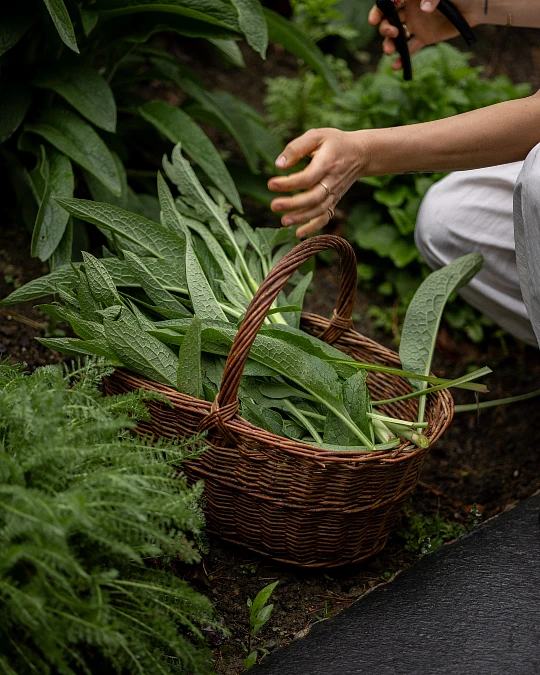
1. Collect healthy comfrey leaves
Cut enough leaves to loosely fill about half of your container.
Wear gloves and long sleeves. Comfrey leaves have coarse hairs that may irritate sensitive skin.
Do not use leaves that have been sprayed with weed killer or another garden chemical.
2. Put the leaves in a plastic container
Use a bucket with a lid. Avoid a valuable metal container because the mixture may stain it or encourage corrosion.
Press the leaves down with a brick, stone, or another clean weight.
3. Cover the leaves with water
Add enough water to cover the leaves. Replace the lid without sealing the bucket so tightly that gas cannot escape.
ECHO’s gardening guidance describes using about 1 to 2 kilograms of comfrey leaves in a 20 litre bucket. It suggests allowing the mixture to sit for around two weeks in hot weather or four weeks in cooler conditions.
Stirring is optional. Leaving the lid closed will reduce the smell around your garden.
4. Strain and dilute the liquid
The finished liquid will be dark and unpleasant smelling. Strain out the broken leaves and add them to your compost pile.
Do not pour the strong liquid straight onto your tomato roots.
Start by mixing:
- One part comfrey liquid
- Fifteen parts water
The finished mixture should look more like weak tea than thick black liquid.
Because homemade batches vary, a weaker mixture is safer when you use it for the first time.
How to Feed Tomatoes Without Burning the Roots

The safest time to feed is when the soil is already slightly damp.
Dry roots are easier to damage. If the soil feels very dry, water the plant first. Apply the diluted feed later that day or the next morning.
Pour the mixture onto the soil around the plant. Keep it away from the main stem and avoid splashing the leaves.
For an established container tomato, begin with a small amount of diluted feed. The exact volume depends on the pot size, so moisten the root area rather than flooding the container.
Then wait.
Do not feed again the next day because you cannot see an instant change. New plant growth takes time.
A sensible starting routine is:
- Apply one weak comfrey feed.
- Wait 7 to 14 days.
- Check the newest leaves and growing tip.
- Feed again only if the plant is responding well and the soil is not already rich.
Stop feeding if the plant develops very dark leaves, soft growth, scorched edges, sudden curling, or a white fertilizer crust on the soil.
RHS warns that overfeeding, particularly with nitrogen rich fertilizer, encourages lush, soft growth that may be more vulnerable to pests, disease, and poor weather.
More fertilizer does not mean more tomatoes.
Check These 5 Problems Before Adding Any Feed
Comfrey liquid can support a plant that is short of nutrients. It cannot correct every reason for stalled growth.
Check these five conditions first.
1. Your tomato is not getting enough direct sun
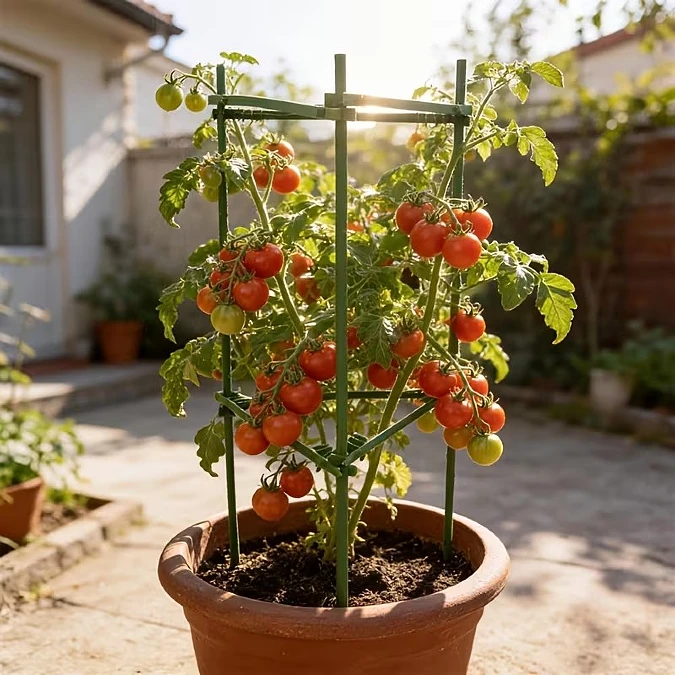
Tomatoes need strong light to produce sturdy growth and flowers.
A plant on a shaded balcony may stay thin and stretch toward the brightest opening. A plant beside a tall fence may receive morning light but spend most of the day in shade.
Track the spot for a full day. Do not guess based on how bright it feels.
Container tomatoes can often be moved to a sunnier place. Plants in the ground may need nearby growth trimmed back.
Avoid removing large amounts of healthy tomato foliage. The leaves make energy and help protect developing fruit.
2. Cool weather is slowing the plant
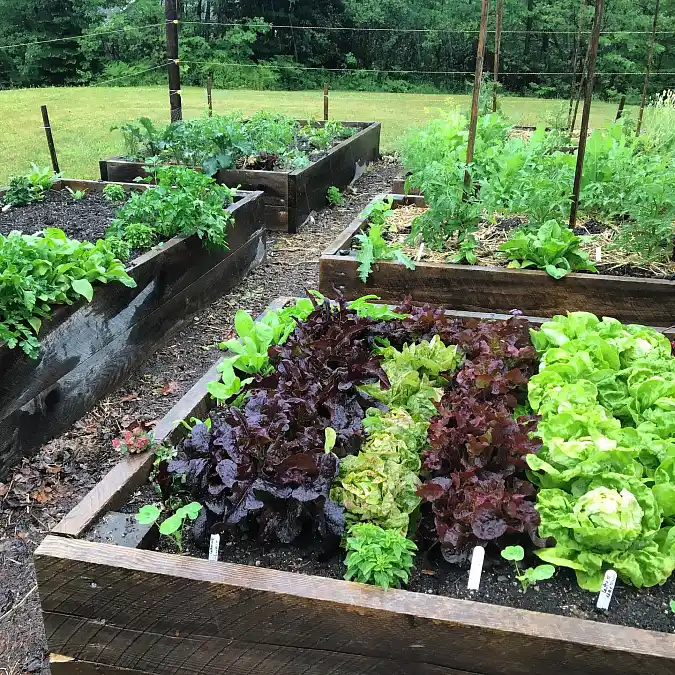
Tomatoes are warm season plants. Cold nights can slow root activity and new growth even when the plant looks healthy.
RHS advises that tomatoes do not thrive below about 54°F. Penn State Extension reports that they prefer nights above 60°F.
A feed will not warm cold soil.
For container plants, move pots beside a warm wall that receives sun. In cooler gardens, use horticultural fleece at night while keeping it away from the leaves where possible.
Remove the cover during the day so the plant receives light and airflow.
3. Extreme heat is stopping flower development
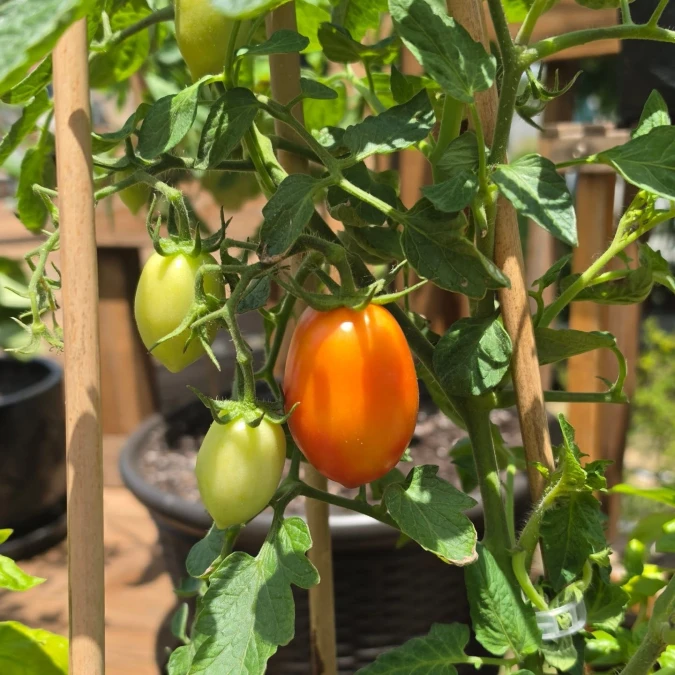
Hot weather can make a tomato plant look as though it has a feeding problem.
The plant may wilt in the afternoon. Flower buds may dry out. Open flowers may drop without forming small green tomatoes.
During a heatwave:
- Water deeply in the morning.
- Add mulch over the soil.
- Protect containers from hot paving.
- Give plants light afternoon shade during the worst heat.
- Do not apply strong fertilizer to a wilted plant.
If the temperature is the problem, flowering often improves after the weather becomes milder.
4. The soil keeps changing from dry to soaked
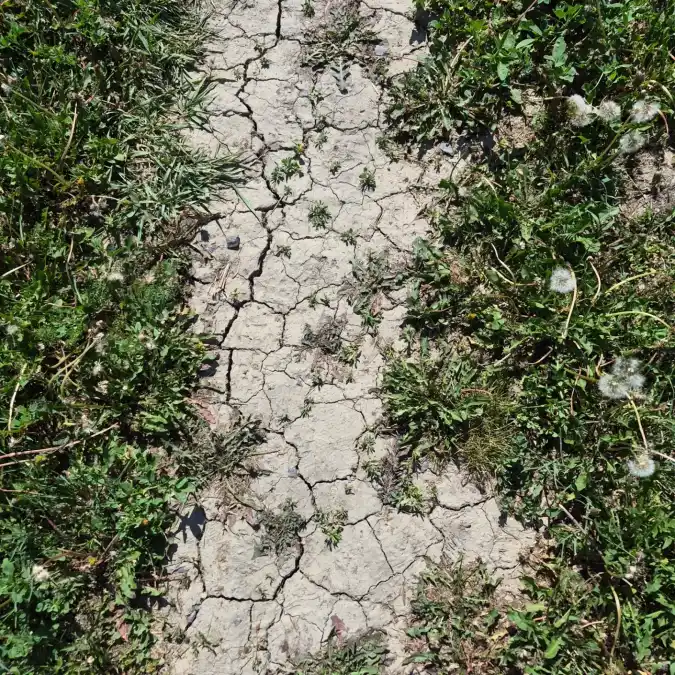
Tomatoes grow best with steady moisture.
Repeated drying and flooding stresses the roots. It can also interfere with nutrient movement through the plant.
RHS links fluctuating soil moisture with tomato fruit problems such as splitting. Its blossom end rot guidance also explains that calcium problems in fruit often relate to water uptake rather than a simple lack of calcium in the soil.
Push a finger several centimetres into the soil before watering.
If the surface is dry but the soil beneath is damp, wait. If the root area feels dry, water slowly until the whole root ball is moist.
5. The plant has already received too much nitrogen
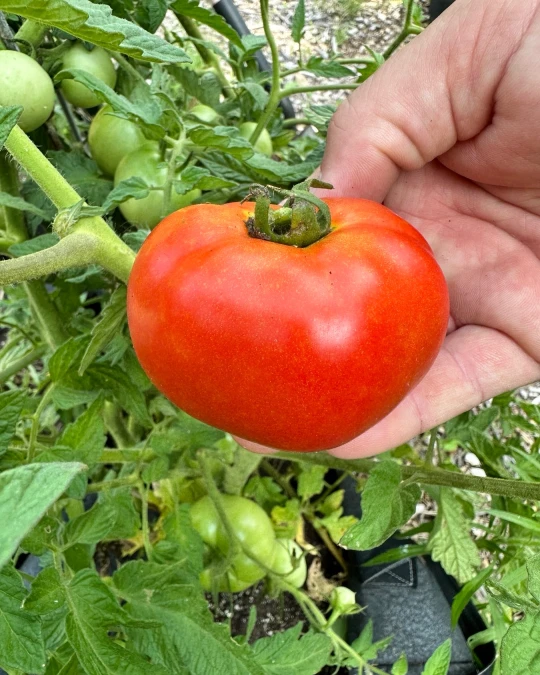
A tomato plant with too much nitrogen often looks impressive.
It may have large leaves, thick stems, rapid growth, and a deep green colour. Yet the flower clusters are late or missing.
Do not add fish emulsion, fresh manure, lawn fertilizer, or another nitrogen rich product to this plant.
University of Minnesota Extension states that excessive nitrogen later in the season can reduce or delay fruiting.
Pause feeding and give the plant time. Keep watering steady and provide as much direct sun as possible.
What Results You Can Realistically Expect
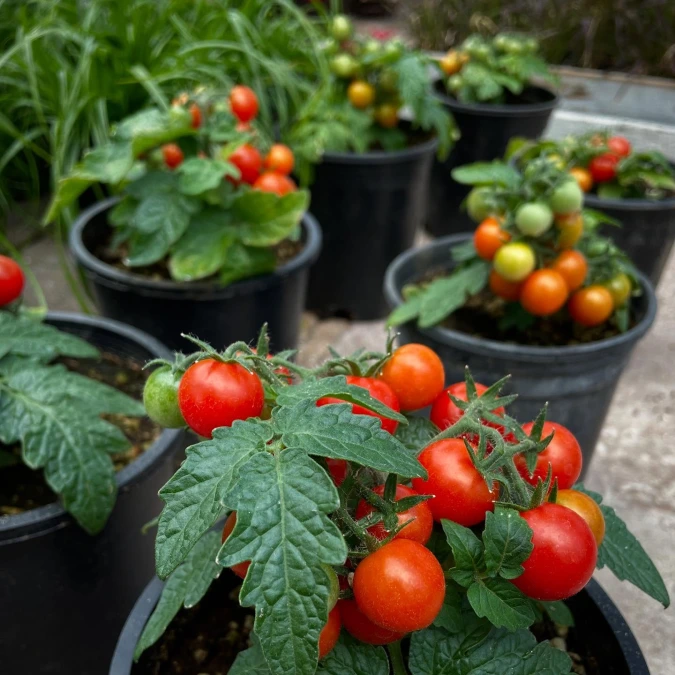
Comfrey liquid cannot force a tomato plant to flower overnight.
When low nutrient supply is the main problem, you may first notice:
- A stronger growing tip
- Slightly larger new leaves
- Better colour in pale growth
- Longer stems between new leaf sections
- The appearance of a new flower cluster
The plant’s age and variety affect the timing. A small patio tomato may begin flowering earlier than a large indeterminate variety.
Weather also controls the response. A plant cannot use nutrients well when its roots are cold, waterlogged, very dry, or damaged.
Give one diluted feed and watch the new growth, not the old leaves. Damaged or yellow lower leaves may never become green again.
If nothing changes after two weeks, check the root zone.
A tomato growing in a tiny pot may be root bound. A plant in heavy wet soil may have weak roots. A sick plant may be dealing with root rot, wilt, insect damage, or another problem that fertilizer cannot solve.
5 Quick Ways to Help Flowers Form
Feeding works better when the plant’s basic needs are already met.
1. Increase the available light
Move containers into the sunniest safe position. Rotate the pot every few days if one side receives much more light.
2. Give roots more space
Small pots dry quickly and restrict root growth.
Move a crowded tomato into a larger container with drainage holes. Use fresh potting mix made for vegetables or outdoor containers.
3. Water the root zone deeply
Small surface splashes encourage shallow roots.
Water slowly until moisture reaches the lower part of the pot or bed. Then allow the upper layer to begin drying before watering again.
4. Support the main stems
Tie growing stems loosely to a stake or cage. Good support keeps leaves open to light and reduces damage during wind.
Leave space between the tie and the stem.
5. Gently shake open flowers
Tomato flowers contain both male and female parts and can pollinate themselves. Wind and movement help release pollen.
When flowers appear, gently tap the flower cluster around midday on a dry day. Do not pull, squeeze, or strike the flowers.
University of Minnesota Extension notes that tomato flowers have a limited window for successful pollination, while high heat can interfere with the process.
Common Natural Tomato Feeding Mistakes to Avoid

Natural does not always mean useful, balanced, or safe.
Using banana peel water as a complete fertilizer
Banana peels contain nutrients, but soaking them in water does not create a complete or measured tomato fertilizer.
The liquid may contain only small or unpredictable amounts of plant nutrients. It can also attract flies if peel pieces remain in the pot.
Add banana peels to a managed compost system instead.
Adding eggshells for an instant calcium fix
Crushed eggshells break down slowly. They will not provide a quick cure for flower problems or blossom end rot.
University of Minnesota Extension explains that calcium reaches tomato fruit through water movement in the plant. Root damage and poor water uptake can limit that movement even when calcium is present in the soil.
Steady watering usually matters more than adding eggshells around an established plant.
Feeding a leafy plant with fish fertilizer
Fish fertilizer can be useful for pale seedlings with a true nitrogen shortage. A May 2026 University of Minnesota vegetable update mentions fish emulsion as an option for yellow seedlings that are growing slowly.
But a tall, dark green tomato with no flowers may already have plenty of nitrogen.
Read the plant before choosing the feed.
Mixing several homemade fertilizers
Do not combine comfrey liquid, nettle tea, fish fertilizer, manure tea, coffee grounds, and a commercial tomato feed.
You will not know how much nutrition the plant is receiving. Salt levels may rise, roots may burn, and excess nitrogen may delay flowering.
Use one product at a time.
Feeding during severe heat or drought
A wilted plant needs relief from heat and dry soil. It does not need a strong meal.
Water it, shade the root zone, and wait until it has recovered. Apply fertilizer only when the plant is firm and the soil is evenly damp.
Should You Use Comfrey Feed on Container Tomatoes?
Container tomatoes are good candidates for careful liquid feeding because regular watering washes nutrients through drainage holes.
The limited amount of potting mix can also become depleted during a long growing season.
Before feeding, make sure the pot has:
- Open drainage holes
- Enough space for the roots
- Fresh or good quality potting mix
- Several hours of direct sun
- Steady access to water
A feed cannot make up for a container that is far too small.
If roots circle the inside of the pot or emerge heavily from the drainage holes, move the tomato into a larger container. Water it well and allow several days for recovery before applying fertilizer.
When a Commercial Organic Tomato Feed Is Safer
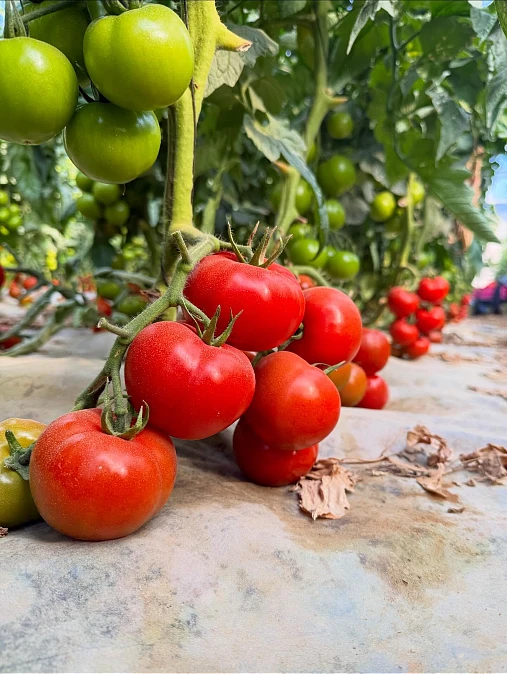
Making comfrey fertilizer takes several weeks. The mixture also smells, and its nutrient strength is uncertain.
A labelled organic tomato fertilizer may be the safer option when:
- You need a feed immediately.
- You grow tomatoes on a small balcony.
- You do not have access to comfrey.
- You want a measured nutrient ratio.
- Your plants have shown fertilizer damage before.
Look at the three numbers on the fertilizer label. They represent nitrogen, phosphorus, and potassium.
Choose a tomato or flowering plant formula that does not contain an unusually high first number. Follow the package rate exactly.
Do not double the amount to get faster flowers.
When Feeding Will Not Save the Plant
Stop looking for a fertilizer solution when the tomato shows signs of serious damage.
Check closely for:
- Black or collapsing stems
- Rapid wilting in damp soil
- Brown roots with a bad smell
- Large spreading leaf spots
- Heavy insect infestations
- Severe leaf distortion
- A broken main stem
- Waterlogged soil with no drainage
A sick root system cannot make good use of fertilizer. Feeding may make the stress worse.
Remove badly affected leaves only when you can do so without stripping the plant. Clean cutting tools between plants.
For sudden wilt, major stem damage, or fast spreading disease, contact a local horticultural extension service or plant clinic. Send clear pictures of the whole plant, both sides of the leaves, stem, soil, and container.
| What You See | Most Likely Cause | What to Do |
|---|---|---|
| Small plant with pale leaves | Low nutrients or limited root space | Check the pot size, then apply one weak comfrey feed |
| Large dark green plant with no flowers | Too much nitrogen | Stop feeding and give the plant more sunlight |
| Flowers appear but fall off | Extreme heat or cold nights | Keep moisture steady and protect the plant from temperature stress |
| Leaves wilt in the afternoon | Heat or dry soil | Water deeply in the morning and add mulch |
| Soil stays wet for days | Poor drainage | Improve drainage and let the soil partly dry before watering |
| Plant grows slowly in a shaded spot | Too little direct sunlight | Move the container or trim nearby shade |
| New leaves improve after feeding | Nutrient shortage was likely | Continue weak feeding every 7 to 14 days |
| No change after two weeks | Feeding is not the main problem | Check roots, temperature, light, pests, and disease |
The Simple Plan to Follow This Week
When your tomato plants are not flowering, resist the urge to add every garden remedy you can find.
Use this order instead:
- Count the hours of direct sun.
- Check daytime and nighttime temperatures.
- Feel the soil below the surface.
- Look for signs of excess nitrogen.
- Check whether the roots have enough space.
- Apply one weak comfrey feed only if nutrition appears low.
- Watch the newest growth for 7 to 14 days.
This approach gives you useful information. It also protects the plant from repeated feeding.