
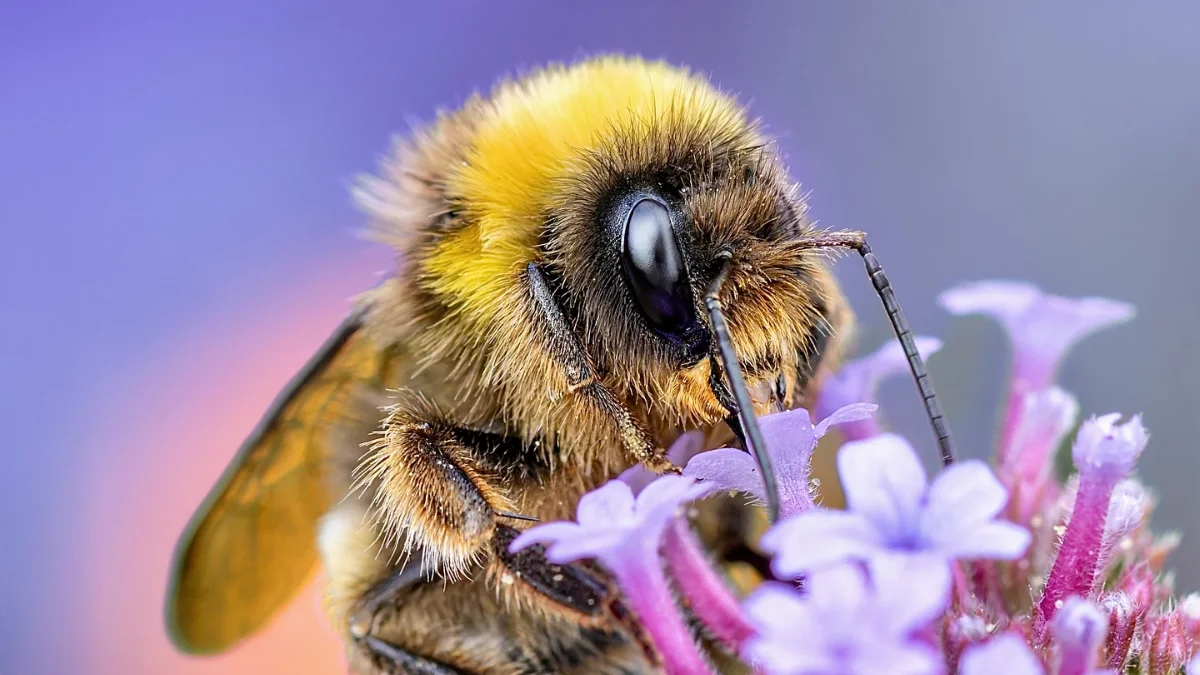
Cultivating a sanctuary for pollinators creates a delightful buzz throughout your backyard. Bees serve a vital role in our global ecosystem, yet they face alarming habitat loss daily.
Planting specific blooms helps them survive while making your outdoor space vibrant. Native plants often attract these buzzing visitors best because they evolved together over centuries.
Gardens filled with purple, blue, and yellow petals catch their eyes quickly. Avoiding harsh pesticides remains critical for their long term health. Simple changes transform a plain lawn into a thriving natural habitat.
You enjoy the colorful view while the insects gather their necessary nectar. This guide offers practical ways to support local wildlife effectively. Every flower counts when trying to save these essential workers.
Creating a Backyard Sanctuary for Native Bees
Bees play a crucial role in the ecosystem yet struggle with shrinking habitats. You can support them by filling your garden with native plants in shades of purple, blue, and yellow.
Avoiding harmful pesticides ensures these visitors remain healthy while collecting nectar. A few mindful planting choices can turn your outdoor space into a thriving wildlife haven.
- Choose native plants that evolved alongside local bee populations.
- Plant flowers with blue, purple, and yellow petals to attract attention.
- Stop using harsh pesticides to ensure the long-term health of pollinators.
- Convert plain lawns into diverse habitats to support essential wildlife.
Pollinator Paradise
Go Native
Choose native plants that evolved alongside local bee populations.
Specific Colors
Plant flowers with blue, purple, and yellow petals to attract attention.
No Harsh Chemicals
Stop using harsh pesticides to ensure the long-term health of pollinators.
Convert Lawns
Convert plain lawns into diverse habitats to support wildlife.
1. Native Wildflower Layers
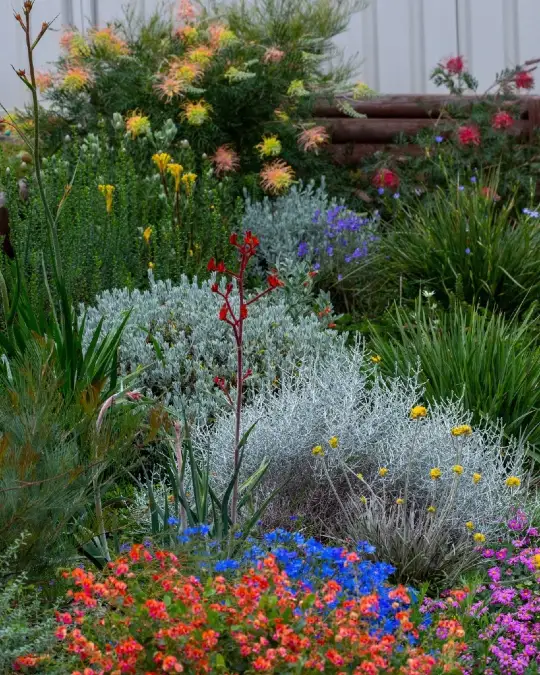
Crimson kangaroo paws rise above silver foliage to create a striking vertical contrast for visitors. Native shrubs offer rich nectar sources that keep local pollinators busy throughout the warm afternoons.
Carpeted blue and pink blooms cover the soil to suppress weeds effectively while adding charm. Textural diversity encourages various bee species to explore every corner of this lush planting bed.
2. Permeable Stepping Stone Pathway
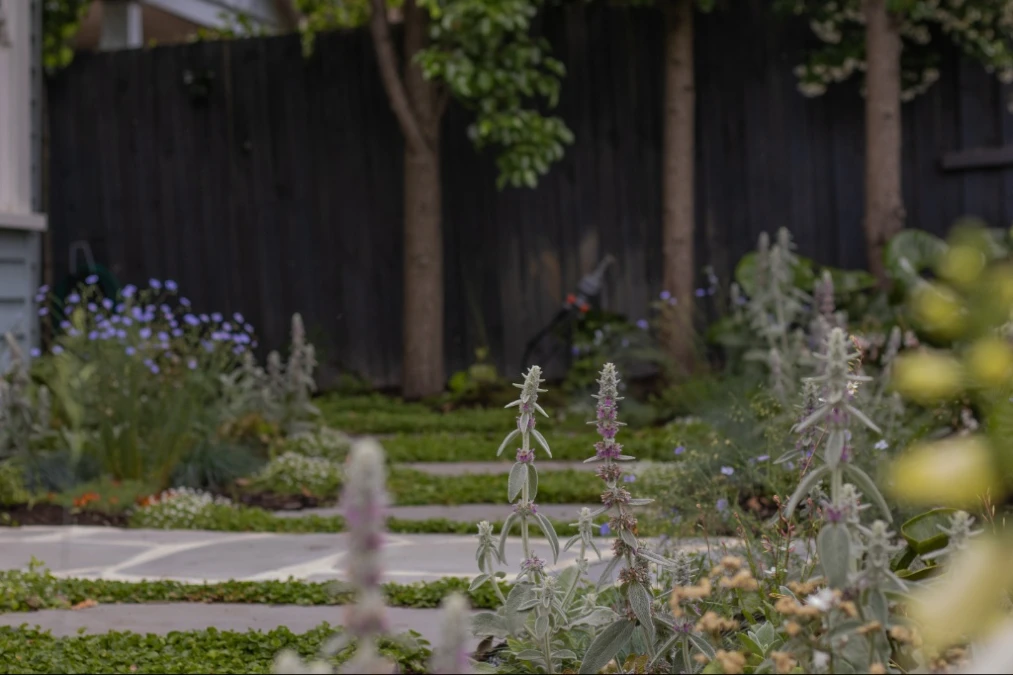
Interspersed stone slabs allow resilient ground cover to flourish in the gaps beneath your feet. Creeping greenery fills these spaces to provide essential nectar for hungry foraging insects. Solid concrete absorbs heat, but this breathable design keeps the soil cool and moist.
Woolly stalks rise gracefully to offer a soft texture among the smooth gray stones. Purple spikes attract diverse bee species that rely on these specific blooms for their daily sustenance. Vertical planting adds depth to the walkway while supporting a healthy ecosystem in your yard.
3. Whimsical Cottage Garden Retreat
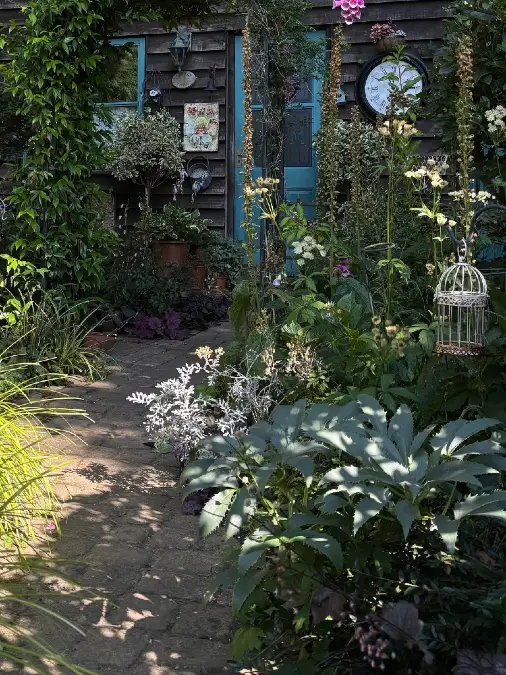
Towering foxgloves line the rustic brick walkway to provide a feast for local bumblebees. Climbing greens drape over the wooden entrance to shield delicate flyers from strong wind gusts.
Decorative cages hang amidst the blooms to add charm while nature reclaims the space below. Shadowy plant layers keep the soil cool and moist to support a thriving insect community.
4. Sunlit Purple Coneflower Haven
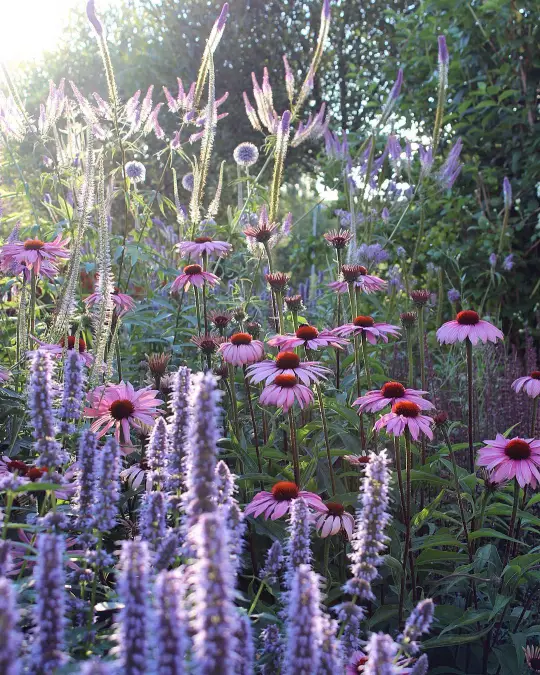
Luminescent purple petals glow warmly against the setting sun to welcome busy evening foragers. Coneflowers stand tall in the garden bed to provide a sturdy landing pad for bees. Golden light filters through the foliage to create a serene atmosphere for nature watching.
Vertical spikes of veronicastrum add height and drama to the lush floral arrangement. Dense planting keeps the soil moist while offering shelter for various insect species.
5. Recycled Pallet Bee Hotel
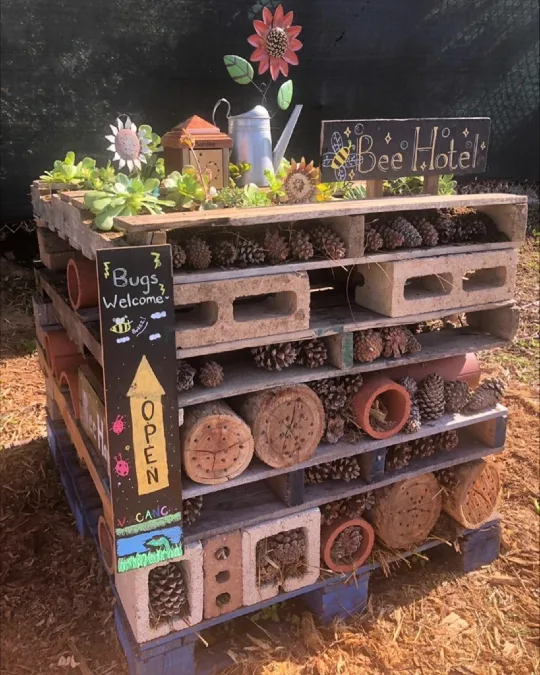
Repurposed wooden pallets stack vertically to create a robust high rise sanctuary for solitary pollinators. Drilled logs and scattered pinecones fill the open gaps to provide secure nesting cavities.
Concrete cinder blocks regulate internal temperatures to protect delicate larvae from extreme weather shifts. Succulent plants growing on the roof offer biological insulation and immediate nectar sources for residents.
6. Secluded Gravel Pollinator Walkway
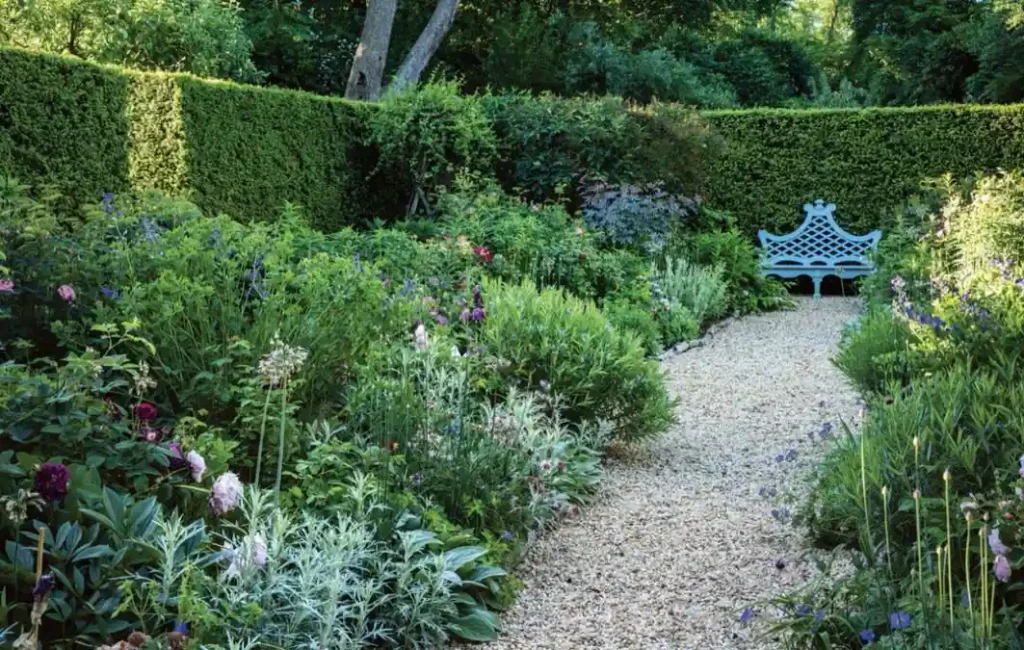
Crushed stone creates a permeable surface that allows the earth beneath to breathe freely. Lush green borders overflow with vibrant purple salvia to offer rich nectar sources nearby.
Towering hedges provide essential wind protection for delicate wings during rough weather conditions. Dense planting layers allow various insects to hide safely from predators while resting.
7. Wild Poppy Meadow Patch
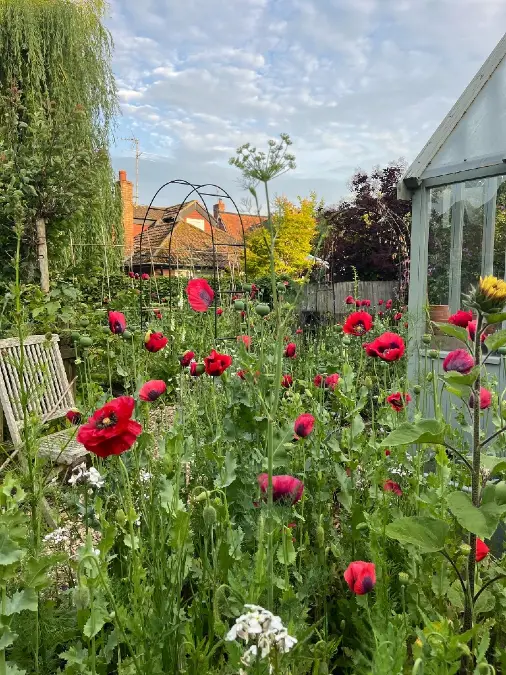
Crimson poppies sway on slender stalks to signal a rich feast for passing bumblebees. Papery petals unfold completely to allow easy landings for insects gathering their daily pollen.
Weathered timber furniture offers a quiet spot to watch the frenetic apiary activity nearby. Traditional glass structures shelter delicate starts while the wilder patch thrives in the open air.
8. Educational Pollinator Signage
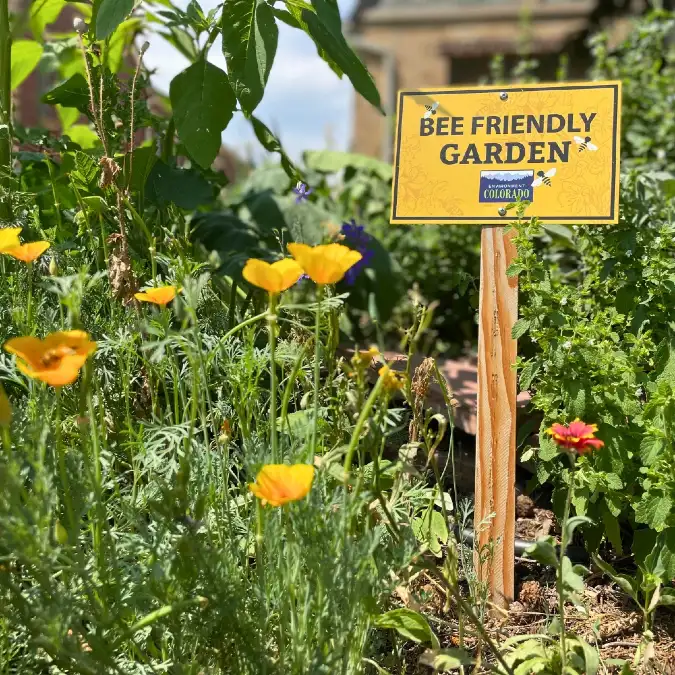
Declarative yellow placards announce your commitment to local conservation efforts clearly to every passerby. Vibrant orange blooms mirror the sunny color of the sign to create a cohesive visual theme.
Advocacy through signage encourages neighbors to adopt similar sustainable gardening habits in their own yards. Dense foliage surrounds the wooden stake to provide immediate shelter and food for visiting insects.
9. Vibrant Cottage Path Borders
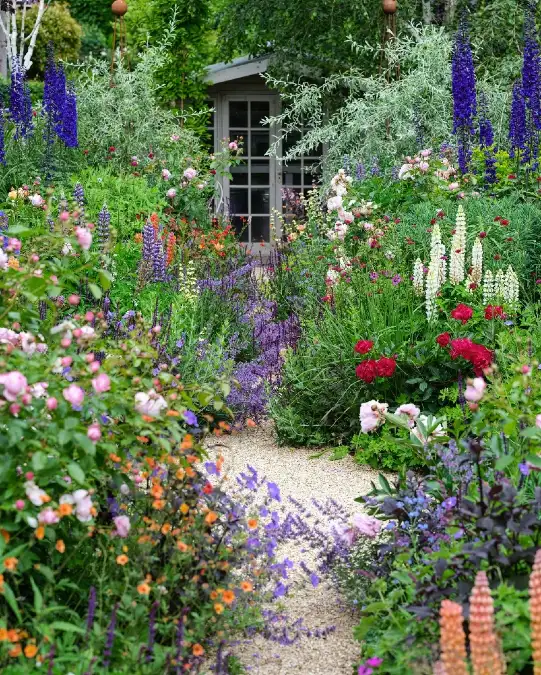
Majestic purple delphiniums tower above the path to create a vibrant and welcoming floral tunnel. Abundant greenery crowds the gravel edges to keep the soil cool for beneficial insects.
Scarlet blooms provide a stark contrast against the soft pastels of the surrounding garden bed. Ivory lupine spikes offer sturdy landing platforms for larger bumblebees seeking a quick rest.
10. Late Blooming Purple Asters
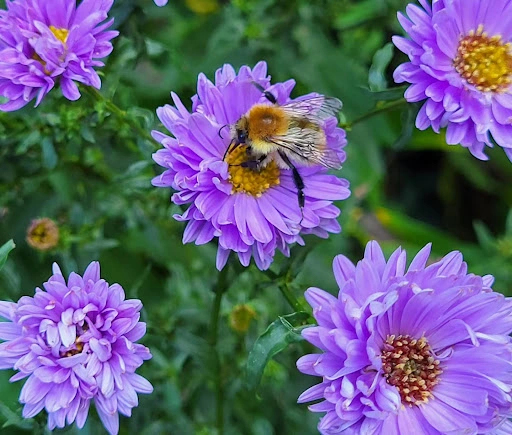
Vibrant violet petals fan out around a golden center to attract hungry bumblebees seeking late nectar. Fuzzy pollinators cling tightly to the disk florets while gathering essential energy for their hives.
Perennial asters offer a critical food source during the cooling autumn months when resources become scarce. Dense clusters of flowers resembling daisies provide easy access for bees of all sizes to land safely.
11. Integrated Vegetable Garden Apiary
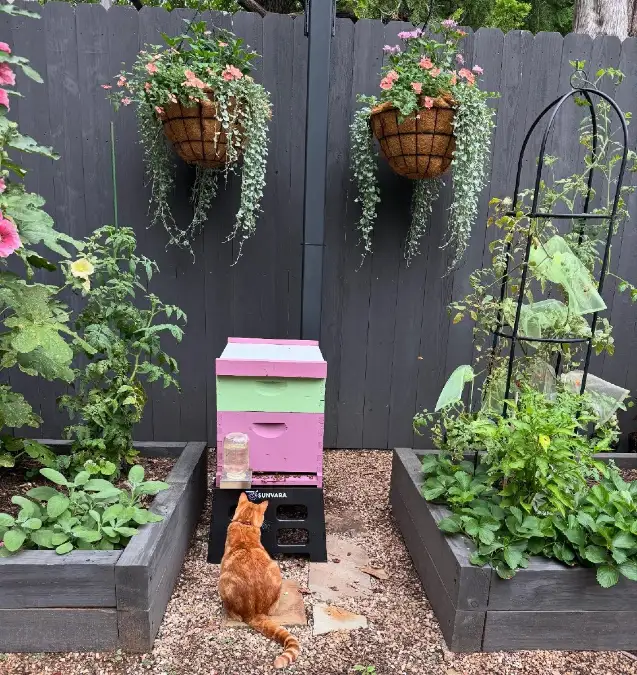
Pastel hues on the wooden hive box create a cheerful focal point between raised vegetable beds. Homegrown tomatoes thrive alongside the busy colony to ensure excellent pollination rates for your summer harvest.
Cascading blooms spill from hanging baskets to soften the dark fence backdrop beautifully. Nature balances itself here as curious pets and buzzing flyers coexist in the productive outdoor space.
12. Certified Pollinator Habitat Zone
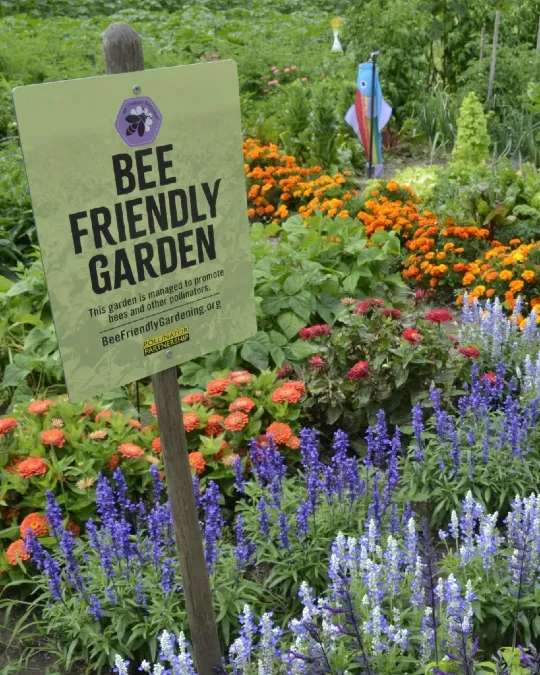
Official green placards stand proudly among the rows to declare this space a safe zone. Marigolds and zinnias offer bright pops of orange and red to attract passing flyers.
Violet salvia spikes rise in the foreground to provide a rich source of nectar. Whimsical windsocks dance in the breeze to add a playful touch to the functional rows.
13. Striking Late Summer Heleniums
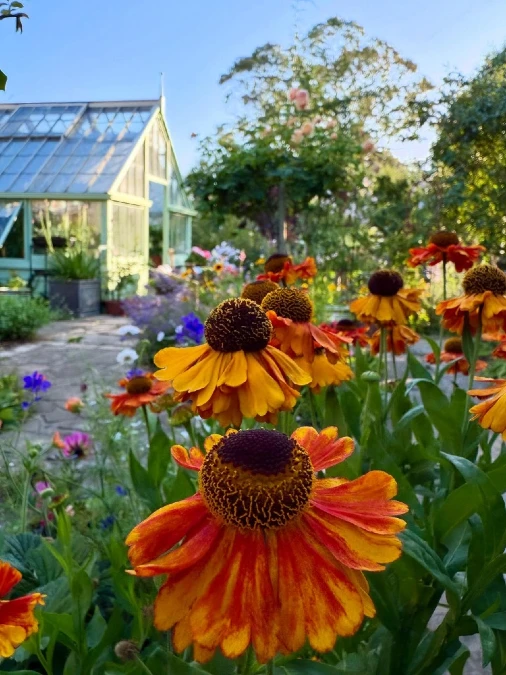
Striking orange and yellow helenium blooms stand out brightly with their prominent dark centers. These cup shaped flowers provide an excellent late season source of nectar for foraging bees.
The nearby glasshouse enables the gardener to start tender seedlings early in the year. Paved areas offer a neat contrast to the lush flower beds overflowing with colorful perennials.
14. Dense Color Block Planting
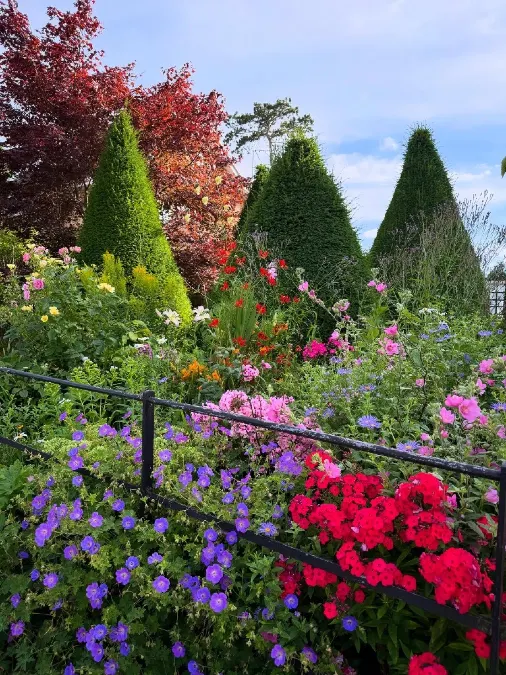
Cone shaped evergreens anchor the garden bed by providing strong, year round structure. Bright masses of purple and red flowers spill over the edging to create a dynamic tapestry of color.
Low growing geraniums carpet the ground to prevent weed growth and suppress moisture loss effectively. Phlox and climbing roses add mid height layers that offer varied nectar access to diverse bee species.
15. Lush Layered Perennial Border
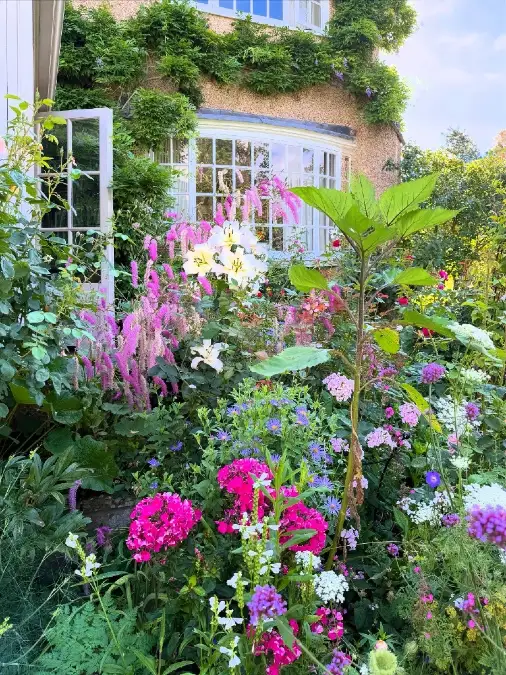
Exuberant pink phlox and white lilies burst through the dense greenery to create striking visual appeal. Tall plumes of bloom provide necessary landing spots for various bees that prefer high nectar sources.
Climbing vines slowly creep up the house facade to provide essential shade and shelter for insects nesting nearby. Curving window frames offer a charming architectural backdrop that contrasts beautifully with the wilder foreground.
16. Water Feature Pollinator Focus
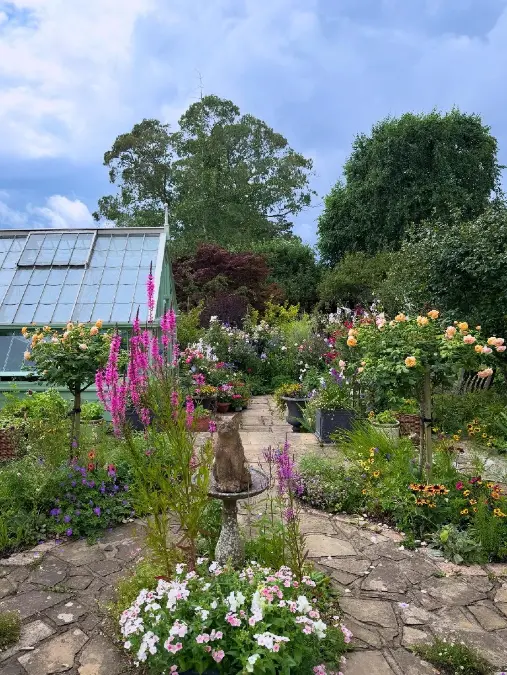
Flagstone paving creates an inviting path that guides visitors toward the peaceful central fountain feature. Statuary provides a focal point while offering a necessary resting spot near a crucial water source for bees.
Pink and yellow roses provide abundant petals and pollen close to the patio for busy insects. Potted plants and raised containers offer flexible planting options that can be moved as the seasons change.