
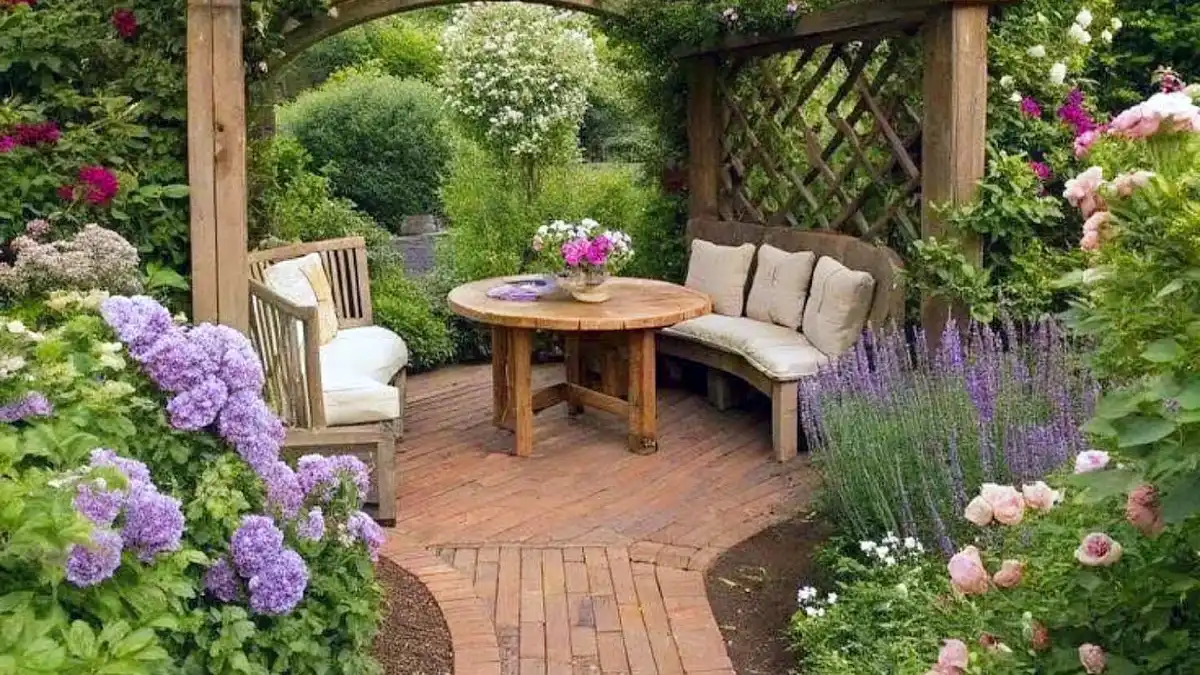
Structure is often overrated when cultivating a lively green space. Scattering seeds randomly mimics how wildflowers grow in the wild without human interference.
Traditional landscaping demands time, money, and precision that many busy people lack. Chaos gardening flips the script by encouraging a freeform approach to planting. Bees and butterflies adore these messy patches because they offer diverse food sources.
Wallets stay fuller since you can use cheap mixes or seeds collected from friends. Control is unnecessary here. Watching a patch of dirt transform into a riot of color brings immense joy.
Why Chaos Gardening is the Low-Stress Trend You Need?
Toss out the graph paper and rigid planting schedules. This method relies on nature doing the heavy lifting after you scatter a mix of seeds across the soil.
Local pollinators flock to these untamed patches while you save money on expensive starts. Enjoy the surprise as unexpected blooms turn a dull corner into a vibrant sanctuary.
- Mimics natural wildflower growth patterns for a wild look
- Requires significantly less time and money than traditional landscaping
- Attracts essential pollinators like bees and butterflies
- Reduces stress by removing the need for strict control
Wildflower Meadow Guide
-
Wild & Natural
Mimics natural wildflower growth patterns for a beautiful, wild look.
-
Save Time & Money
Requires significantly less resources than traditional landscaping.
-
Feed Pollinators
Attracts essential bees and butterflies to your garden.
-
Reduce Stress
Reduces stress by removing the need for strict control and mowing.
1. The Raised Bed Riot
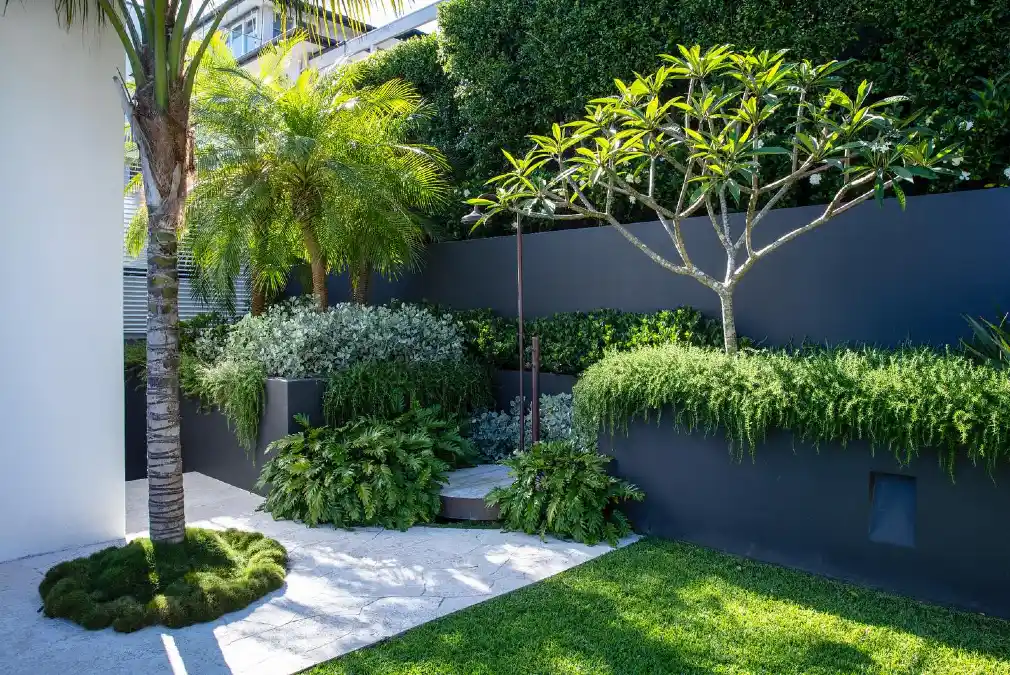
Rectilinear planters often house neat rows of shrubs in traditional yards. Emptying a mixed packet of seeds into these confined spaces creates a contained explosion of color. Structured boxes keep the messy growth from looking like total neglect.
Verticality adds interest when the blooms spill over the sharp edges of the concrete. Nature softens the harsh lines of modern architecture with zero maintenance required. You get the wild aesthetic without losing all sense of order.
2. The Geometric Border Clash
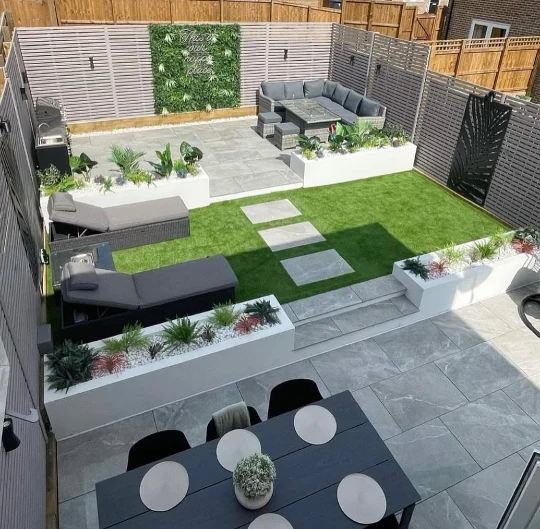
Uniformity usually dictates the vibe of such a structured outdoor lounge. White containers limit the wildflower spread to specific designated areas only. Color explodes from the boxes while the rest remains tidy.
Artificiality creates a cold feeling in spaces with so much pavement. Filling the perimeter beds with a random mix brings warmth back. Contrast makes the wild plants look intentional rather than messy.
3. The Vertical Spillage Technique
Verticality adds significant drama to any backyard area. Black walls make the lush green foliage stand out sharply. Seeds scattered loosely at the base grow upward while others spill beautifully over the top edge.
Layering different seed heights randomly achieves this density without purchasing large mature plants. Gravity encourages vines and creeping flowers to soften the architecture’s hard lines naturally.
4. The Paver Edge Explosion
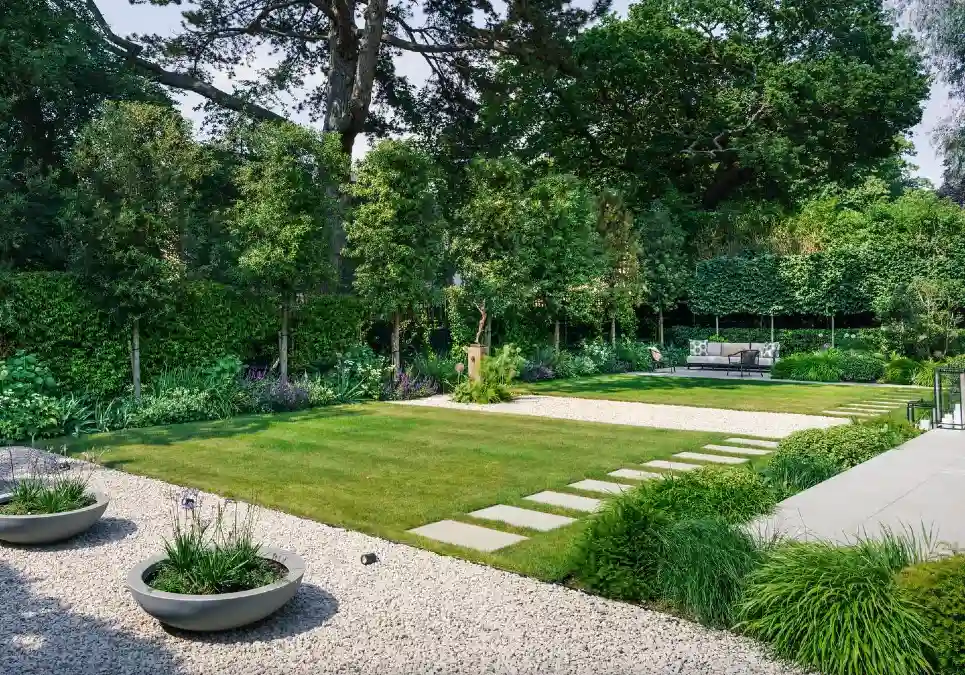
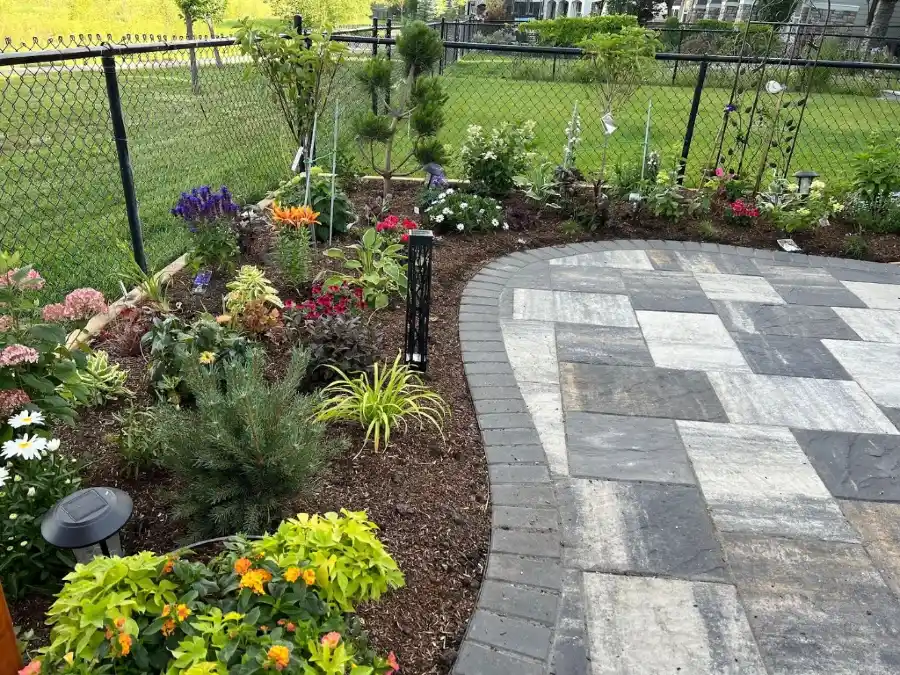
Unoccupied soil between the pavers and the fence begs for a scatter of random seeds. Sprinkling a native mix here prevents weeds from taking hold in the mulch. Colors will eventually spill over the hard stone edges beautifully.
Starkness from the metal chain link fence disappears behind a rising wall of tall blooms. Nature takes over the perimeter and creates a living privacy screen for free. Pollinators find a haven in what was once just a strip of bare bark.
5. The Curvilinear Path Takeover
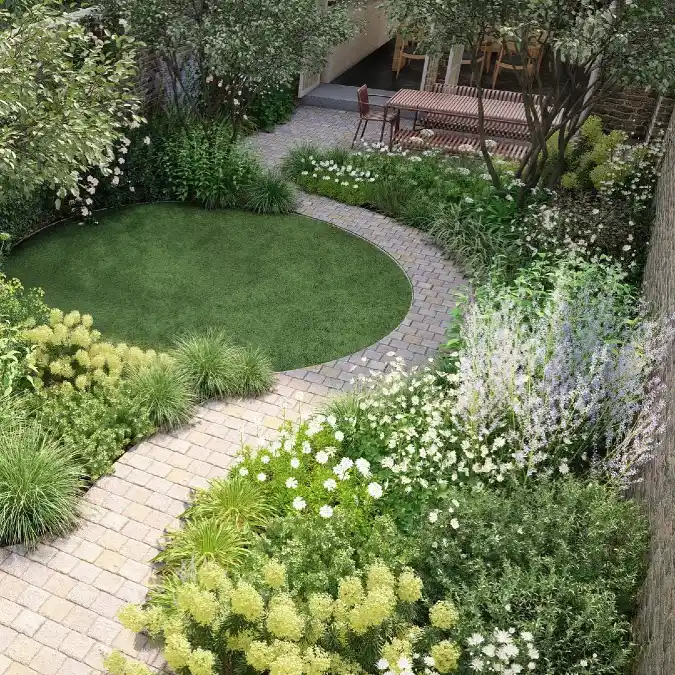
Curvilinear walkways provide excellent boundaries for containing the wildest growth. Scattering seeds aggressively along the stone edges lets the blooms spill over the pavement freely.
Softening the lawn circle with billowing perennials encourages movement in the entire design. Low budget seeds thrive in this environment where competition among plants is part of the fun.
6. The Radial Border Rebellion
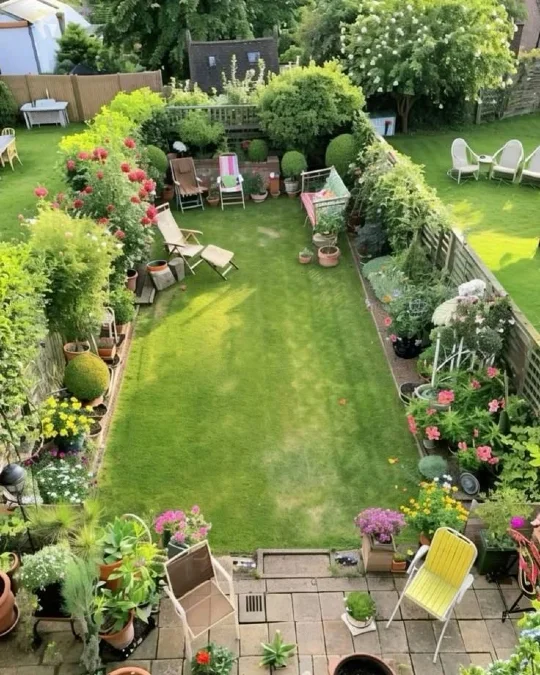
Curvature defines the garden’s skeleton while the plants break all the rules. White blooms lean heavily onto the bricks without asking for permission.
Rigidity disappears when you allow the green edges to become fuzzy. Nature fills the gaps cheaper than buying expensive stone borders.
7. The Self Seeding Takeover
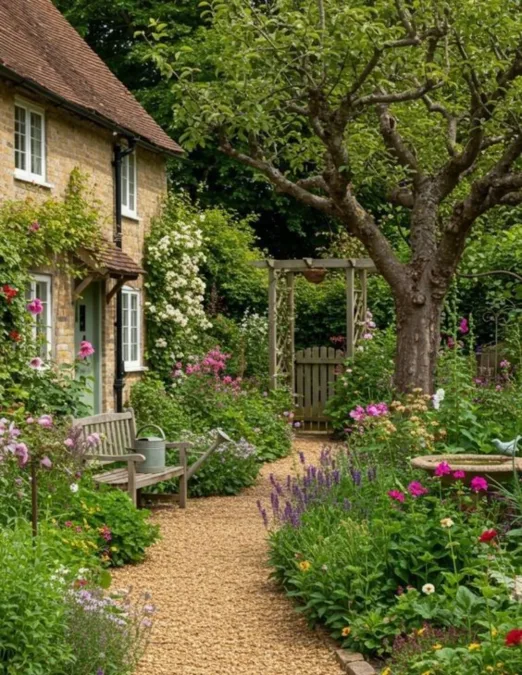
Abandoning shears encourages plants to grow tall and layer over one another naturally. Gravel paths provide excellent drainage for resilient varieties that spread easily. Every flower is allowed to drop seeds and colonize new territory freely.
Density protects the soil, minimizing water evaporation and preventing excessive weed growth across the yard. This technique saves significant time usually spent trimming or deadheading flowers. You simply allow the garden to evolve into a rich, complex ecosystem annually.
8. The Stepping Stone Encroachment
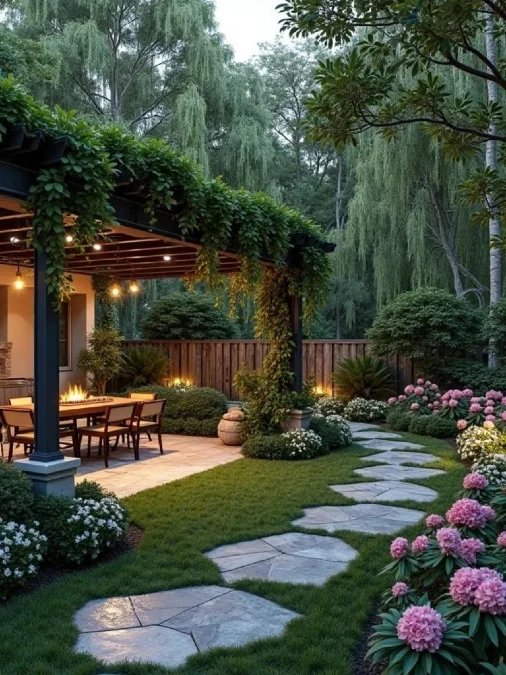
Exuberance defines the border planting along this winding path. Seeds scattered closely together create a visually dense, multi-layered tapestry of color.
Boundaries like these large stepping stones invite plants to sprawl across the edges. Utilizing low cost climbing seeds allows the pergola structure to soften quickly.
9. The Circular Border Overflow
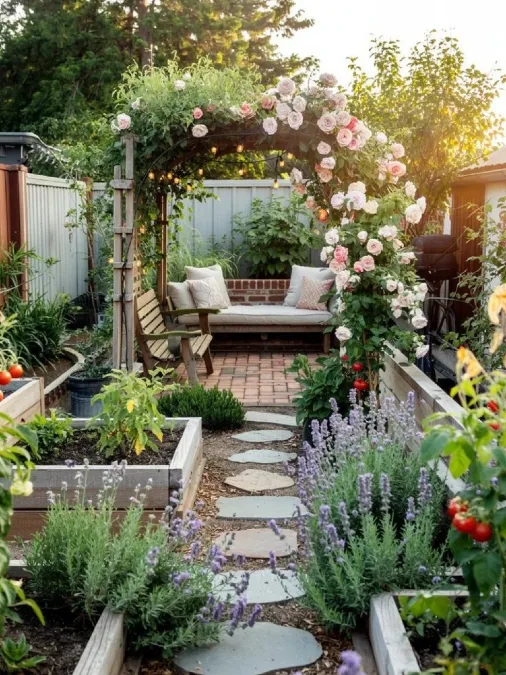
Curvature defines the garden skeleton while the plants break all the rigid rules. White blooms lean heavily onto the bricks without asking for permission. Manicured grass contrasts sharply with the untamed borders surrounding it.
Rigidity disappears when you allow the green edges to become fuzzy and wild. Nature fills the gaps cheaper than buying expensive stone borders. This lush method softens the hard landscaping effectively.
10. The Gravel Dining Rebellion
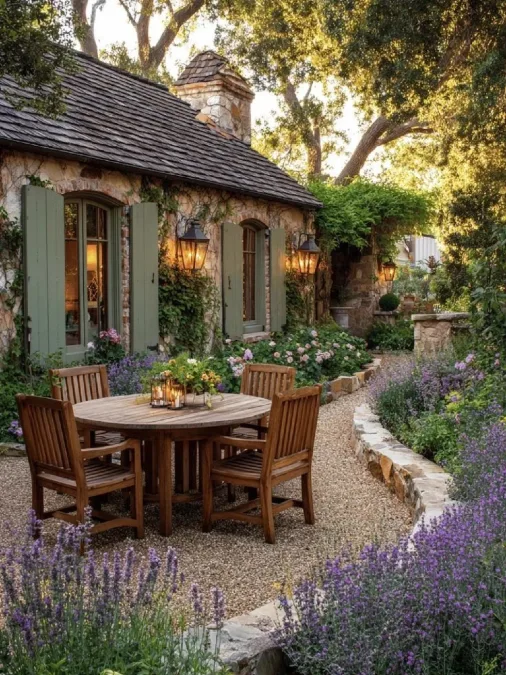
Coarse gravel provides a hospitable base for wayward seeds to take root alongside the rustic furniture. Dining outdoors feels magical when purple blooms rise directly from the loose stones beneath your chair.
Masonry boundaries soften significantly when you let local flora encroach upon the rocky edges freely. Low maintenance is the reality here since nature dictates the planting schedule for you.
11. Cottage Style Wildflower Stone Path Borders
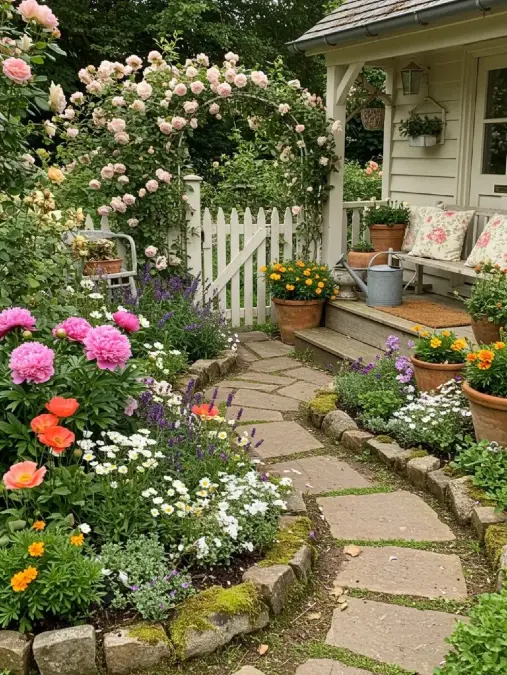
Irregular granite rocks outline the winding trail to guide visitors through the greenery. Vibrant pink peonies lean over the path alongside orange poppies for a loud statement. Native moss covers the stone edges to make the garden feel timeless and aged.
Trailing roses climb the wooden archway to create a fragrant and welcoming entrance. Terracotta pots filled with marigolds rest on the porch steps to add extra color. Tiny daisies fill the gaps between the larger plants to complete the wild look.
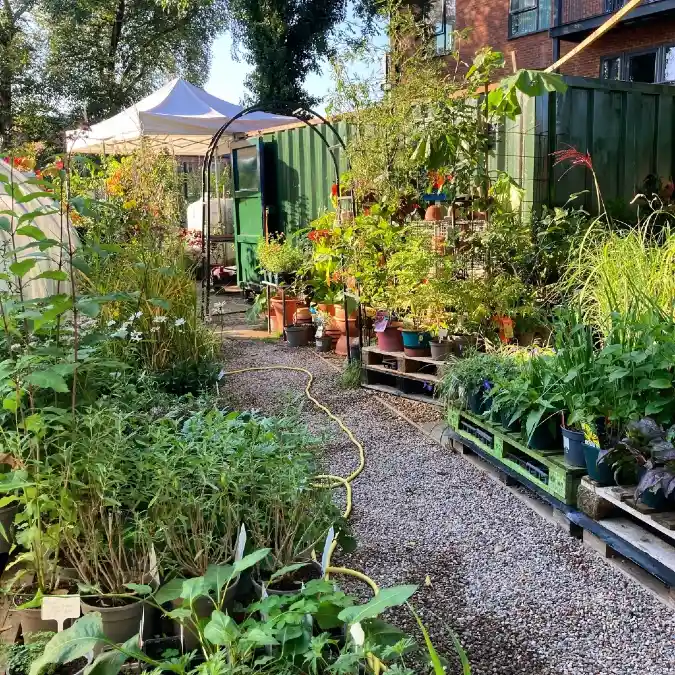
12. Reclaimed Pallet and Container Nursery
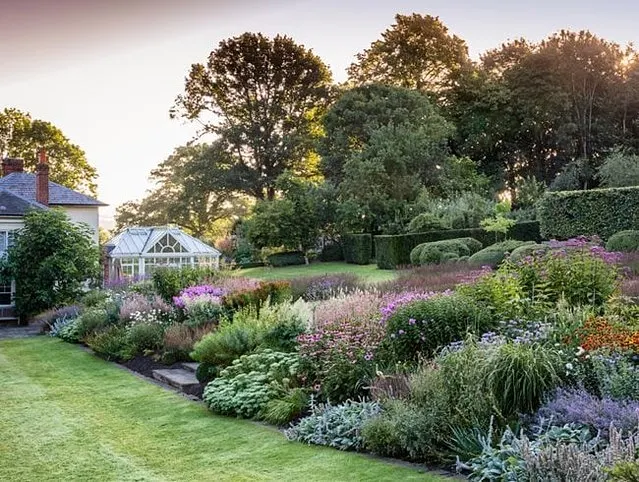
Discarded timber pallets elevate the plastic planters to keep roots off the cold ground. Neon yellow hoses coil across the stones like snakes among the wild greenery. Dense foliage spills from every plastic container to hide the industrial fencing behind it.
Emerald painted metal containers stand open to reveal tools and supplies for the gardener. Slender metal arches frame the walkway to add a touch of structure to the mess.
13. Vintage White Picket Fence
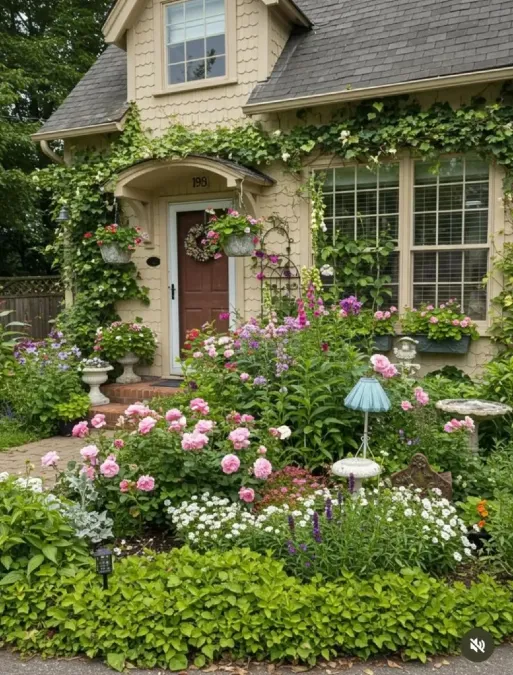
Abundant pale pink roses cascade over the curved white trellis to frame the garden gate beautifully. Irregular stone slabs form a rustic path that leads visitors straight to the wooden porch steps.
Terracotta planters holding bright orange marigolds sit on the stairs to add warmth to the entry. Weathered benches with floral pillows offer a cozy place to view the wild greenery nearby.
14. Ivy Clad Cottage Entrance
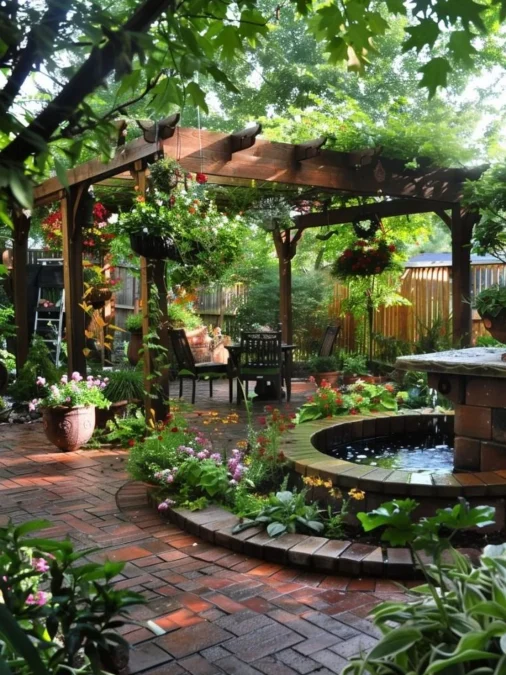
Dense ivy creeps across the beige siding to frame the arched doorway naturally. Hanging metal baskets overflow with pink petunias to greet guests at the door. Tall purple foxgloves rise above the bushes to add dramatic height and contrast.
Abundant pink roses cluster near the brick steps to soften the hard edges. A vintage birdbath sits among the greenery to attract local wildlife friends. White alyssum spreads across the ground to fill empty spaces with brightness.
15. Rustic Timber Pergola
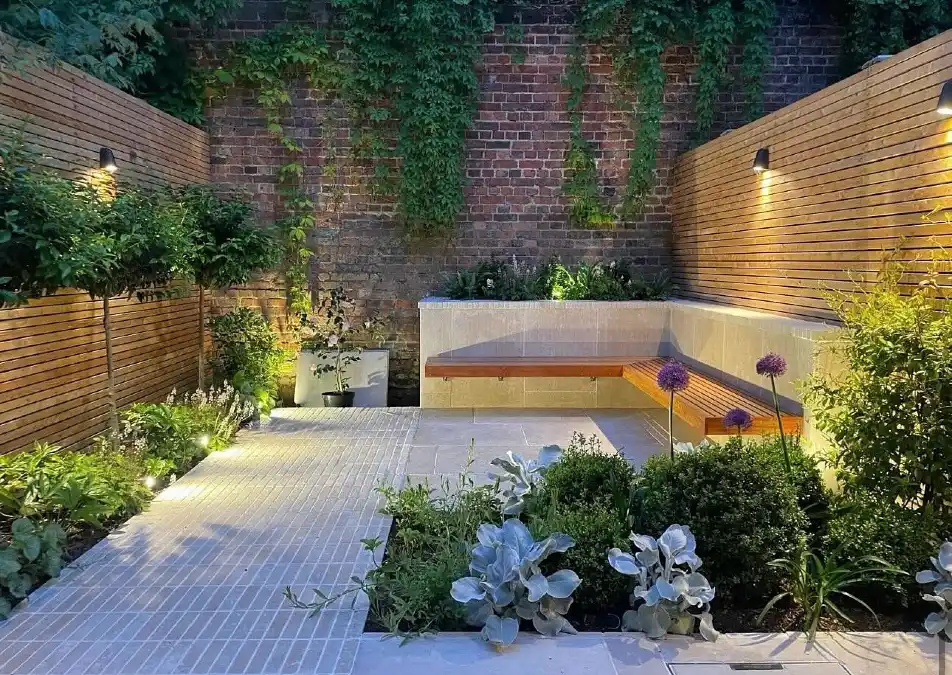
Timber beams form a sturdy grid overhead to hold heavy baskets of trailing red flowers. Crimson blooms cascade from the suspended planters to add life to the shaded brick patio.
Masonry bricks curve around the small water feature that sits centrally on the paved terrace. Clay pots filled with wild greenery crowd the fountain edge to soften the hard stone lines.
16. Enclosed Courtyard
Original brick walls provide a rugged history that contrasts with the smooth horizontal wood fencing. Tall purple alliums stand like lollipops among the green shrubs to add fun visual height.
Pale stone pavers extend across the ground to create a clean and spacious foundation. Silvery textured leaves grow densely in the borders to contrast with the dark boxwood spheres.
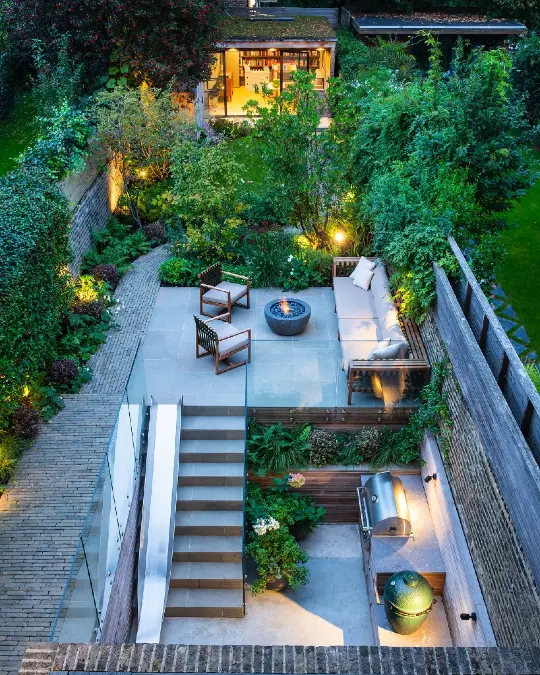
17. Modern Split Level Garden
Elevated grey pavers host a cozy fire pit area for evening relaxation. Dense shrubs crowd the brick walls to create a private green sanctuary. Glass balustrades define the terrace edge without blocking the lush garden views.
Polished metal forms a playful slide alongside the stairs for quick descent. Modern outdoor cooking stations sit nestled in the sunken lower courtyard level. Vibrant ferns spill from the wooden planters to soften the concrete structures.