
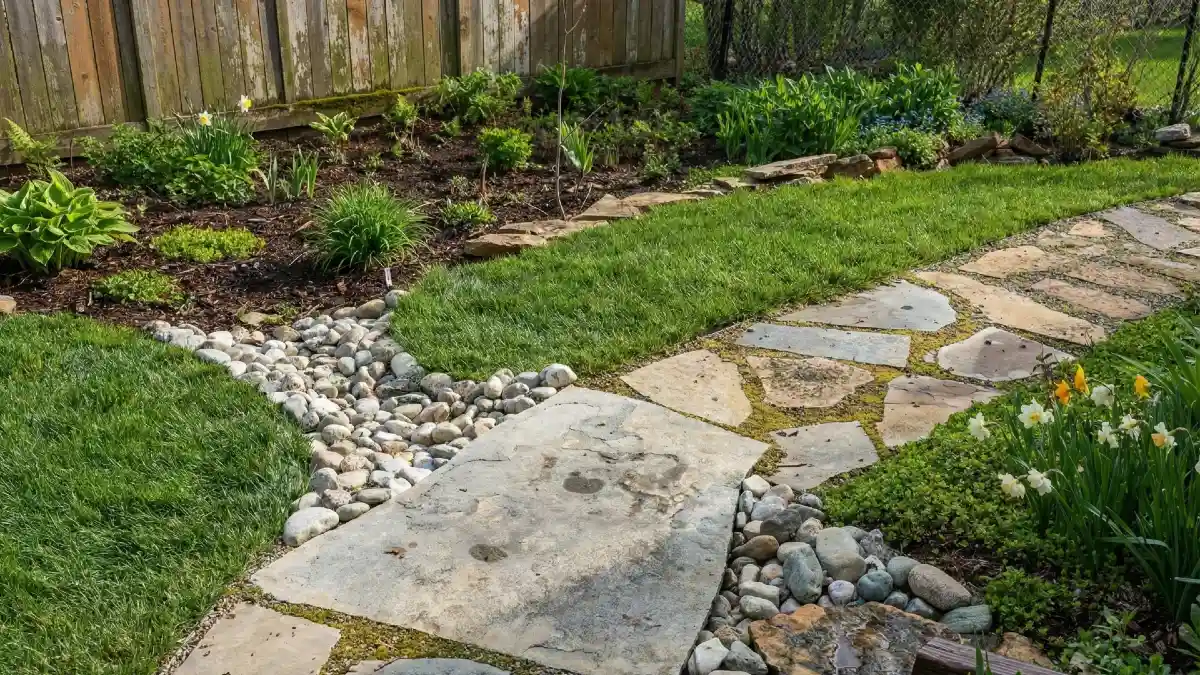
Rain gardens solve drainage issues while adding beauty to your yard. These functional spaces capture runoff from roofs or driveways effectively. Native plants thrive in these wet zones and filter pollutants naturally.
You can also attract pollinators like butterflies by choosing the right flowers. Milkweed and cone flowers bring vibrant color and life to the garden. Creating a habitat supports local wildlife and improves soil health over time.
Homeowners love how these designs reduce erosion problems significantly. Maintenance becomes easy once plants establish their deep roots.
Enhancing Landscapes with Functional Rain Gardens
Implementing a rain garden offers an elegant solution for managing stormwater runoff while simultaneously improving curb appeal.
These purpose-built depressions utilize native vegetation to filter pollutants and absorb excess water, effectively mitigating soil erosion.
Rain Garden Design
-
Effective Runoff Capture
Strategically redirect heavy runoff from roofs and driveways to protect your site foundations.
-
Natural Filtration
Utilize deep-rooted vegetation to naturally filter pollutants before they reach local waterways.
-
Pollinator Habitats
Create vibrant zones that support butterflies and other essential local pollinators.
-
Erosion Reduction
Significant reduction in soil erosion with minimal long-term maintenance required for the venue.
1. Rocky Creek Bed Garden
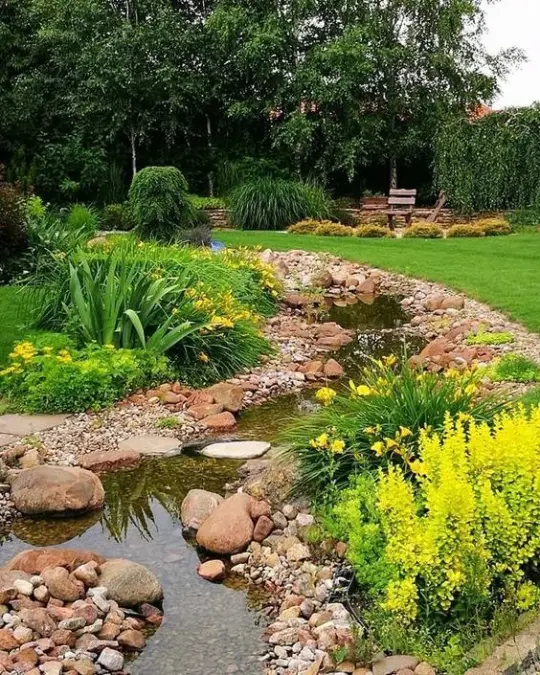
Large rocks form a winding creek bed to guide water through the landscape. Shallow pools collect among the stones after rainfall.
Vibrant yellow blooms cluster along the rocky edges to attract visitors. Lush green foliage frames the water feature beautifully.
2. Circular Island Bed
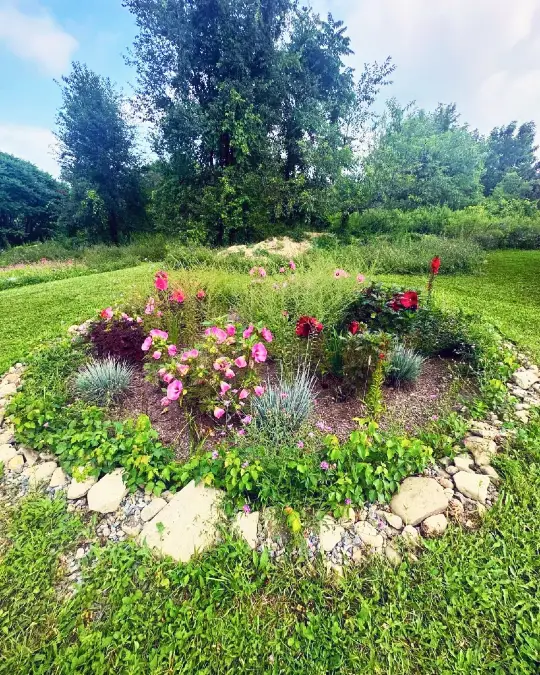
Large, light-colored stones create a distinct round border for this garden island. This design separates the planting area clearly from the surrounding lawn.
Bright pink blossoms mix with feathery grasses in the center of the stone ring. Darker foliage adds contrast to the vibrant floral display inside the circle.
3. Gravel Creek Bed with Berms
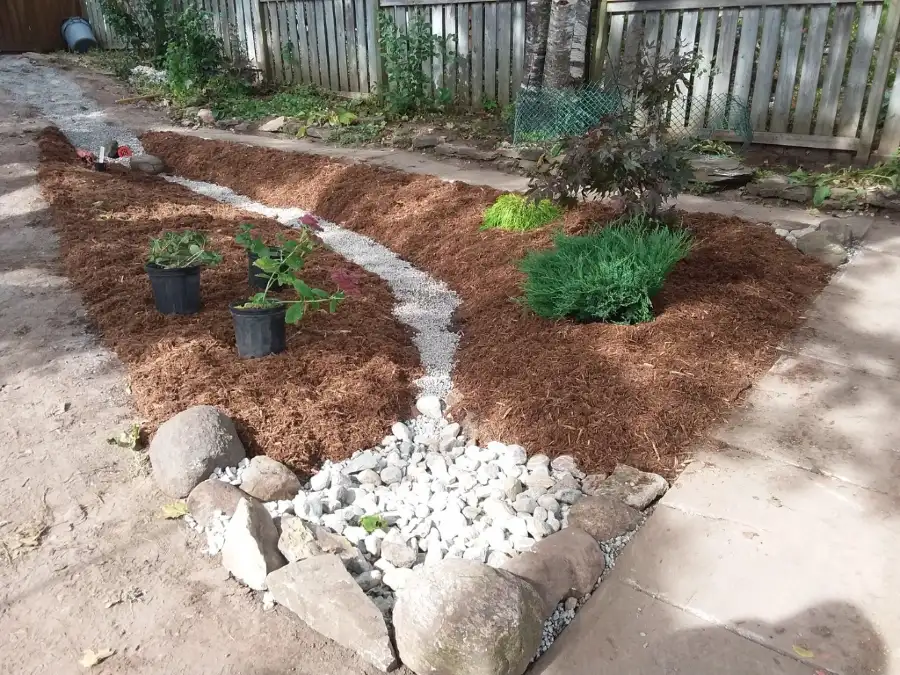
A narrow path of light grey gravel winds through mounds of rich brown mulch. Large river stones anchor the base to slow down rushing water.
Small potted plants sit ready for installation along the sloping edges of the soil. Lush green shrubs and a small tree add immediate height to the landscape.
4. Modern Walkway Borders
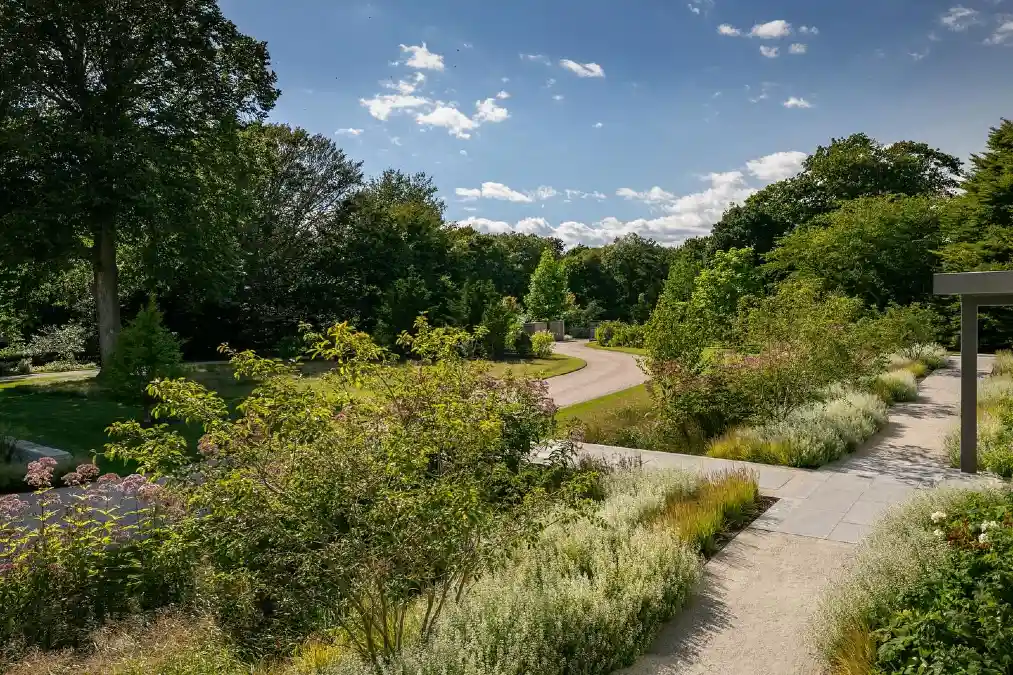
Lush rows of silvery green grasses line a clean stone path. Soft pink flowers sway in the breeze to attract winged visitors.
Tall deciduous trees provide a deep green backdrop against the bright blue sky. This layout combines structured stone surfaces with wild flowering plants.
5. Stone Edged Garden Pond
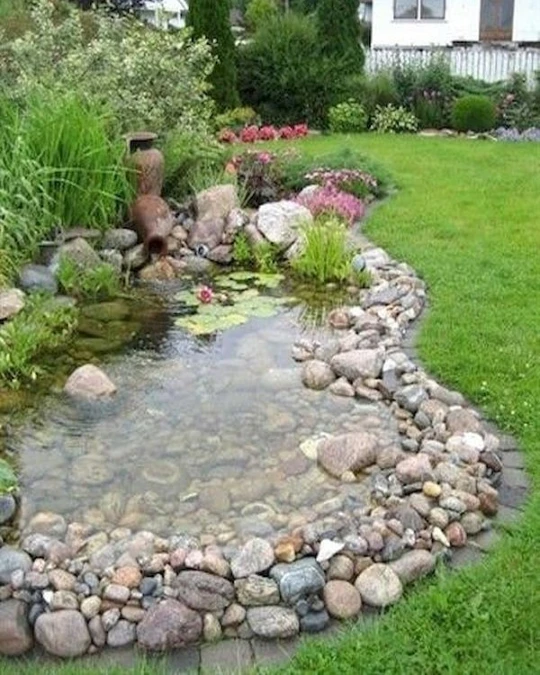
Smooth river rocks create a natural border around the clear water. A bed of multicolored stones covers the shallow bottom of the basin.
A large clay pot spills a gentle stream into the small pool. Green lily pads float near the edge of the lush lawn.
6. Roadside Pollinator Swale
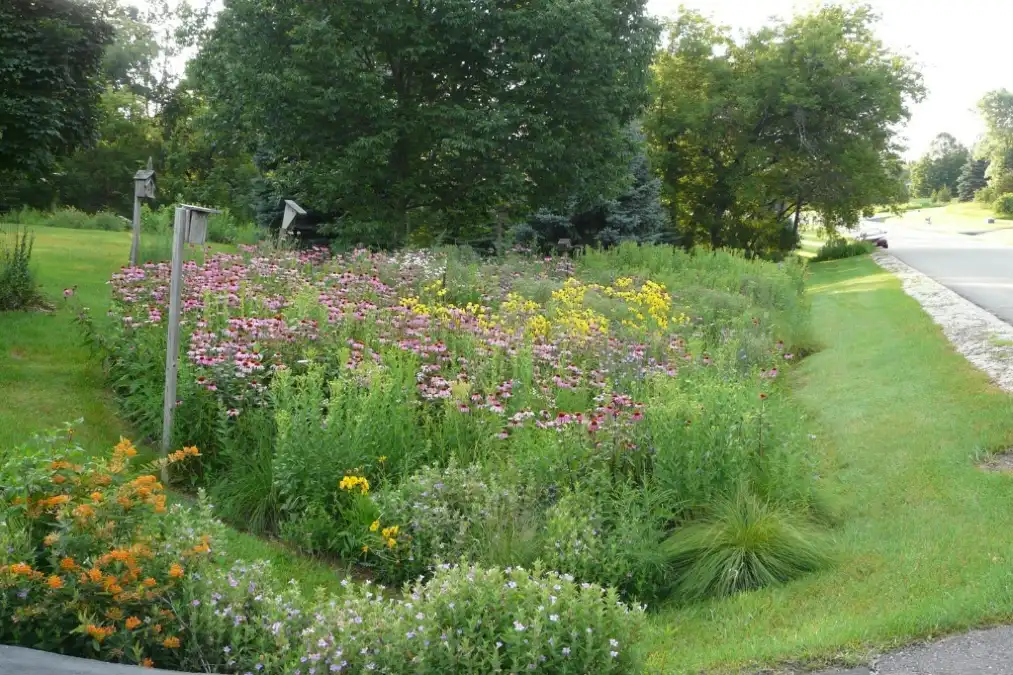
This expansive rain garden runs along the edge of a paved road to catch runoff. Pink coneflowers and bright yellow blooms dominate the center of this lush planting area.
Tall birdhouses stand on wooden posts to invite feathered friends into the space. Thick green grasses and low shrubs fill the foreground to add varied textures.
7. Natural Stone Pond Feature
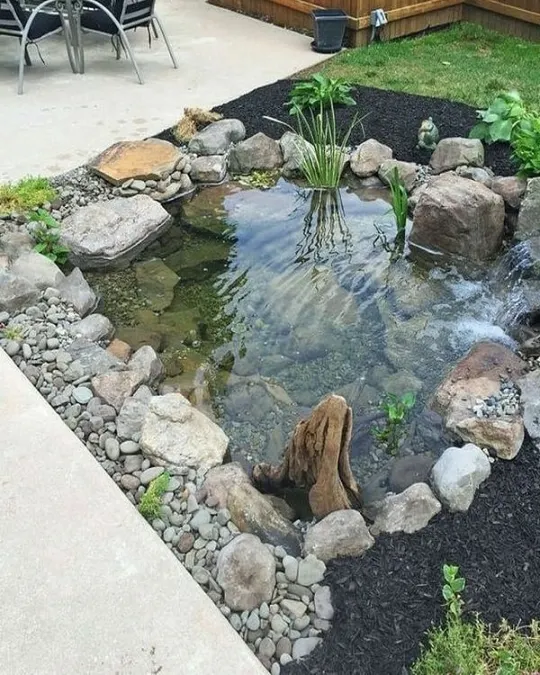
Clear water sits within a basin lined by smooth river rocks and large boulders. Dark mulch surrounds the rocky edge to create a sharp contrast with the gray stones.
Small aquatic plants emerge from the shallow areas to provide resting spots for winged visitors. A piece of weathered driftwood adds an organic focal point near the center of the pool.
8. Woodland Meadow Escape
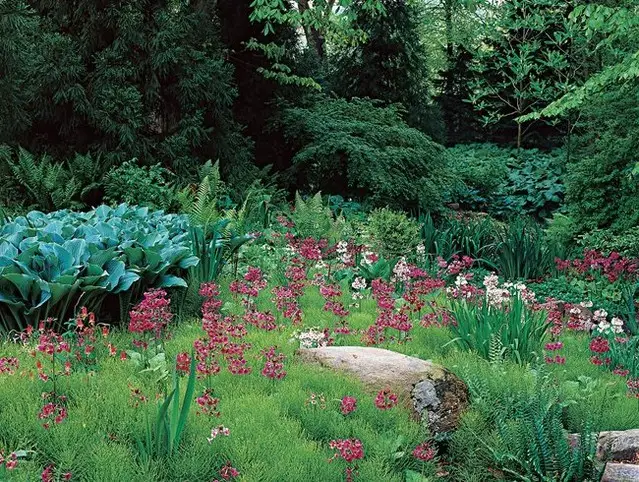
Deep pink and white flowers pop against a vibrant green carpet of groundcover. Large blue hostas and feathery ferns frame the edges of this shaded retreat.
A smooth mossy boulder rests in the middle of the low growth. Dark evergreen trees provide a dense backdrop for this secluded garden space.
9. Entryway Mulch Garden
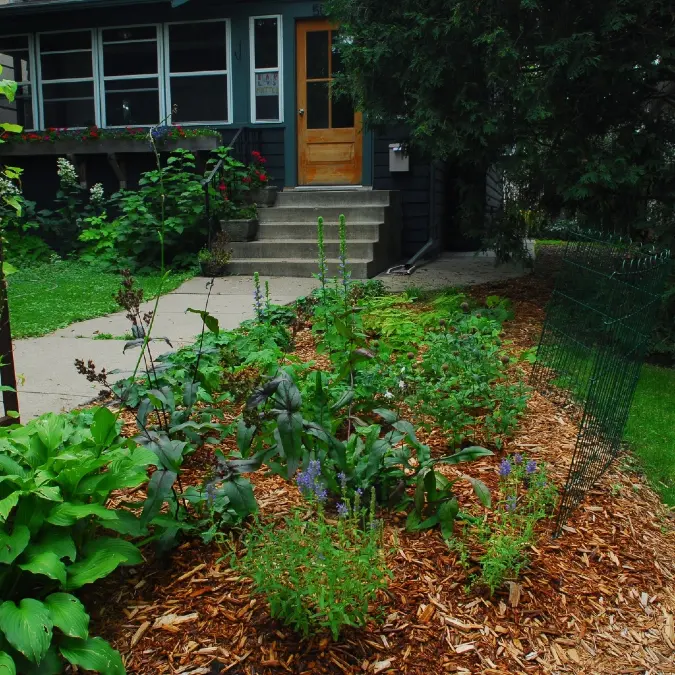
A thick layer of wood mulch covers the ground to help retain soil moisture. Purple spikes and leafy hostas grow along the concrete path leading to the front door.
A small green wire fence protects the young plants from foot traffic. Tall green stalks rise from the center of the bed to add vertical interest to the home entrance.
10. Curved Border Perennial Bed
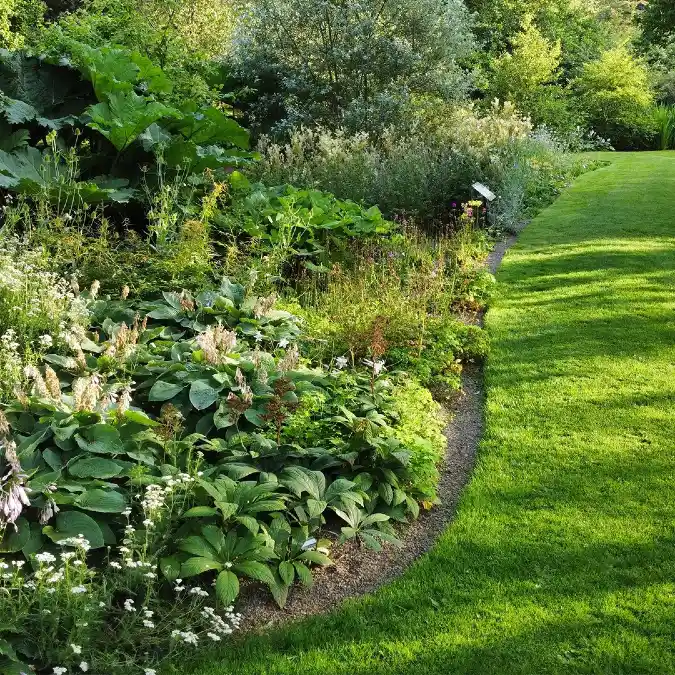
A gravel path creates a clean line between the mowed lawn and the dense planting area. Large hostas with broad leaves anchor the front of the curved border.
White and purple wildflowers bloom among the diverse foliage. Tall shrubs and trees in the background provide a sense of privacy and enclosure for the yard.
11. Zen Pavilion Sanctuary
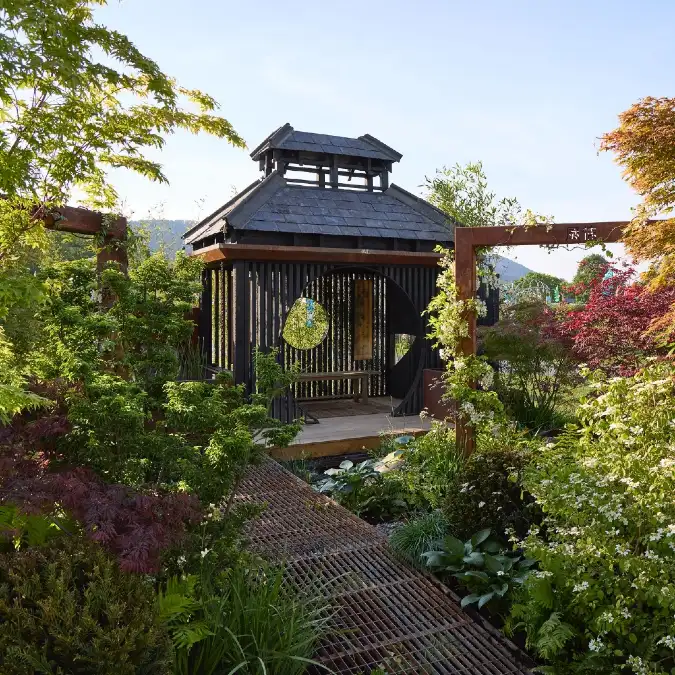
A dark wooden gazebo with a slate roof serves as the focal point for this structured garden. Slatted walls and a circular cutout offer a framed view of the lush greenery outside.
Metal grate walkways lead visitors over low-lying plantings to reach the sheltered seating area. Vibrant red and green maples flank the structure to provide a rich variety of seasonal color.
12. Modern Column Water Feature

Three dark basalt columns stand upright in a bed of smooth river stones. Water trickles down the textured sides of these pillars to create a soothing sound.
Yellow wildflowers and tall grasses surround the rock base to soften the modern look. This design sits near a large white house overlooking a calm body of water.
13. Minimalist Courtyard Planting
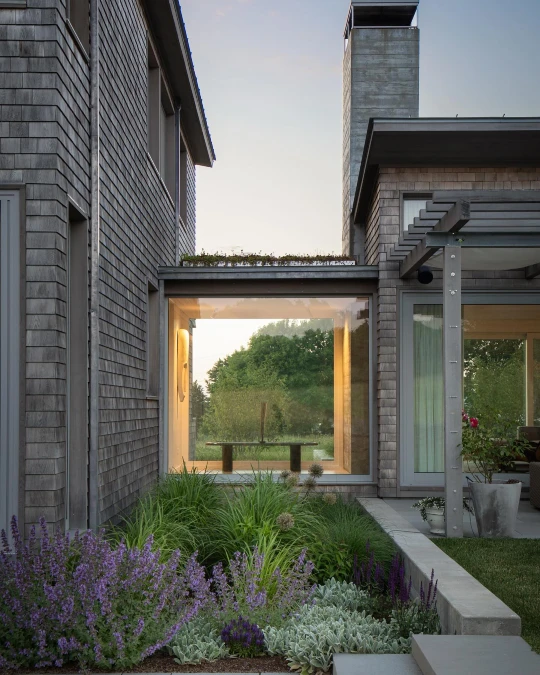
A sleek concrete wall separates the manicured lawn from a dense bed of ornamental grasses. Lavender flowers and silvery lamb’s ear plants fill the foreground with soft colors.
Large glass windows on the modern gray house offer a clear view of this organized rain garden. A small green roof sits atop the connecting hallway to manage extra runoff.
14. Curb Cut Infiltration Basin

A concrete curb features a strategic gap to direct street water into a sunken basin. Small river rocks line the entry point to prevent soil erosion during heavy storms.
Golden ornamental grasses and green shrubs fill the depression to filter pollutants. This functional design sits between a sidewalk and a residential street to manage local runoff.
15. Mulch Bed Infiltration Zone
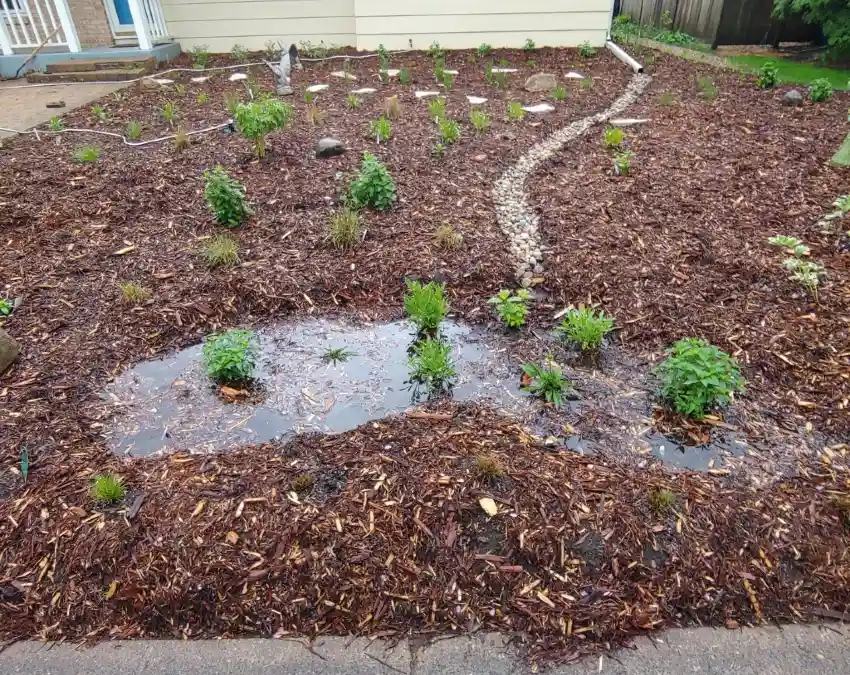
A thick layer of brown wood mulch covers this expansive front yard to manage moisture levels. Small green plants grow in tidy rows across the dark surface to fill the space.
A narrow rock spillway guides water from the house downspout into a central depression. Standing water pools in the middle of the bed to allow slow drainage into the ground.