
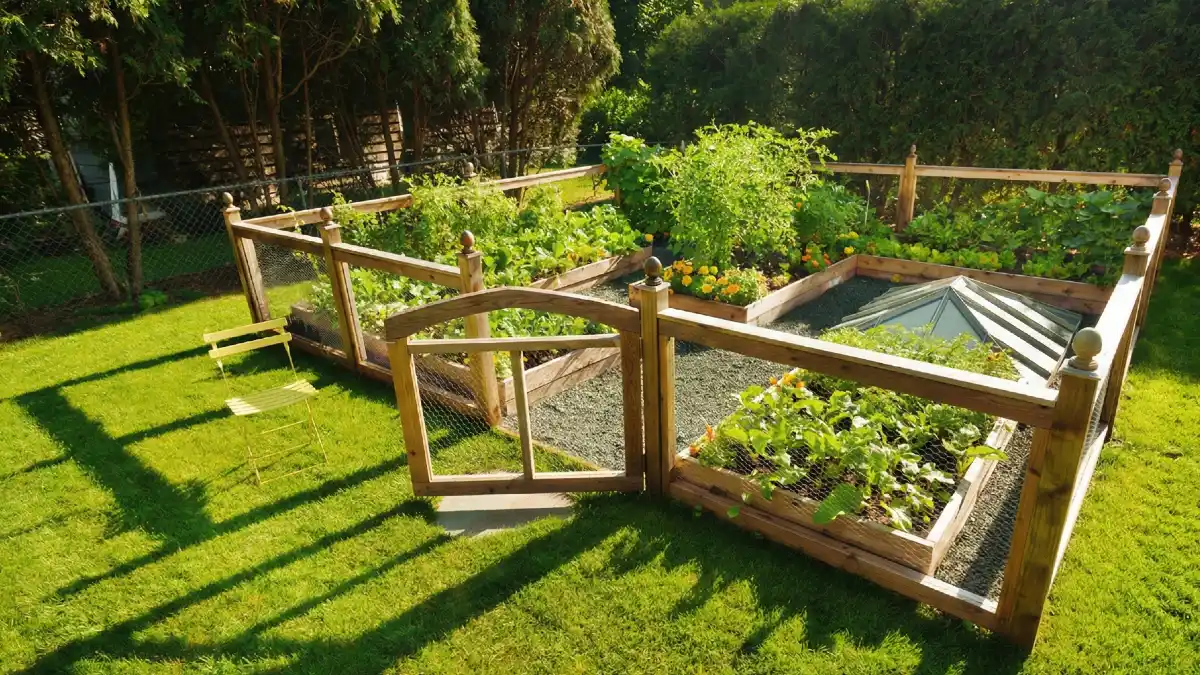
Growing your own food changes everything. A mini food forest fits into small backyards or patios. You save money on groceries every week. Nature handles most of the hard work here.
These systems use layers of plants working together. Trees, shrubs, and herbs support each other. Upkeep stays low compared to traditional gardens.
You simply need to plant the right mix. Fresh fruit tastes better straight from the soil. Use these concepts to build a thriving ecosystem at home.
Cultivating High-Yield Micro-Food Forests
Adopting permaculture principles allows for the creation of self-sustaining agricultural ecosystems within compact residential areas.
This approach utilizes multi-layered planting strategies where canopy trees, shrubs, and ground cover interact to enhance soil health and crop production.
The Food Forest Blueprint
-
Vertical Stratification
Maximize limited square footage through strategic placement of canopy, shrubs, and ground vegetation.
-
Operational Efficiency
Minimize manual maintenance as the system establishes self-regulating plant communities.
-
Economic Optimization
Generate consistent organic produce to significantly offset standard household food expenditures.
-
Ecological Integrity
Foster a biodiverse environment that naturally improves soil fertility and long-term resilience.
1. Staked Cherry Tomatoes and Groundcover Greens
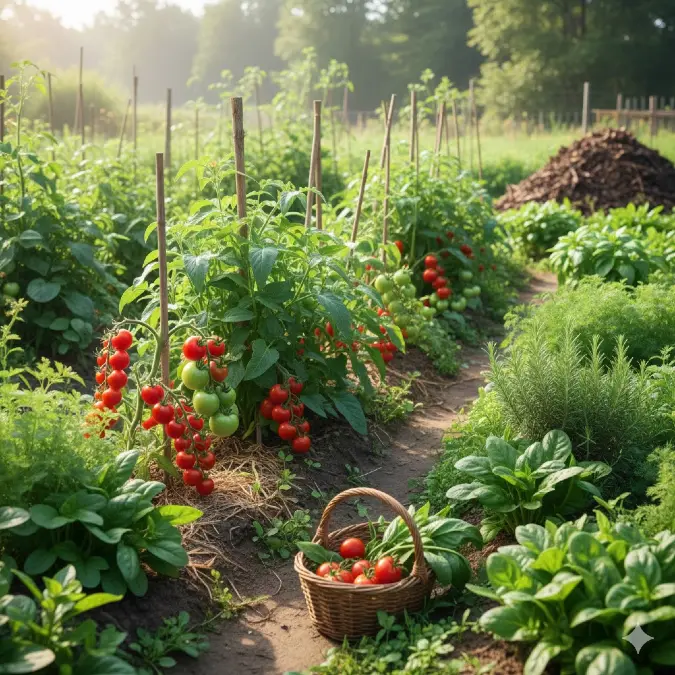
Red and green cherry tomatoes hang from tall wooden stakes along a dirt path. These plants grow vertically to maximize space. Lush leafy vegetables flourish near the ground below them. They help shade the soil.
A wicker basket rests on the path holding a fresh harvest. Straw mulch surrounds the base of the vines. A large pile of compost sits in the background ready for use.
2. Raised Garden Beds with Square Foot Grid
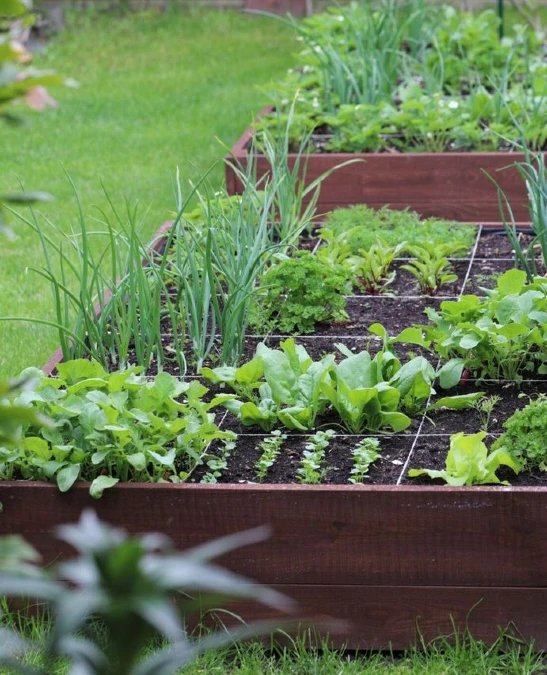
Two wooden raised beds sit upon a green lawn. A string grid divides the soil into neat separate squares. This system organizes planting space efficiently. You can clearly see different crops assigned to specific sections.
Tall green onions grow in the back rows. Lush leafy vegetables fill the middle squares. The front sections hold younger plants planted in precise lines. This method keeps the garden orderly.
3. Rainbow Swiss Chard
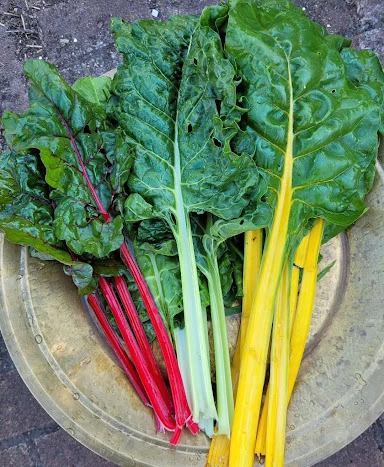
Bright stalks of red, yellow, and white fill a shallow brass bowl. Huge green leaves fan out from the colorful stems. This harvest looks crisp and freshly washed.
Water droplets rest on the textured surface of the greens. A stone path serves as the background for the metal tray. You get a mix of vibrant colors in a single bunch.
4. Red Bell Peppers, Eggplants, and Basil
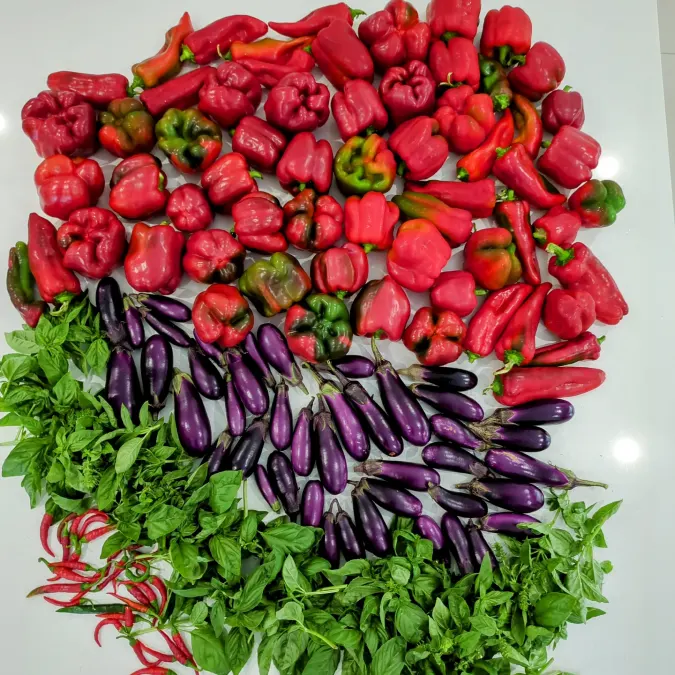
Hundreds of vibrant red peppers dominate the upper half of this display. Patches of green appear on some of the glossy skins. They sit tightly packed on a clean white surface.
A curved line of slender purple eggplants separates the peppers from the bottom section. Fresh basil leaves fill the lower corners with lush emerald color. Small spicy chilies add bright red accents near the herbs.
5. Cucumber or Squash Seedlings
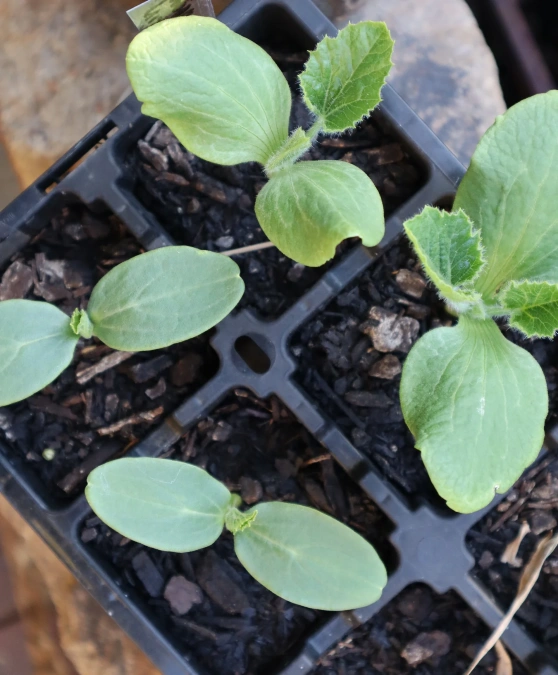
Young green seedlings grow in a black plastic starter tray. Smooth oval leaves spread out to catch the light. You can see tiny fuzzy true leaves emerging from the center.
Dark potting mix holds moisture around the roots. The separated cells keep the plants from tangling together. Starting crops this way ensures a healthy transplant later.
6. Peppers and Marigolds with Colorful Supports
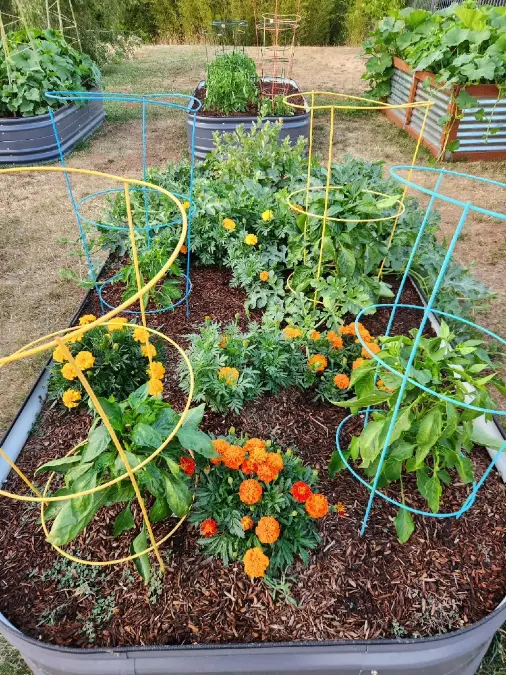
Bright yellow and blue wire cages support green pepper plants. Orange marigold flowers bloom between the leafy vegetables. Dark wood chip mulch covers the soil surface to hold moisture.
A galvanized metal raised bed contains this organized garden patch. Other planters sit in the background on the dry grass. The flowers add bright pops of color among the edible greens.
7. Kitchen Scraps Regrowing in Water
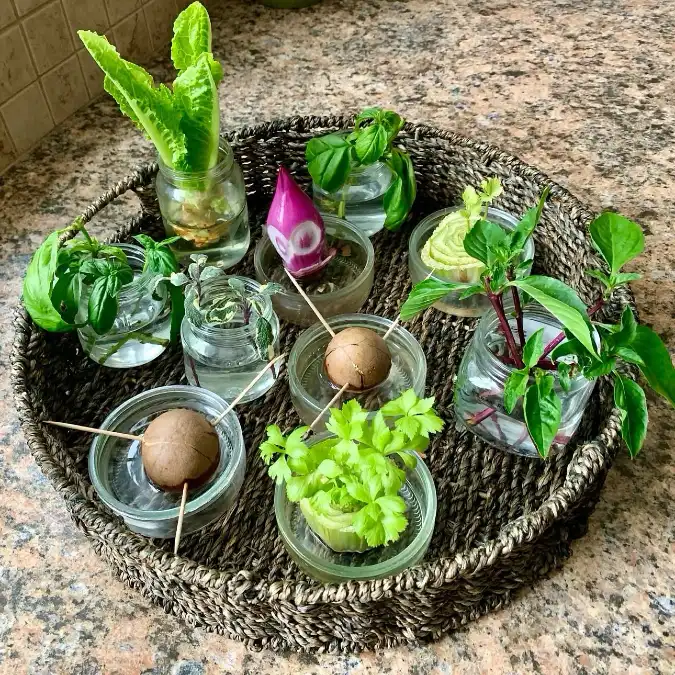
Small glass jars fill a round woven basket on a stone counter. You see brown avocado pits suspended over liquid by wooden toothpicks. Green leaves sprout fresh from the tops of celery and lettuce bases.
Clear water keeps the roots hydrated and healthy. A red onion bulb sits among the other growing plants. This setup turns leftover ends into free food.
8. Purple Spring Onions
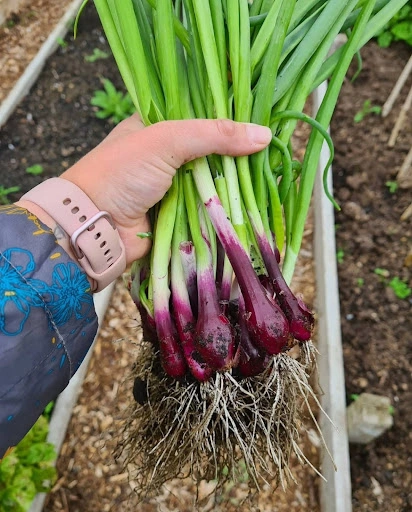
A gardener holds a thick bunch of onions with deep purple bulbs. Long green stalks reach high above the hand. White roots dangle from the bottom with soil attached.
A pink watch band sits on the wrist of the person holding the harvest. The blurred background reveals the dark garden soil. These vegetables add bright color to the crop selection.
9. Mixed Winter Harvest Display
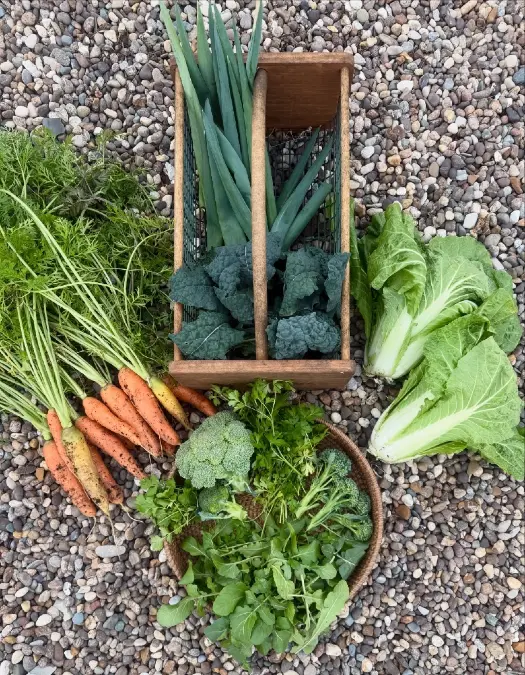
A wooden basket stands in the center holding tall leeks and dark kale. Orange and yellow carrots lie in a large bunch on the left side. Their leafy green tops fan out across the pebble surface.
Two heads of pale napa cabbage rest on the right. A round woven container holds fresh broccoli florets near the bottom. Small loose salad greens fill the gaps around the brassicas.
10. Bush Beans and Flowers in Raised Beds
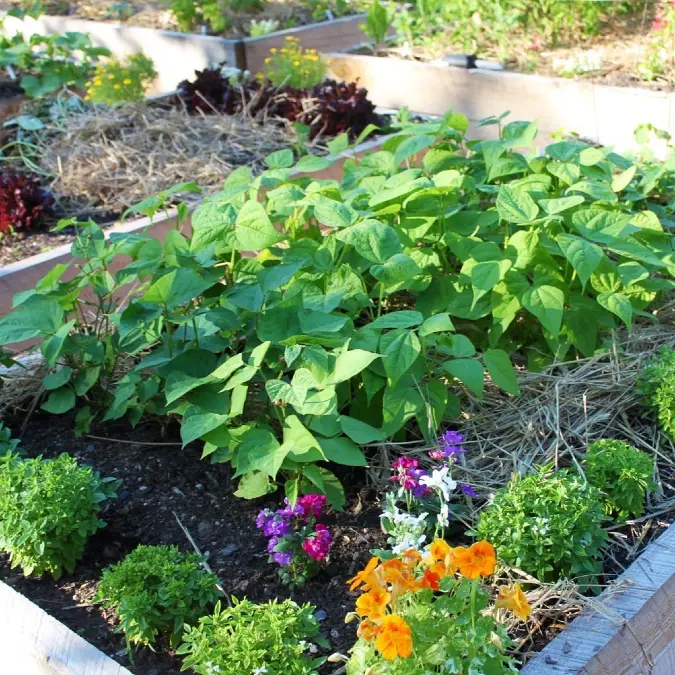
Thick green bush bean plants fill the center of a wooden garden box. Dry straw mulch covers the soil around the stems to keep roots cool. Sunlight brightens the broad leaves from the side.
Orange and purple blooms grow in the front corners of the bed. Small mounds of green herbs sit next to the colorful flowers. You can see other planted boxes in the background.
11. Giant White Turnips in High Tunnel
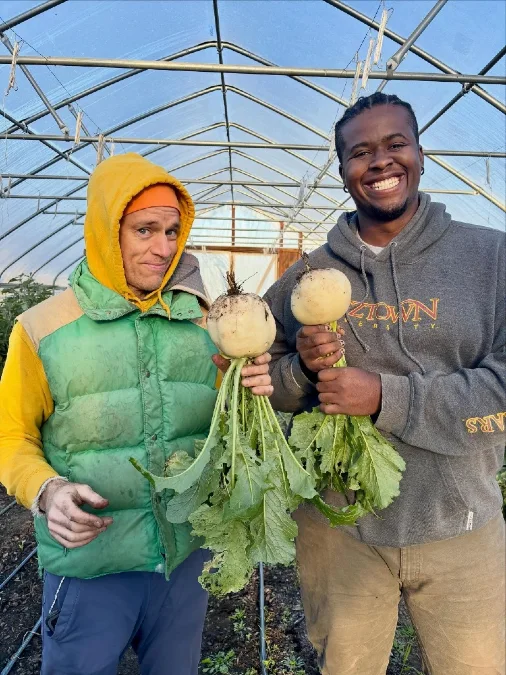
Two farmers show off large white turnips inside a greenhouse structure. The man on the left wears a yellow hood and green vest while holding his harvest. Long green leaves hang down from the tops of the heavy roots.
A smiling man in a grey sweatshirt holds up a matching vegetable on the right. Metal curved poles support the plastic roof above their heads. Rows of dark earth cover the floor behind them.
12. Purple Kale and Edible Flowers
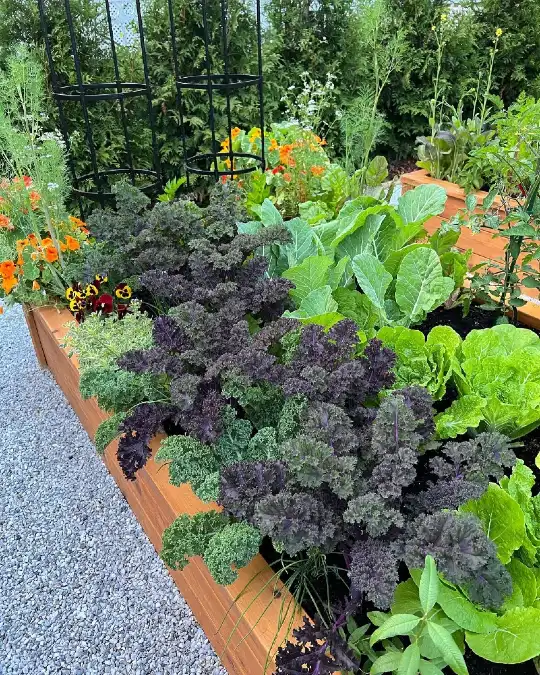
Deep purple curly kale dominates the front of this long wooden planter. Bright green leafy vegetables grow tall behind the dark foliage. Orange nasturtiums and small pansies add color to the left corner.
Black metal trellis towers stand ready for climbing plants in the background. Clean grey gravel covers the ground around the raised bed. This combination mixes ornamental beauty with practical food production.
13. Sugar Snap Peas on Trellis
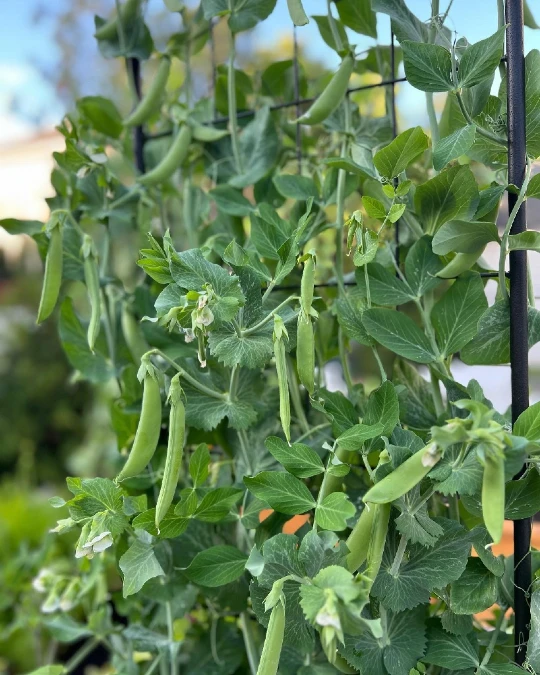
Green pea pods hang from thin vines climbing a black metal grid. Curly tendrils wrap tightly around the wire support structure. White flowers bloom near the bottom among the fresh leaves.
Sunlight illuminates the translucent green skins of the vegetables. You can see the blue sky through the gaps in the foliage. Vertical growing saves ground space while producing a heavy crop.
14. Yellow and Purple Snap Beans
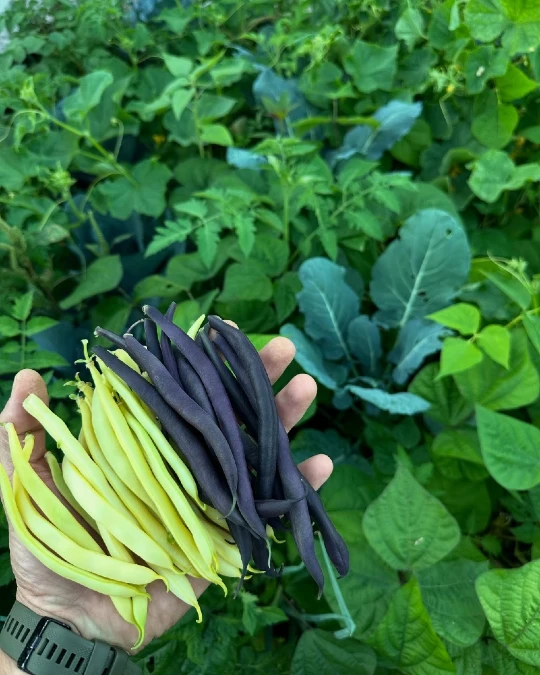
A gardener displays a handful of yellow and purple beans. Pale wax varieties sit next to the dark violet pods in the palm. Lush green foliage fills the entire background behind the harvest.
Broad leaves suggest healthy vegetable plants growing closely together. You can see a green watch strap on the wrist holding the vegetables. This crop adds colorful variety to standard green harvests.
15. Mixed Herb and Corn Seedlings
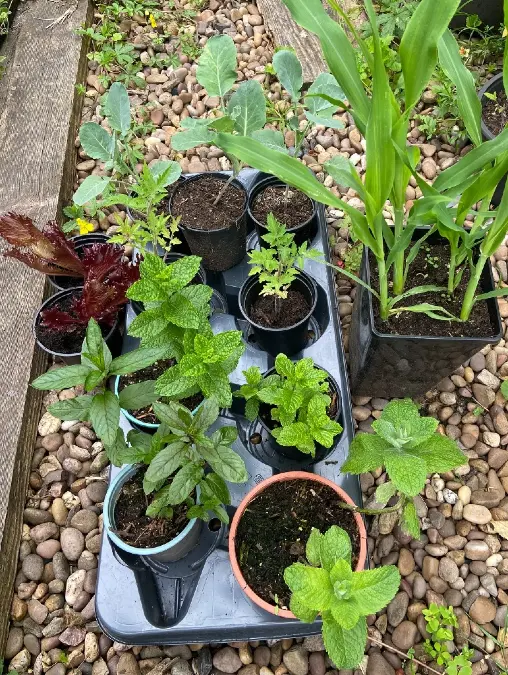
A black plastic carrier tray sits on a bed of smooth river stones. Tall green corn shoots rise from a large square pot on the right. Dark red lettuce creates a contrast on the opposite side.
Several pots of textured mint fill the front and center rows. You can see smaller vegetable starts growing in the background containers. This collection prepares different crops for transplanting at the same time.